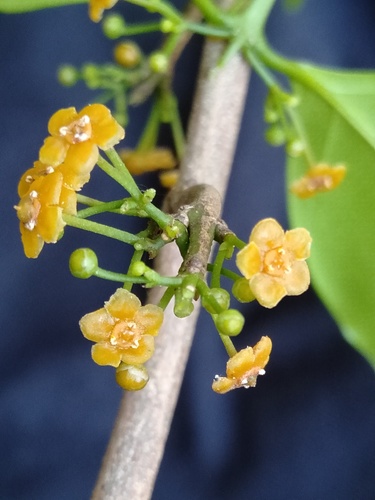
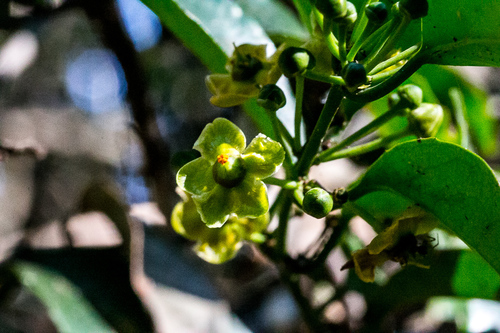
Salacia madagascariensis
(Lam.) DC.
iNaturalist· cc-by-nc
(c) David Rabehevitra, some rights reserved (CC BY-NC)
iNaturalist· cc-by-nc
(c) Guy Eric Onjalalaina, some rights reserved (CC BY-NC), uploaded by Guy Eric Onjalalaina
iNaturalist· cc-by-nc
(c) David Rabehevitra, some rights reserved (CC BY-NC)
Description
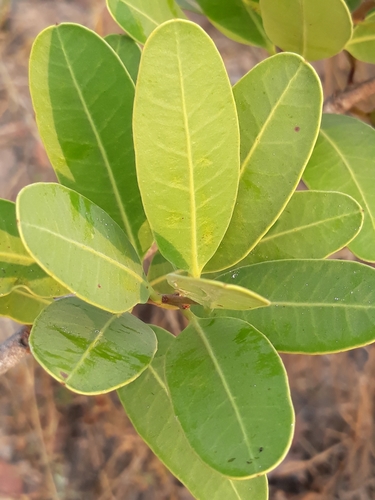
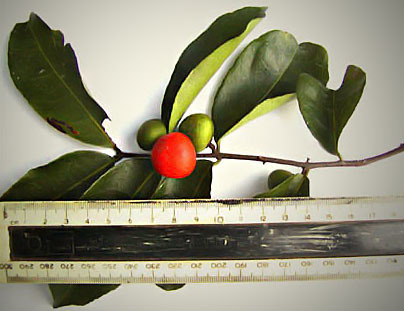
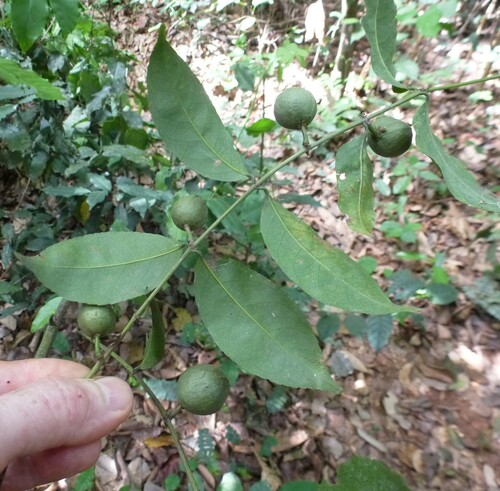
An evergreen shrub or climber. The leaves are narrowly oval and shiny. There are teeth around the edge. The flowers are in clusters and are greenish-yellow. The fruit are round and 3 cm across. They are orange to red when ripe.
Edible Uses
The fruit coat is removed and the seed discarded; the small amount of flesh inside is eaten.
Traditional Uses
The fruit coat is removed and the seed is discarded and the small amount of flesh is eaten.
This uses section is brief — help expand it
Distribution
It is a tropical plant. In Kenya it grows in coastal areas. It grows in sand and rocky areas from sea level to 500 m altitude.
Where It Grows
Africa, East Africa, Kenya, Madagascar,
Other Information
It is a famine food.
Notes
Also put in the family Hippocrateacece.
Synonyms
Also Known As
Mudzipo, Voa manandroa, Voamasoandro, Voantsimatra, Voa vonomby
References (6)
- East African Herbarium records, 1981,
- Maundu, P. et al, 1999, Traditional Food Plants of Kenya. National Museum of Kenya. 288p
- Mutie, F. M., et al, 2023, Important Medicinal and Food Taxa (Orders and Families) in Kenya, Based on Three Quantitative Approaches. Plants 2023, 12, 1145
- Peters, C. R., O'Brien, E. M., and Drummond, R.B., 1992, Edible Wild plants of Sub-saharan Africa. Kew. p 81
- Reitveld, S., 2013, The Animals and Plants of the Zazamalala Forest in Western Madagascar. p 60
Show all 6 references Hide references
- Styger, E., et al, 1999, Indigenous fruit trees of Madagascar: potential components of agroforestry systems to improve human nutrition and restore biological diversity. Agroforestry Systems 46: 289-310