Salacia luebbertii
Loes.
Leather plum
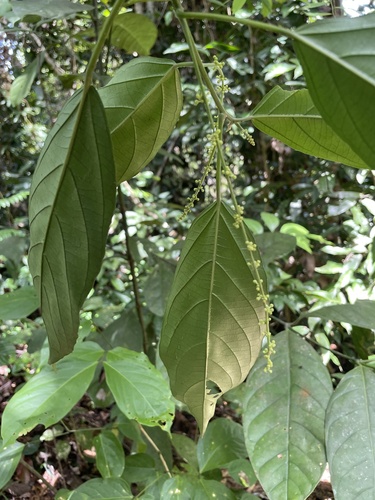
iNaturalist· cc-by-nc
(c) Peter Erb, some rights reserved (CC BY-NC)
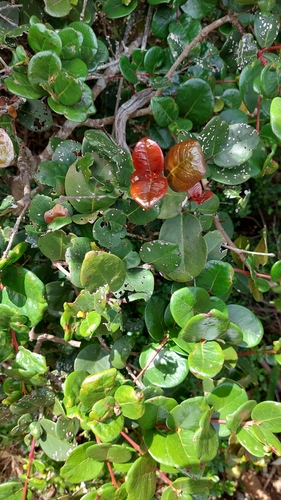
iNaturalist· cc-by-nc
(c) Peter Erb, some rights reserved (CC BY-NC)
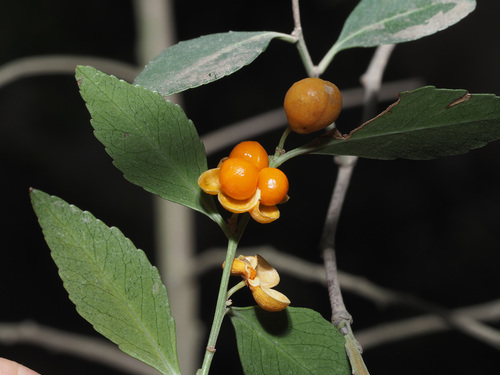
iNaturalist· cc-by-nc
(c) Peter Erb, some rights reserved (CC BY-NC)
Description
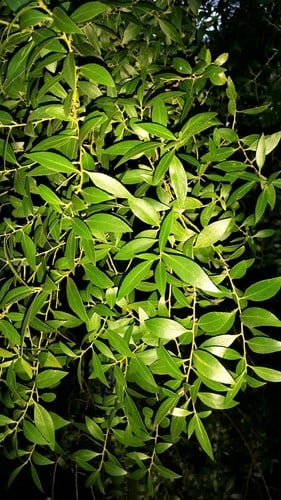
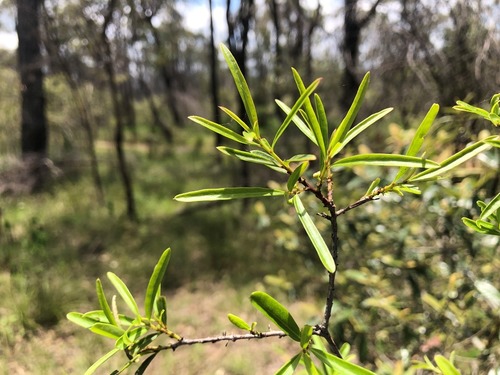
A shrub. It grows 80 cm high. The leaves are almost opposite. They are shiny and light green above and dull green underneath. The flowers are in groups or about 5 in the axils of leaves. They are yellow-orange. The fruit are orange. They are about 3 cm across.
Edible Uses
Fruit - raw. The fruit is broken up and the sweet-tasting pulp is sucked off the seeds. The pale orange-yellow to red, globose fruit can be 26 - 30mm in diameter, containing one, sometimes two or three, flattened seeds.
Traditional Uses
The fruit are eaten raw. The flesh is sucked.
This uses section is brief — help expand it
Medicinal Uses
A decoction of the roots is used in the treatment of chest pains. A strong, all-purpose medicine is made with the leaves and roots, in combination with other herbs such as the roots of Securidaca longepedunculata plus the roots and leaves of Diospyros chamaethamnus.
Distribution
It is a subtropical plant. It grows in hot arid places with a marked dry season. It grows in deep sands. It grows between 250-600 m above sea level. It can grow in arid places.
Where It Grows
Africa, Botswana, East Africa, Namibia, Southern Africa, Zambia,
Cultivation
Plants are always found on sandy soils in the wild.
Other Information
It is eaten especially by children.
Also Known As
Gorashe, Gorrasey, Korotee, Mumbete, Okadongodogono, Okandogondongo
References (14)
- Cheikhyoussef, A & Embashu, W., 2013, Ethnobotanical knowledge on Indigenous fruits in Ohangwena and Oshito regions in Northern Namibia. Journal of Ethnobiology and Ethnomedicine 9:34
- Fox, F. W. & Young, M. E. N., 1982, Food from the Veld. Delta Books. p 151
- Lee, 1979,
- Leger, S., 1997, A Description of Today's Use of Plants in West Bushmanland (Namibia). German Development Service. PO Box 220035, 14061 Berlin, Germany. http://www.sigridleger.de/book/
- Maguire, 1978,
Show all 14 references Hide references
- Maroyi, A. & Cheikhyoussef, A., 2017, Traditional knowledge of wild edible fruit in southern Africa: A comparative use patterns in Namibia and Zimbabwe. Indian Journal of Traditional Knowledge. 16(3): 385-392
- Marshall, 1976,
- Peters, C. R., O'Brien, E. M., and Drummond, R.B., 1992, Edible Wild plants of Sub-saharan Africa. Kew. p 81
- Rodin, 1985,
- Royal Botanic Gardens, Kew (1999). Survey of Economic Plants for Arid and Semi-Arid Lands (SEPASAL) database. Published on the Internet; http://www.rbgkew.org.uk/ceb/sepasal/internet [Accessed 7th April 2011]
- Ruiters-Welcome, A. K., 2019, Food plants of southern Africa. Ph.D. thesis. Univ. of Johannesburg p 44
- van Wyk, Be., & Gericke, N., 2007, People's plants. A Guide to Useful Plants of Southern Africa. Briza. p 56
- Welcome, A. K. & Van Wyk, B.-E., 2019, An inventory and analysis of the food plants of southern Africa. South African Journal of Botany 122 (2019) 136–179
- World Checklist of Useful Plant Species 2020. Royal Botanic Gardens, Kew