Maurocenia frangularia
Pers.
Hottentot's cherry, Bittersweet cherry
iNaturalist· cc-by-nc
(c) photogenie, some rights reserved (CC BY-NC)
iNaturalist· cc-by-nc
(c) photogenie, some rights reserved (CC BY-NC)
iNaturalist· cc-by-nc
(c) murraychristian, some rights reserved (CC BY-NC)
Description
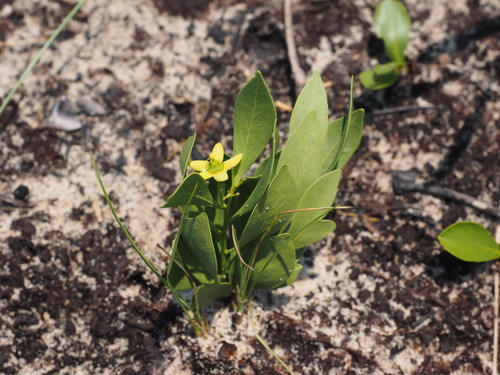
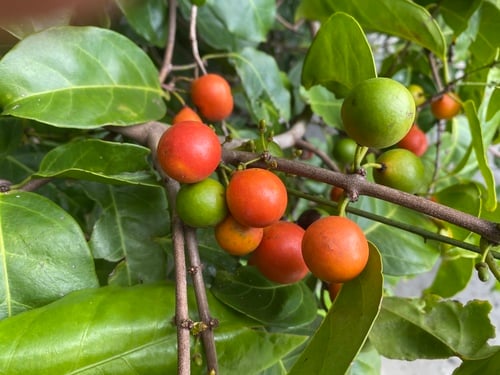
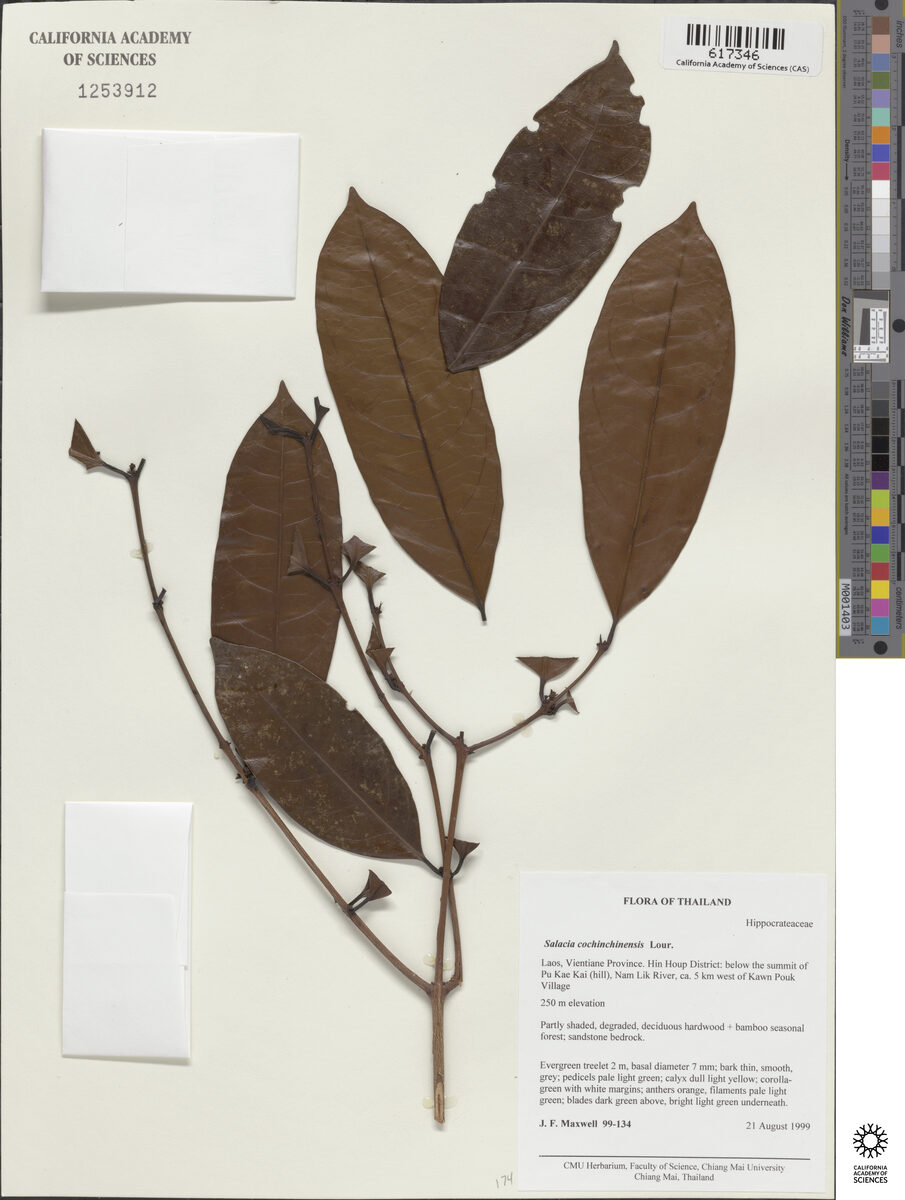
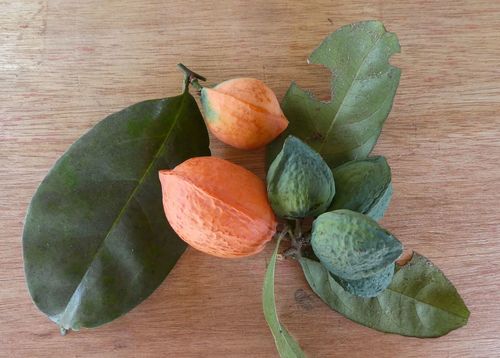
A small tree. It grows 3 m tall. The bark is grey and scaly with cracks along it. The new growth is red. The leaves are leathery and dark green above and more pale underneath. The flowers are small and yellow to white. Male and female flowers are usually on separate plants. The fruit are bright red berries that turn purple when ripe.
Edible Uses
The fruit are eaten raw.
Traditional Uses
The fruit are eaten raw.
This uses section is brief — help expand it
Distribution
It is a subtropical or Mediterranean climate plant.
Where It Grows
Africa, South Africa, Southern Africa,
Cultivation
It can be grown by seeds or cuttings. It can be grown as a hedge.
Production
It grows slowly but lives a long time.
Notes
There is only one Maurocenia species.
Synonyms
References (7)
- Fox, F. W. & Young, M. E. N., 1982, Food from the Veld. Delta Books. p 152
- Jardin, C., 1970, List of Foods Used In Africa, FAO Nutrition Information Document Series No 2.p 125 (As Cassine maurocenia)
- Palmer & Pitman, 1972,
- Peters, C. R., O'Brien, E. M., and Drummond, R.B., 1992, Edible Wild plants of Sub-saharan Africa. Kew. p 80
- Ruiters-Welcome, A. K., 2019, Food plants of southern Africa. Ph.D. thesis. Univ. of Johannesburg p 43
Show all 7 references Hide references
- Sp. pl. ed. 2, 1:385. 1762 (As Cassine maurocenia)
- Welcome, A. K. & Van Wyk, B.-E., 2019, An inventory and analysis of the food plants of southern Africa. South African Journal of Botany 122 (2019) 136–179