Xysmalobium undulatum
(L.) Aiton f.
Bitter wood, Milk bush
iNaturalist· cc-by-nc
(c) Sharon Louw, some rights reserved (CC BY-NC), uploaded by Sharon Louw
iNaturalist· cc-by-nc
(c) Sharon Louw, some rights reserved (CC BY-NC), uploaded by Sharon Louw
iNaturalist· cc-by-nc
(c) Sharon Louw, some rights reserved (CC BY-NC), uploaded by Sharon Louw
Description
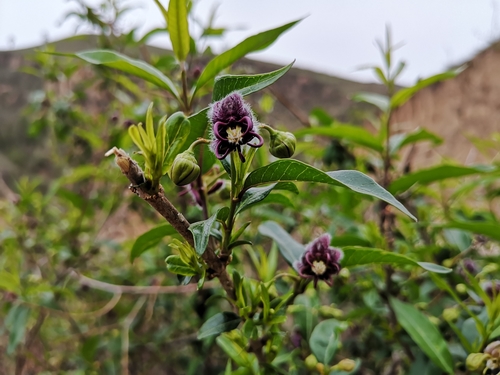
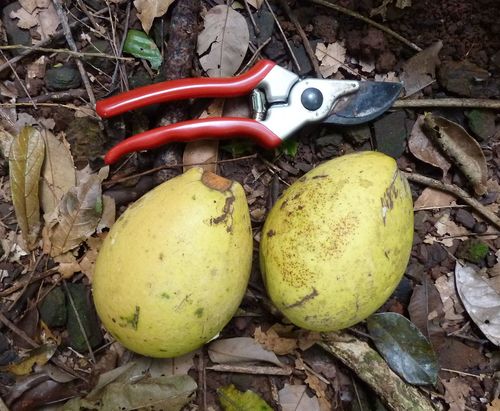
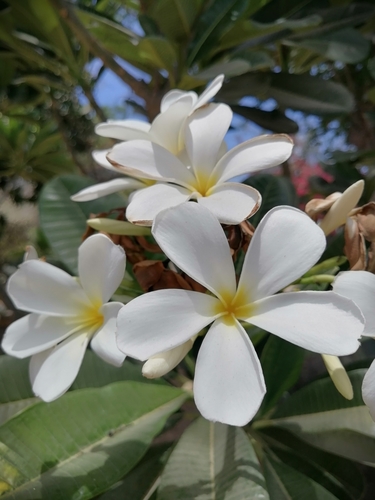
A herb. It has a stout single stem. It is erect and 1.8 m high. It has a milky latex when damaged. It is densely leafy. The leaves have short stalks. The leaf blade in oblong but broader at the base. The edges are wavy. They are 15 cm long by 5 cm wide. The flowers are in groups on the sides of the plant. They are pale yellow or greenish. They have erect lobes and white hairs at the tip. The fruit are leathery and flattened. They are 13 cm long by 4 cm wide. They have wavy hairs 2 cm long. The fruit can occur singly or in pairs.
Edible Uses
The young leaves are eaten raw or used as a cooked vegetable and for flavoring.
Traditional Uses
The young leaves are eaten. They can be eaten raw or used as a vegetable and for flavouring. Caution: The roots contain a toxic chemical that can affect the heart.
Known Hazards
The roots contain a toxic chemical that can affect the heart.
Distribution
A tropical plant. It often grows on flooded grassland. In southern Africa it grows between 80-2,000 m altitude. It can grow in arid places.
Where It Grows
Africa, Botswana, East Africa, Eswatini, Lesotho, Mozambique, Namibia, South Africa, Southern Africa, Swaziland, Tanzania, Zambia, Zimbabwe,
Synonyms
Also Known As
Bitterhout, Ilothana, Ishongwe, Itshongwe, Iyeza elimhlophe, Leshokhoa, Lethokzwa, Lishongwe, Milk bush, Mubva, Ombaruru, Pohotshehla, Umdzayi, Uzara, Vhubva
References (15)
- Fowler, D. G., 2007, Zambian Plants: Their Vernacular Names and Uses. Kew. p 76
- Fox, F. W. & Young, M. E. N., 1982, Food from the Veld. Delta Books. p 117
- Guillarmod, J., 1971,
- Jardin, C., 1970, List of Foods Used In Africa, FAO Nutrition Information Document Series No 2.p 111
- Long, C., 2005, Swaziland's Flora - siSwati names and Uses http://www.sntc.org.sz/flora/
Show all 15 references Hide references
- Martin, F.W. & Ruberte, R.M., 1979, Edible Leaves of the Tropics. Antillian College Press, Mayaguez, Puerto Rico. p 178
- Mem. Wern. Nat. Hist. Soc. 1:39. 1811 (W. T. Aiton, Hortus kew. ed. 2, 2:79. 1811)
- Ogle & Grivetti, 1985,
- Peters, C. R., O'Brien, E. M., and Drummond, R.B., 1992, Edible Wild plants of Sub-saharan Africa. Kew. p 68
- Royal Botanic Gardens, Kew (1999). Survey of Economic Plants for Arid and Semi-Arid Lands (SEPASAL) database. Published on the Internet; http://www.rbgkew.org.uk/ceb/sepasal/internet [Accessed 4th April 2011]
- Ruiters-Welcome, A. K., 2019, Food plants of southern Africa. Ph.D. thesis. Univ. of Johannesburg p 28
- Shava, S., 2000, The Use of Indigenous Plants as Food by a Rural Community in the Eastern Cape: an Educational Exploration. Masters Thesis Rhodes University. p 67
- Swaziland's Flora Database http://www.sntc.org.sz/flora (As (L.) Aiton.f.)
- Welcome, A. K. & Van Wyk, B.-E., 2019, An inventory and analysis of the food plants of southern Africa. South African Journal of Botany 122 (2019) 136–179
- World Checklist of Useful Plant Species 2020. Royal Botanic Gardens, Kew