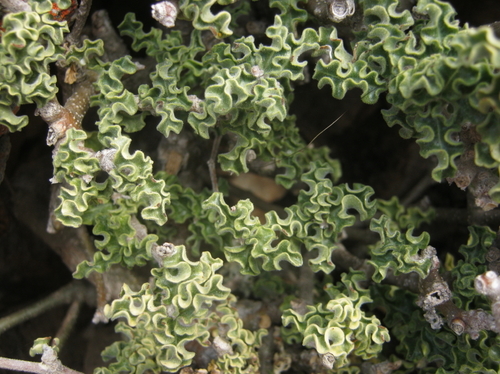
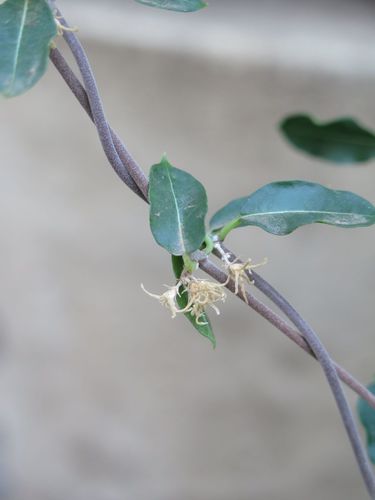
Diplorhynchus condylocarpon
(Muell. Arg.) Pichon
Horn-pod tree
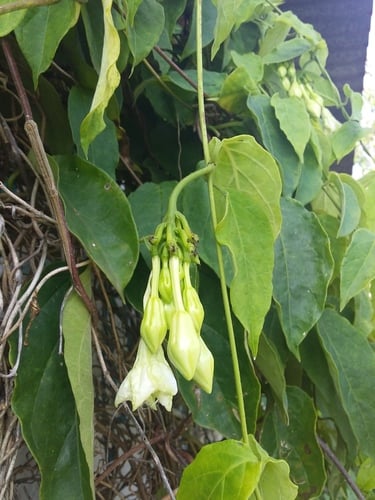
iNaturalist· cc-by-nc
(c) Clare Mateke, some rights reserved (CC BY-NC), uploaded by Clare Mateke
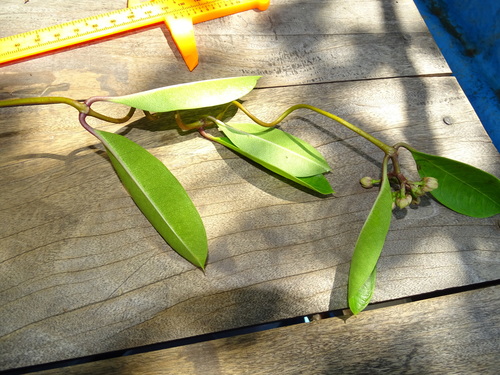
iNaturalist· cc-by-nc
(c) setlhare, some rights reserved (CC BY-NC)
Description
A tree or shrub. It can have one or many stems. It grows 3-12 m high. The trunk can be 50 cm across. The bark is rough and deeply cracked. The small branches droop. The leaves are opposite and yellowish green. The leaf blade varies in shape. It can be 4-9 cm long by 2-5 cm wide. The flowers are white or cream and in loose clusters near the ends of branches. They have a sweet scent. The flowers have a sweet scent. The fruit is made up of 2 follicles. They are woody and boat shaped.
Edible Uses
Gum is harvested from the tree.
Medicinal Uses
The plant is probably used in traditional medicine.
Distribution
It is a tropical plant. It grows in dry deciduous woodland. It can tolerate toxic serpentine derived soils. It grows from sea level to 1,700 m altitude. It is more common in the lowlands. In Zimbabwe it grows in areas with a rainfall between 600-750 mm rainfall per year.
Where It Grows
Africa, Angola, Botswana, Central Africa, Congo, East Africa, Malawi, Mozambique, Namibia, South Africa, Southern Africa, Tanzania, Zambia, Zimbabwe,
Cultivation
Usually found in deep, sandy soils in the wild. Coppicing and pollarding are appropriate management techniques - the cut trunks sprout readily from the base.
Propagation
Seed - Cuttings.
Other Uses
A fibre obtained from the bark is used for weaving in a similar way as the bark fibre of baobab (Adansonia digitata). A latex obtained from injuries to the plant is used to repair bicycle tyres. It is also used as glue to stick feathers and metal tips to arrows. The latex is also smeared on hides of drums to improve the tone. The wood is suitable for ornaments, furniture, fencing and firewood and to make charcoal.
Notes
It is probably used in medicine.
Synonyms
Also Known As
Imkamamasane, Musikanyimo, Mutohwa, Rocossi, Tocarri, Tsowa
References (8)
- de Ruijter, A., 2006. Diplorhynchus condylocarpon (Müll.Arg.) Pichon. [Internet] Record from Protabase. Schmelzer, G.H. & Gurib-Fakim, A. (Editors). PROTA (Plant Resources of Tropical Africa), Wageningen, Netherlands. < http://database.prota.org/search.htm>. Accessed 15 October 2009.
- East African Herbarium records, 1981,
- Fowler, D. G., 2007, Zambian Plants: Their Vernacular Names and Uses. Kew. p 10
- Peters, C. R., O'Brien, E. M., and Drummond, R.B., 1992, Edible Wild plants of Sub-saharan Africa. Kew. p 58
- Pickering, H., & Roe, E., 2009, Wild Flowers of the Victoria Falls Area. Helen Pickering, London. p 28
Show all 8 references Hide references
- Roodt, V., 1998, Trees & Shrubs of the Okavango Delta. Medicinal Uses and Nutritional value. The Shell Field Guide Series: Part 1. Shell Botswana. p 193
- World Checklist of Useful Plant Species 2020. Royal Botanic Gardens, Kew
- www.zimbabweflora.co.zw 2011