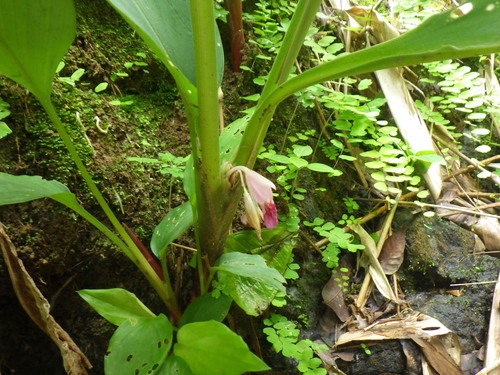
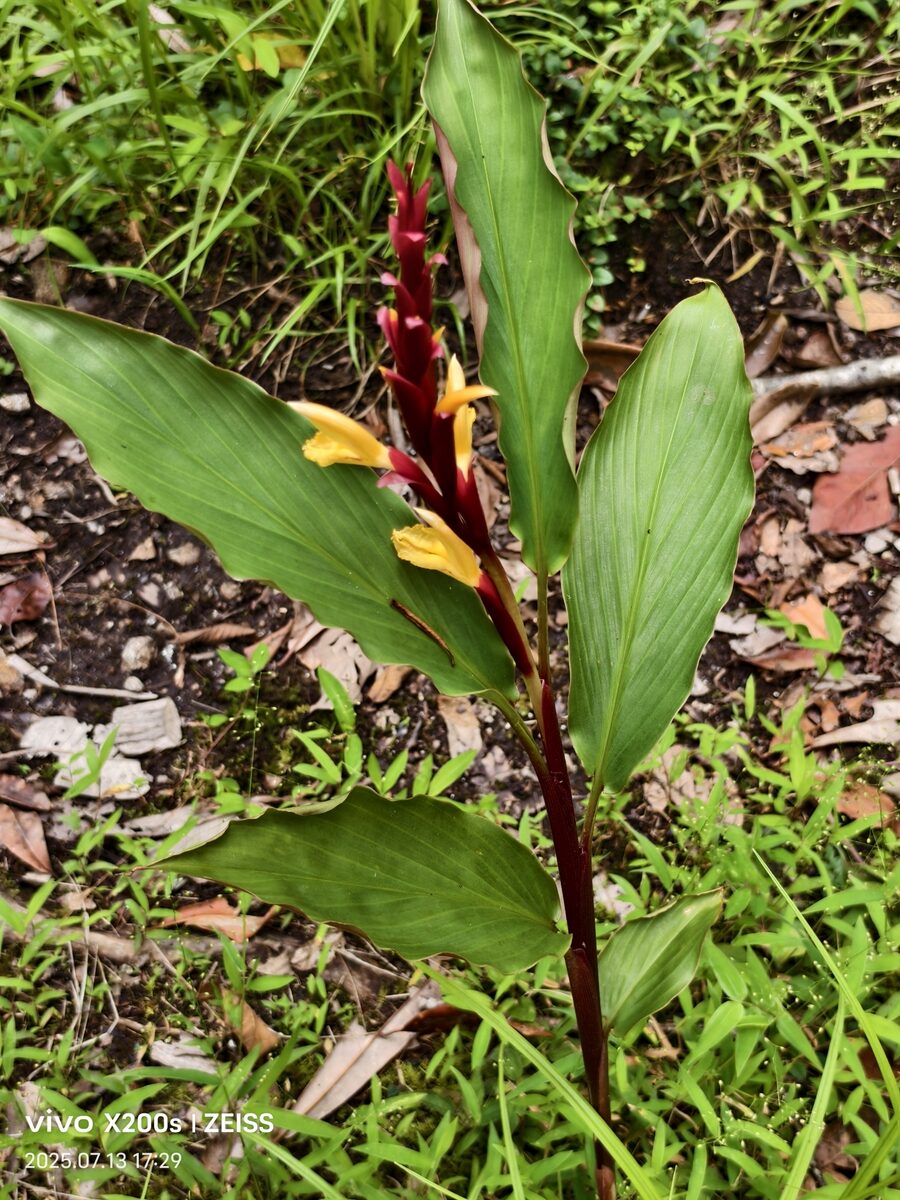
Aframomum cereum
(Hook. f..) K. Schum.
Guinea grains, Black amomum
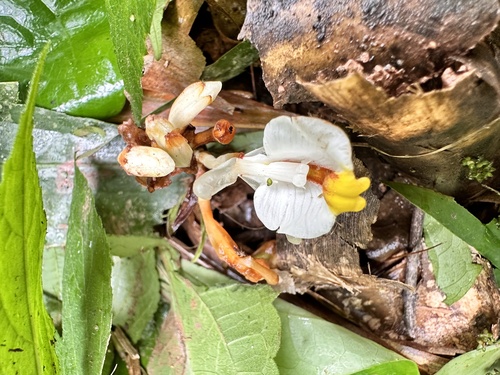
iNaturalist· cc-by-nc
(c) Carel Jongkind, some rights reserved (CC BY-NC), uploaded by Carel Jongkind
iNaturalist· cc-by-nc
(c) Carel Jongkind, some rights reserved (CC BY-NC), uploaded by Carel Jongkind
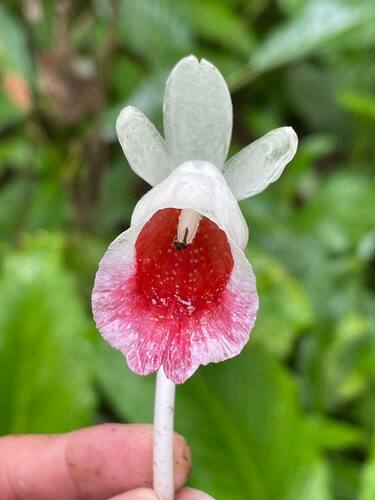
iNaturalist· cc-by-nc
(c) Carel Jongkind, some rights reserved (CC BY-NC), uploaded by Carel Jongkind
Summary
Source: WikipediaAframomum cereum is a monocotyledonous plant species in the family Zingiberaceae that was first described by Joseph Dalton Hooker, and got its current name from Karl Moritz Schumann.
Description
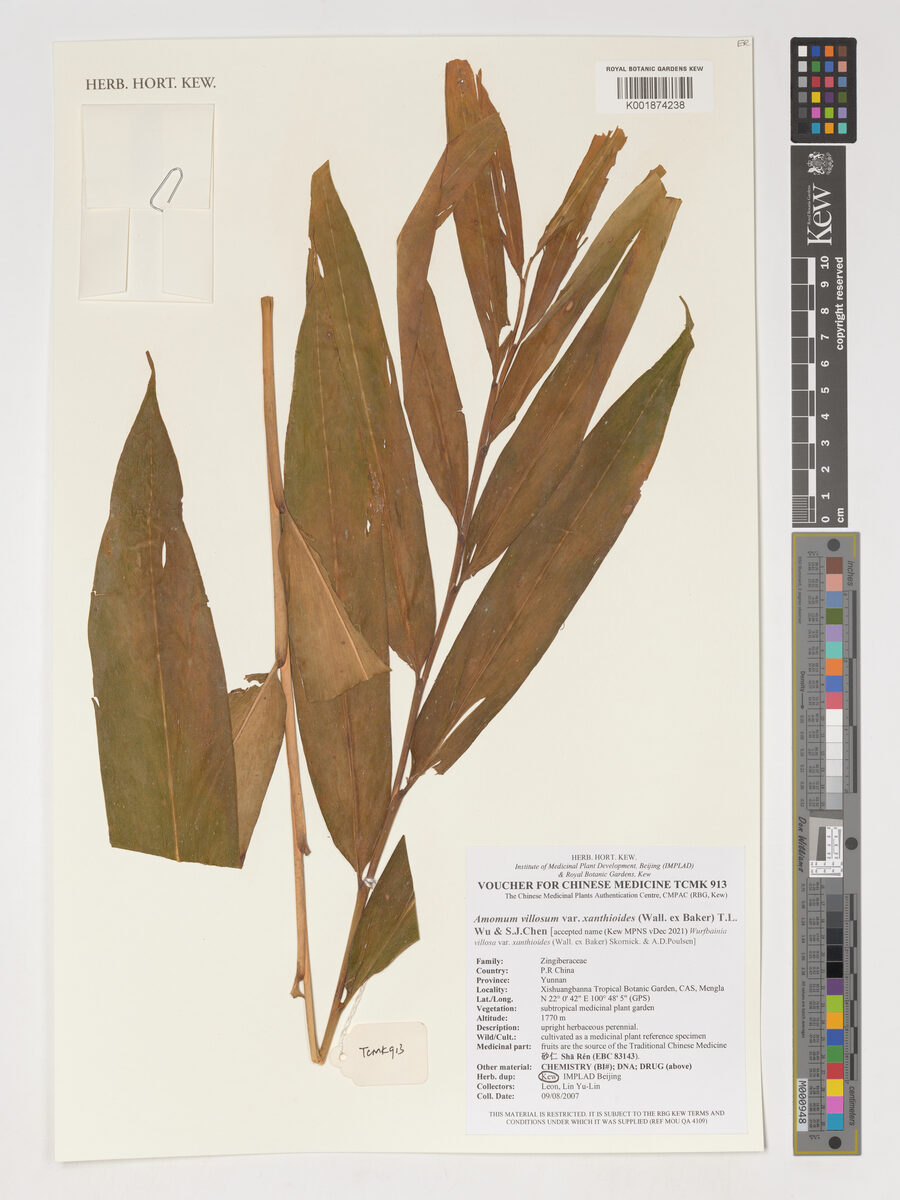
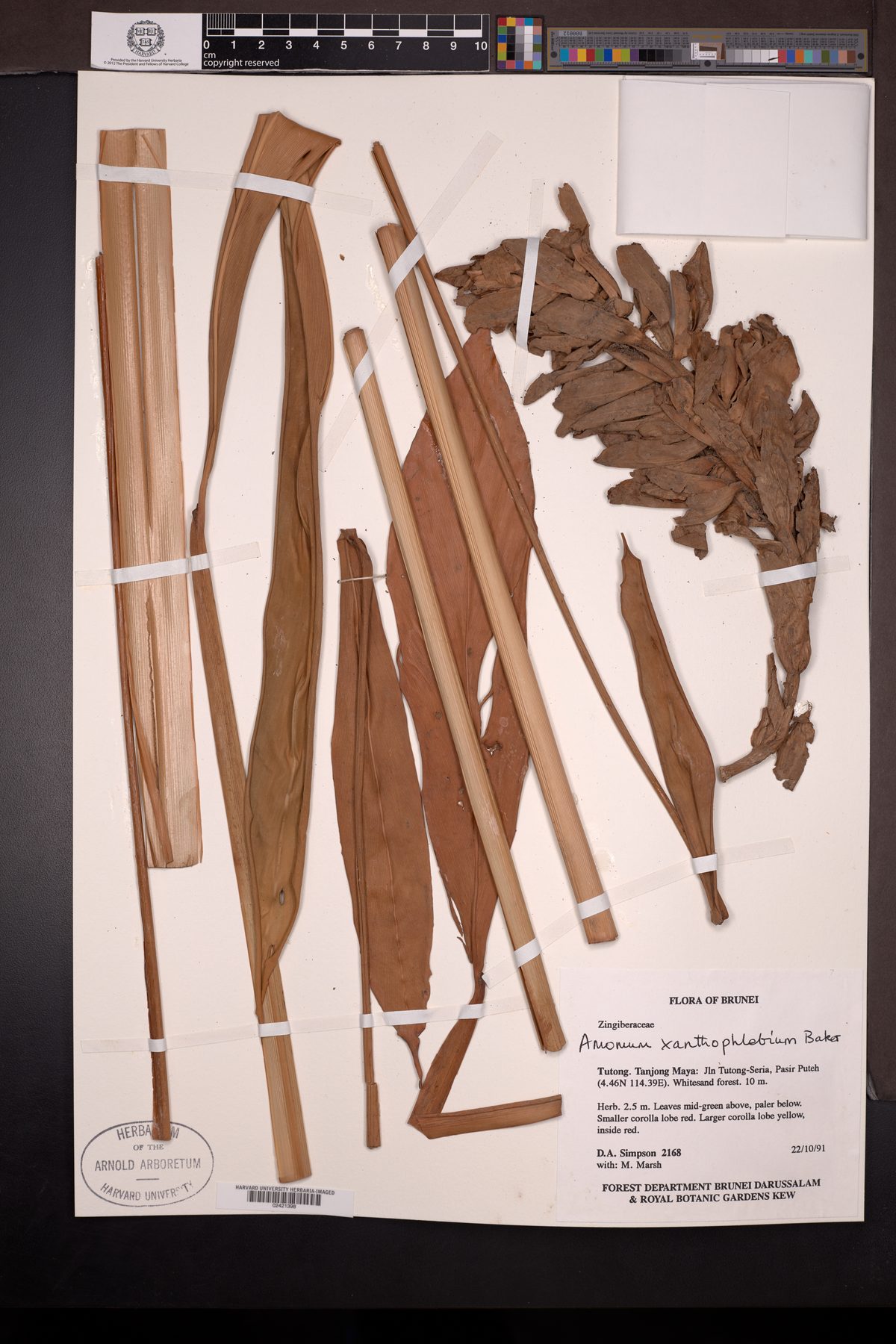
A ginger family herb. It has rhizomes or underground stems. It keeps growing from year to year and grows 2 m high and spreads 1 m wide. The stems are erect. They are leafy. The leaves are oblong and taper to the tip. They are bright green. They have parallel veins. The leaves are 25 cm long and sheath the stem. The flowers are mauve. They are in spikes at the ends of the plant. The fruit are acid. They are in long spikes. The seeds are brown.
Edible Uses
The dark red, succulent fruit are edible, and the leaves are used fresh as a spice and flavoring agent.
Traditional Uses
The dark red fruit are succulent and edible. The leaves are used as a spice and flavouring.
This uses section is brief — help expand it
Known Hazards
The plant is sensitive to drought and frost, limiting its cultivation range.
Distribution
It is a tropical plant. It needs humus-rich moist soil. It is best in a protected shaded position. It is sensitive to drought and frost.
Where It Grows
Africa*, Angola, Australia, Benin, Cameroon, Central Africa, Central African Republic, Congo R, Congo DR, Côte d'Ivoire, Gabon, Ghana, Guinea, Guinée, Guinea-Bissau, Ivory Coast, Liberia, Nigeria, Senegal, Sierra Leone, Togo, West Africa,
Cultivation
Plants are grown by division.
Notes
There are about 50 Aframomum species.
Synonyms
Also Known As
Nanga
References (12)
- Bircher, A. G. & Bircher, W. H., 2000, Encyclopedia of Fruit Trees and Edible Flowering Plants in Egypt and the Subtropics. AUC Press. p 11 (As Aframomum sceptrum and Aframomum masuianum)
- Bodkin, F., 1991, Encyclopedia Botanica. Cornstalk publishing, p 55 (As Aframomum sceptrum)
- Burkill, H. M., 1985, The useful plants of west tropical Africa, Vol. 5. Kew. (As Aframomum sceptrum)
- Codjia, J. T. C., et al, 2003, Diversity and local valorisation of vegetal edible products in Benin. Cahiers Agricultures 12:1-12 (As Aframomum sceptrum)
- Dalziel, J. M., 1937, The Useful plants of west tropical Africa. Crown Agents for the Colonies London. (As Aframomum sceptrum)
Show all 12 references Hide references
- Djihounouck, Y., et al, 2018, Diversité Et Importance Socio-Economique Des Espèces Fruitières Sauvages Comestibles En Zone Kasa (Sud-Ouest Du Sénégal). European Scientific Journal December 2018 edition Vol.14, No.36 ISSN: 1857 – 7881
- e-monocot.org/taxon/urn:kew.org:wcs:taxon:218357
- Gallois, S., et al, 2020, Methodological priorities in assessing wild edible plant knowledge and use – a case study among the Baka in Cameroon. (As Aframomum sceptrum)
- N'Danikou, S. et al, 2010, Eliciting Local Values of Wild Edible Plants in Southern Bénin to Identify Priority Species for Conservation. Economic Botany, 20(10), 2011, pp. 1–15.
- Peters, C. R., O'Brien, E. M., and Drummond, R.B., 1992, Edible Wild plants of Sub-saharan Africa. Kew. p 42 (As Aframomum sceptrum)
- Seidemann J., 2005, World Spice Plants. Economic Usage, Botany, Taxonomy. Springer. p 11 (As Aframomum sceptrum)
- World Checklist of Useful Plant Species 2020. Royal Botanic Gardens, Kew