Drimia sanguinea
(Schinz) Jessop
Red slangkop
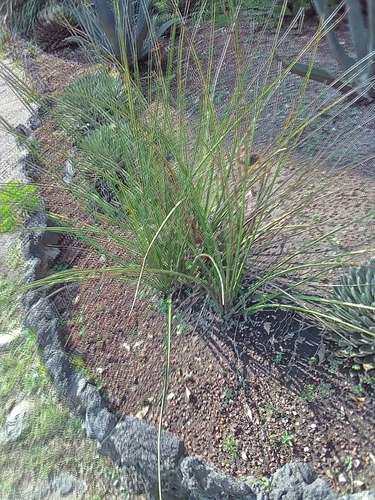
iNaturalist· cc-by-nc
(c) Richard Gill, some rights reserved (CC BY-NC), uploaded by Richard Gill
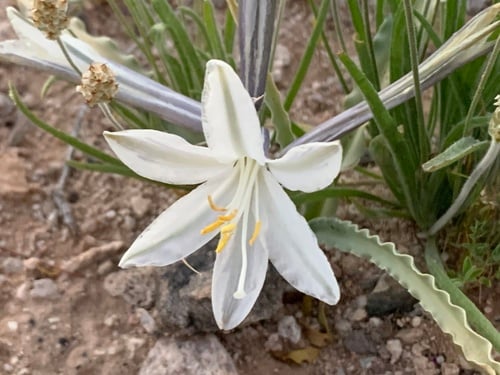
iNaturalist· cc-by-nc
(c) Tony Benn, some rights reserved (CC BY-NC), uploaded by Tony Benn
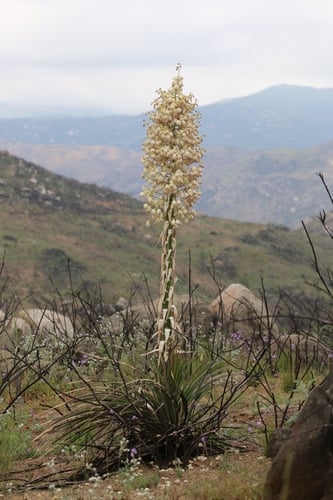
iNaturalist· cc-by-sa
(c) Andrew Hankey, some rights reserved (CC BY-SA), uploaded by Andrew Hankey
Description
A bulb plant. The bulbs are large and red. It is 5-7 cm wide. It has tightly packed scales. There are 3-5 erect leaves. They are 25-35 cm tall and 4-10 mm wide. The flowering shoots are 20-45 cm tall.
Edible Uses
The leaves are eaten as a vegetable.
Distribution
It is a tropical plant.
Where It Grows
Africa, Botswana, East Africa, Namibia, South Africa, Southern Africa, Zimbabwe,
Notes
Also put in the family Hyacinthaceae.
Synonyms
Sekanama burkei (Baker) SpetaSekanama sanguinea (Schinz) SpetaUrginea burkei BakerUrginea rautanenii BakerUrginea sanguinea Schinz
Also Known As
Rabasa, Sekaname
References (5)
- Grivetti, 1976, 1979, (As Urginea sanguinea)
- Grivetti, L. E., 1980, Agricultural development: present and potential role of edible wild plants. Part 2: Sub-Saharan Africa, Report to the Department of State Agency for International Development. p 80 (As Urginea sanguinea)
- Peters, C. R., O'Brien, E. M., and Drummond, R.B., 1992, Edible Wild plants of Sub-saharan Africa. Kew. p 31 (As Urginea sanguinea)
- Ruiters-Welcome, A. K., 2019, Food plants of southern Africa. Ph.D. thesis. Univ. of Johannesburg p 65
- Welcome, A. K. & Van Wyk, B.-E., 2019, An inventory and analysis of the food plants of southern Africa. South African Journal of Botany 122 (2019) 136–179