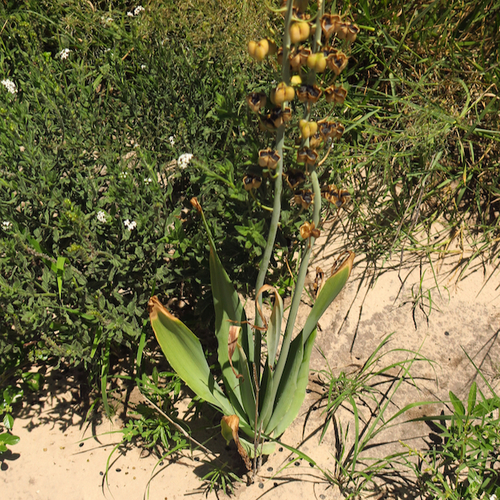
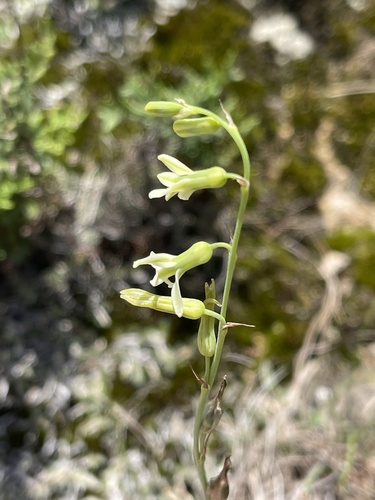
Drimia altissima
(L. f.) Ker Gawl.
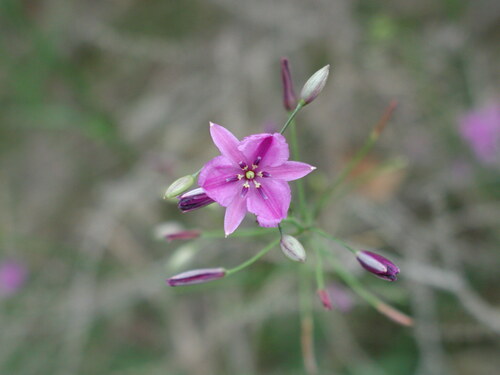
iNaturalist· cc-by-nc
(c) Riana Fourie, some rights reserved (CC BY-NC), uploaded by Riana Fourie
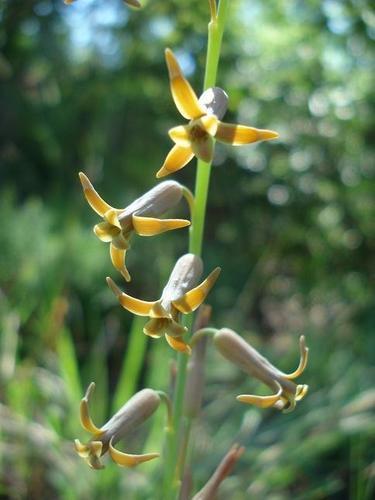
iNaturalist· cc-by-nc
(c) Heinrich Human, some rights reserved (CC BY-NC), uploaded by Heinrich Human
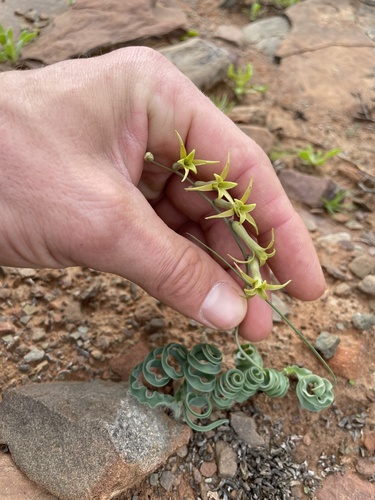
iNaturalist· cc-by-nc
(c) Troos van der Merwe, some rights reserved (CC BY-NC), uploaded by Troos van der Merwe
Description
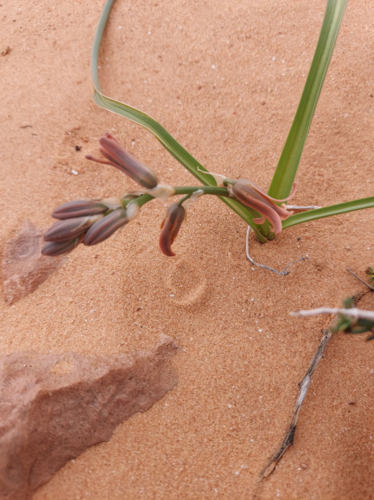
A herb that keeps growing from year to year. It grows 2 m tall. The leaves are in a small ring near the base. They are greyish-green. The flowers occur as about 100 on a long spike. They are white with a green midrib.
Edible Uses
The bulb is eaten raw. The root contains starch, and the fruit and stem are also edible.
Traditional Uses
The bulb is eaten raw.
This uses section is brief — help expand it
Medicinal Uses
The bulb is traditionally eaten raw.
Known Hazards
Although used medicinally, the bulb is poisonous in anything but small doses.
Distribution
It is a subtropical plant. It grows in open woodland. It can grow in arid places.
Where It Grows
Africa, Botswana, Burkina Faso, Cameroon, Central Africa, Côte d'Ivoire, East Africa, Gambia, Ghana, Guinea, Guinée, Guinea-Bissau, Ivory Coast, Mali, Nigeria, Senegal, Sierra Leone, South Africa, Southern Africa, Sudan, West Africa, Zambia, Zimbabwe,
Other Uses
The starch from the bulbs is used to stiffen the hair.
Notes
Also put in the family Hyacinthaceae.
Synonyms
References (6)
- Belem, M., et al, 2017, Strategy of Conservation and Protection of Wild Edible Plants Diversity in Burkina Faso. ANADOLU 27 (2) 2017, 82- 90 (As Urginea altissima)
- Herb., E. A., 1981, (As Urginea altissima)
- Peters, C. R., O'Brien, E. M., and Drummond, R.B., 1992, Edible Wild plants of Sub-saharan Africa. Kew. p 31 (As Urginea altissima)
- Pickering, H., & Roe, E., 2009, Wild Flowers of the Victoria Falls Area. Helen Pickering, London. p 65 (As Urginea altissima)
- Royal Botanic Gardens, Kew (1999). Survey of Economic Plants for Arid and Semi-Arid Lands (SEPASAL) database. Published on the Internet; http://www.rbgkew.org.uk/ceb/sepasal/internet [Accessed 16th April 2011] (As Urginea altissima)
Show all 6 references Hide references
- World Checklist of Useful Plant Species 2020. Royal Botanic Gardens, Kew