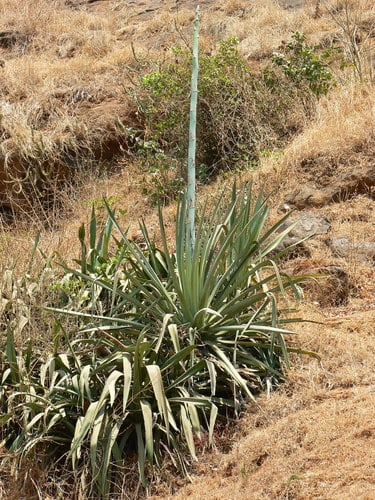
Polygonatum verticillatum
(L.) All.
Whorled Solomon's seal
iNaturalist· cc-by-nc
(c) Zdeňka Nováková, some rights reserved (CC BY-NC), uploaded by Zdeňka Nováková
iNaturalist· cc-by-nc
(c) Yves Krippel, some rights reserved (CC BY-NC), uploaded by Yves Krippel
iNaturalist· cc-by
(c) Wolfgang Jauch, some rights reserved (CC BY), uploaded by Wolfgang Jauch
Summary
Source: WikipediaPolygonatum verticillatum or whorled Solomon's-seal is a plant species of the genus Polygonatum. It is widespread in Europe and also in China and the Himalayas though not reported from large sections of western and Central Asia in between those two ranges.
Description
A herb. It grows to 1 m high. It has a rhizome or underground stem. This is 0.7-1.5 cm thick. The stem is angled and grooved. The leaves do not have stalks. They occur as 3-8 in rings. The leaf blade is 6-10 cm long by 0.5-3 cm wide. They are narrow and sword shaped. There are hairs along the edge. The edges are slightly rolled in. They taper to the tip. The flowers are white. They occur as two together on stalks in the axils of leaves. The flowers hang down. The fruit are berries. They are red and 6-9 mm across. There are 6-12 seeds.
Edible Uses
Tender leaves and young shoots are cooked as a vegetable and can serve as an asparagus substitute. The root is also eaten cooked and is rich in starch.
Traditional Uses
The tender leaves and shoots are cooked as a vegetable. They are also used for soup. The ripe fruits are eaten. The rhizomes are considered strengthening food. They are eaten raw.
Medicinal Uses
None known
Distribution
It is a temperate plant. In Nepal they grow between 2000-4000 m altitude.
Where It Grows
Afghanistan, Asia, Australia, Bhutan, Britain, China, Europe, Greece, Himalayas, India, Italy, Luxembourg, Mediterranean, Nepal, Northeastern India, Pakistan, Russia, Siberia, Sikkim, Slovenia, Tibet,
Cultivation
Plants are grown from seed or by root tubers.
Propagation
Seed is best sown as soon as it is ripe in early autumn in a shady part of a cold greenhouse. Stored seed should be sown as early in the year as possible. Germination can be slow, seedlings may not come true to type, and it takes several years to reach a good size. Prick seedlings into individual pots when large enough to handle and grow on in a shady position in the greenhouse for at least their first winter, then plant out in late spring or early summer after the last expected frosts. Divide in March or October. Larger divisions can go directly into permanent positions, while smaller ones are better potted up and grown on in light shade in a cold frame until well established before planting out in late spring or early summer.
Other Uses
None known Special Uses
Notes
There are about 50 Polygonatum species. Also put in the family Convallariaceae.
Synonyms
Also Known As
Khakan, Khinraula, Khirangalo, Khol, Khulung, Lun ye huang jing, Mahameda, Mithadudia, Ra-mnye, Rang bu jiang jiang, Ranye, Ranye goepa, Rawa nyalu, Salam misari, Schiavone, Shakakul, Sparice calice, Tse-met-che, Vretenčasti salomonov pečat
References (24)
- Ambasta, S.P. (Ed.), 2000, The Useful Plants of India. CSIR India. p 478
- Biscotti, N. et al, 2018, The traditional food use of wild vegetables in Apulia (Italy) in the light of Italian ethnobotanical literature. Italian Botanist 5:1-24
- Boesi, A., 2014, Traditional knowledge of wild food plants in a few Tibetan communities. Journal of Ethnobiology and Ethnomedicine 10:75
- Chen, W., et al, 2021, Wild plants used by the Lhoba people in Douyu Village, characterized by high mountains and valleys, in southeastern Tibet, China. Journal of Ethnobiology and Ethnomedicine (2021) 17:46
- Chen Xinqi, Liang Songyun, Xu Jiemei, Tamura M.N., Liliaceae. Flora of China. p 161
Show all 24 references Hide references
- Dangol, D. R. et al, 2017, Wild Edible Plants in Nepal. Proceedings of 2nd National Workshop on CUAOGR, 2017.
- Ding, X., 2021, Collection calendar: the diversity and local knowledge of wild edible plants used by Chenthang Sherpa people to treat seasonal food shortages in Tibet, China. Journal of Ethnobiology and Ethnomedicine 17:40
- Fl. pedem. 1:131. 1785
- Flora of Pakistan. www.eFloras.org
- Gautam, R. S., et al, 2022, Ethnobotanical Review of Wild Edible Plants of Nepal. Journal of Natural History Museum Volume 32, 2021-22 p 105
- Ghimire, S. K., et al, 2008, Non-Timber Forest Products of Nepal Himalaya. WWF Nepal p 100
- Hibbert, M., 2002, The Aussie Plant Finder 2002, Florilegium. p 238
- http://www.botanic-gardens-ljubljana.com/en/plants
- Joshi, N., et al, 2007, Traditional neglected vegetables of Nepal: Their sustainable utilization for meeting human needs. Tropentag 2007. Conference on International Agricultural Research for Development.
- Manandhar, N.P., 2002, Plants and People of Nepal. Timber Press. Portland, Oregon. p 374
- Masoodi, H. U. R. & Sundriyal, R. C., 2020, Richness of non-timber forest products in Himalayan communities—diversity, distribution, use pattern and conservation status. Journal of Ethnobiology and Ethnomedicine 16:56
- Misra, S. et al, 2008, Wild leafy vegetables: A study of their subsistence dietetic support to the inhabitants of Nanda Devi Biosphere reserve, India. Journal of Ethnobiology and Ethnomedicine. 4:15
- Plants for a Future database, The Field, Penpol, Lostwithiel, Cornwall, PL22 0NG, UK. http://www.scs.leeds.ac.uk/pfaf/
- Radha, B., et al, 2013, Wild Edible Plant Resources of the Lohba Range of Kedarnath Forest Division (KFD), Garhwal Himalaya, India. Int. Res J. Biological Sci. Vol. 2 (11), 65-73
- Rawat, G.S., & Pangtey, Y.P.S., 1987, A Contribution to the Ethnobotany of Alpine Regions of Kumaon. J. Econ. Tax. Bot. Vol. 11 No. 1 pp 139-147 (Wrongly as Polygonum verticillatum)
- Ryan, S., 2008, Dicksonia. Rare Plants Manual. Hyland House. p 110
- Singh, H.B., Arora R.K.,1978, Wild edible Plants of India. Indian Council of Agricultural Research, New Delhi. p14
- Wujisguleng, W., et al, 2012, Ethnobotanical review of food uses of Polygonatum (Convallariaceae) in China. Acta Societatis Botanicorum Poloniae 81(4):239-244
- Yeshi, K. et al, 2017, Taxonomical Identification of Himalayan Edible Medicinal Plants in Bhutan and the Phenolic Contents and Antioxidant Activity of Selected Plants. TBAP 7 (2) 2017 pp 89 - 106