Eragrostis curvula
(Schrad.) Nees
Weeping lovegrass
iNaturalist· cc-by
(c) Ed Alverson, some rights reserved (CC BY), uploaded by Ed Alverson
iNaturalist· cc-by
(c) Ed Alverson, some rights reserved (CC BY)
iNaturalist· cc-by
(c) Ed Alverson, some rights reserved (CC BY)
Summary
Source: WikipediaEragrostis curvula is a species of grass known by the common name weeping lovegrass. Other common names include Boer lovegrass, curved lovegrass, Catalina lovegrass, and African lovegrass. It is native to southern Africa. It is an introduced species on other continents.
Description
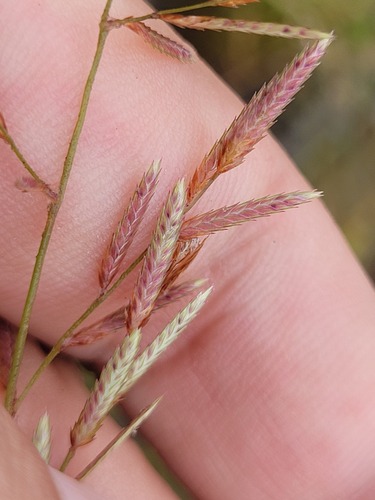
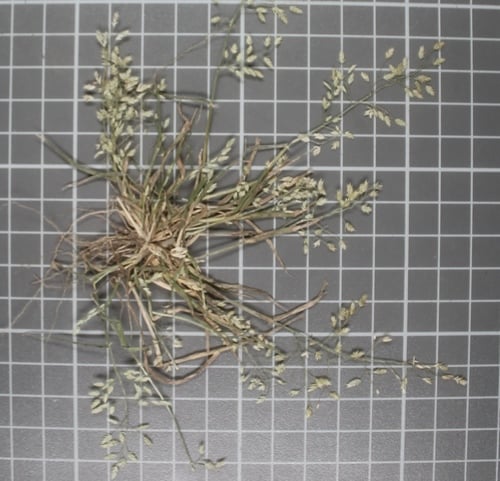
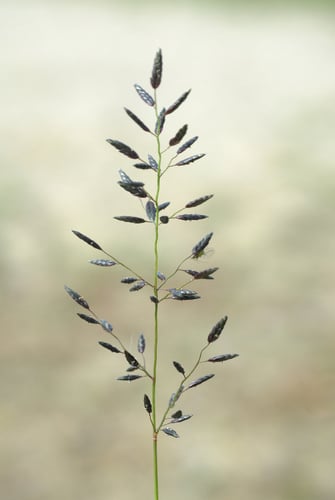
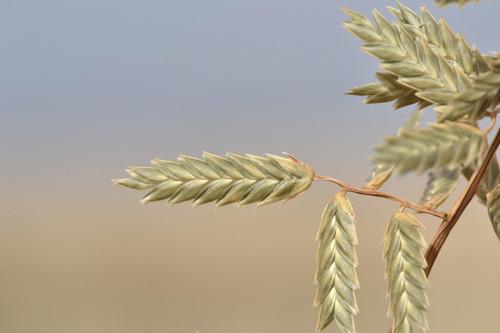
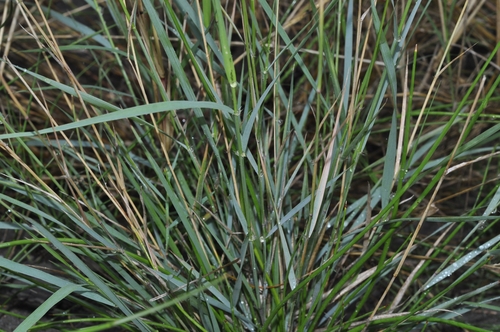
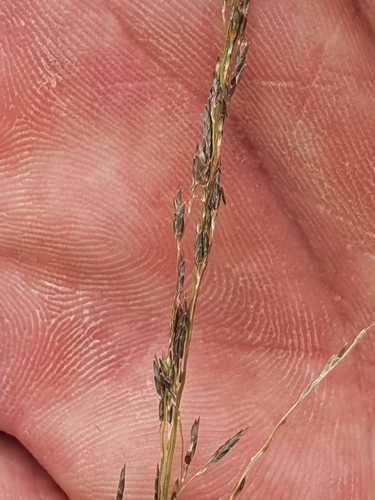
A grass. A densely tufted plant. It keeps growing from year to year. It grows 60-100 cm high. There are many leaves and they are very narrow They have a fine tip. The flowering shoots can be 30 cm long. There are many flowering spikes lying close to the branch. They are dark grey-green. They are 5-6 mm long.
Edible Uses
Seed - cooked. Used as a grain. The seed is small and fiddly to utilize - it is most commonly seen as a famine food, used when nothing better is available.
Traditional Uses
The seeds are used for bread and also for making beer.
This uses section is brief — help expand it
Medicinal Uses
None known
Distribution
It is a tropical to temperate plant. It grows in humid but not wet soils. It grows in hot arid areas with an annual rainfall between 300-1,000 mm. It can grow in acid and weakly salty soils. It grows from sea level to 3,500 m above sea level. It will re-grow after fire. It can grow in sands and alkaline soils. It can grow in arid places. In Yunnan.
Where It Grows
Africa, Angola, Argentina, Asia, Australia, Botswana, Brazil, Burundi, Central Africa, Chile, China, East Africa, Eswatini, Iran, Kenya, Korea, Lesotho, Middle East, Mozambique, Myanmar, Namibia, North America, Pakistan, SE Asia, South Africa, Southern Africa, St Helena, Swaziland, Taiwan, Tanzania, Tasmania, Uruguay, USA, Yemen, Zambia, Zimbabwe,
Cultivation
Weeping love grass is a plant of the tropics and subtropics of Africa, widely cultivated as a pasture grass in other parts of the tropics. It grows best in areas where the mean annual temperatures are within the range 5.9 to 26.2°c and, when dormant, can survive temperatures down to about -5°c. It prefers a mean annual rainfall in the range 310 - 1630mm. Prefers an open, sunny position. Easily grown in most well-drained soils, preferring sandy loams. It is adapted to semi-arid and desert areas and sandy soils, growing well on low fertility soils. Prefers a pH in the range of 5.0 to 8.2. Once established, it is a very drought-resistant plant. The roots contain pyrocatechol, suggesting an explanation for the plants resistance to nematodes. The species and its varieties are apomictic (producing seed without fertilization) although sexual plants have occasionally been found.
Propagation
Sow seed in early spring in a greenhouse, barely covering it. Germination typically occurs within 2 weeks. Once seedlings are large enough to handle, prick them out into individual pots and plant outside after the last expected frost. Seed can also be sown in situ in mid to late spring, though in a cool summer it may not ripen many seeds. Division can be carried out in spring.
Other Uses
A deep-rooted plant considered excellent for protecting terraces, grassing water channels, and controlling erosion. In Lesotho, the plant is used to make baskets, brooms, hats, ropes, and candles.
Other Information
It is a famine food.
Synonyms
References (12)
- Akinola, R., et al, 2020, A Review of Indigenous Food Crops in Africa and the Implications for more Sustainable and Healthy Food Systems. Sustainability 2020, 12, 3493;
- Flora of Pakistan. www.eFloras.org
- Fox, F. W. & Young, M. E. N., 1982, Food from the Veld. Delta Books. p 301
- Guillarmod, J., 1971,
- Long, C., 2005, Swaziland's Flora - siSwati names and Uses http://www.sntc.org.sz/flora/
Show all 12 references Hide references
- Peters, C. R., O'Brien, E. M., and Drummond, R.B., 1992, Edible Wild plants of Sub-saharan Africa. Kew. p 22
- Royal Botanic Gardens, Kew (1999). Survey of Economic Plants for Arid and Semi-Arid Lands (SEPASAL) database. Published on the Internet; http://www.rbgkew.org.uk/ceb/sepasal/internet [Accessed 3rd June 2011]
- Ruiters-Welcome, A. K., 2019, Food plants of southern Africa. Ph.D. thesis. Univ. of Johannesburg p 87
- Swaziland's Flora Database http://www.sntc.org.sz/flora
- van Wyk, Be, & Gericke, N., 2007, People's plants. A Guide to Useful Plants of Southern Africa. Briza. p 10
- Welcome, A. K. & Van Wyk, B.-E., 2019, An inventory and analysis of the food plants of southern Africa. South African Journal of Botany 122 (2019) 136–179
- World Checklist of Useful Plant Species 2020. Royal Botanic Gardens, Kew