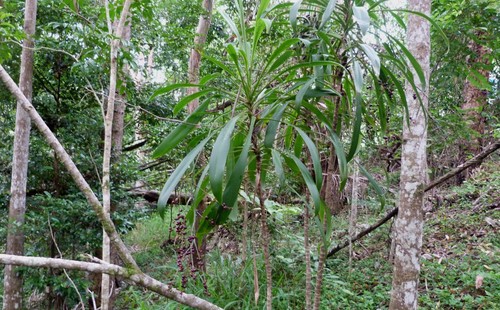
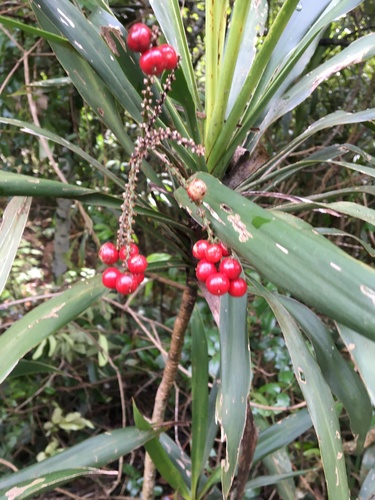
Sansevieria aethiopica
Thunb.
Bowstring hemp
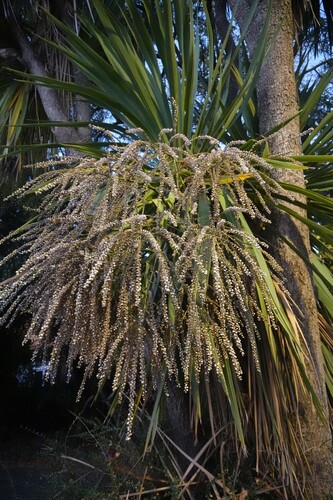
iNaturalist· cc-by-nc
(c) Richard Gill, some rights reserved (CC BY-NC), uploaded by Richard Gill
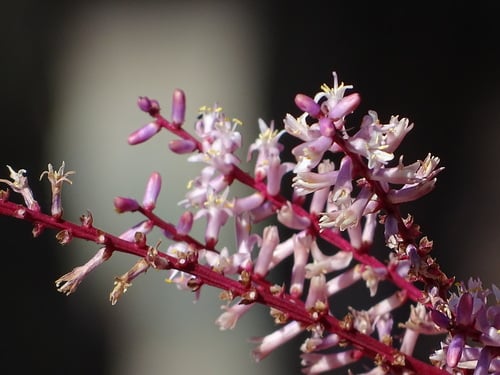
iNaturalist· cc-by-nc
(c) Tony Benn, some rights reserved (CC BY-NC)
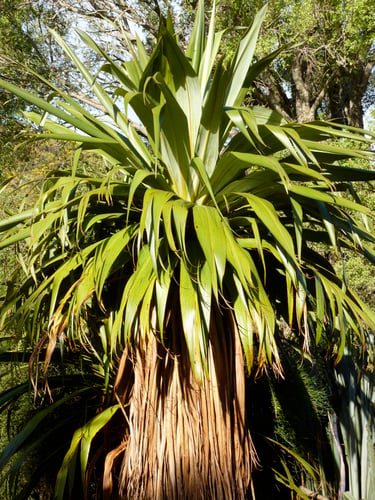
iNaturalist· cc-by-nc
(c) leewarren, some rights reserved (CC BY-NC)
Description
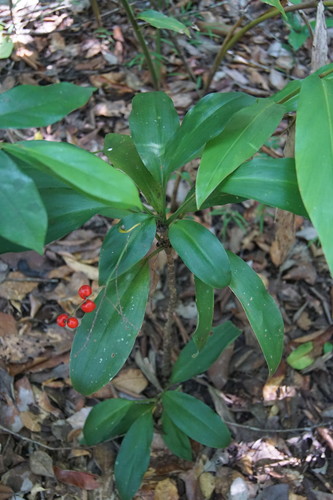
A succulent plant. It keeps growing from year to year. It has a creeping rhizome. The leaves are narrow and grow upright from this. They leaves are 30-40 cm long. The flowering plant can be 60 cm high. The leaves are rigid and fibrous. They are dull green with white blotches. The flowers are tube shaped and open at night. They are cream or green. The fruit are red berries.
Edible Uses
The root and rhizome provide water in dry places, though the root can be bitter. The roots are used to make dairy-like products, rennet, or milk substitute and can curdle milk. The fruit is eaten as a snack.
Traditional Uses
The root is used as a source of water in dry places but it can be bitter. The roots are used to make a dairy like product or rennet or milk substitute. It can curdle milk. The fruit is eaten as a snack.
Medicinal Uses
The leaves are bruised, then heated for a short time. They are then twisted by hand and the fluid thus obtained is dripped into the ear as a cure for ear problems.
Distribution
It is a tropical plant. It grows in sandy soil and in shady places. It grows in hot arid places with a marked dry season. It grows in well-drained soils often over limestone material. It grows between 100-1,465 m above sea level. It is common in the Kalahari. It can grow in arid places.
Where It Grows
Africa, Australia, Botswana, East Africa, Ethiopia, Namibia, South Africa, Southern Africa, Zambia, Zimbabwe,
Cultivation
Sansevieria aethiopica is native to the tropics and subtropics of southern Africa where it grows primarily in the desert or dry shrubland biome. It is not very frost hardy, though it can succeed outdoors in the mildest parts of the temperate zone if it is given a selected sunny position. Requires a very sunny position in a very well-drained sandy gritty loam and a pH between 6 and 7. Plants must be kept dry after they have flowered. Established plants are drought tolerant.
Propagation
Seed - Division of suckers as growth commences in the spring. Leaf-cuttings, 7cm long placed in sand in a frame. The leaf is cut into sections, the cut surfaces allowed to dry for a few hours, and the sections then placed in pots in a warm light frame, but with shelter from direct sunlight. Rooting and new growth should take place within a month.
Other Uses
A high quality fibre is obtained from the leaves. It is used for making sails and paper.
Notes
Also put in the family Dracaenaceae.
Synonyms
Also Known As
Eyasigo, Mosokelatsebeng, Omuse, Onghushe, Rufugu
References (10)
- Fox, F. W. & Young, M. E. N., 1982, Food from the Veld. Delta Books. p 68
- Grivetti, 1976,
- Grivetti, L. E., 1980, Agricultural development: present and potential role of edible wild plants. Part 2: Sub-Saharan Africa, Report to the Department of State Agency for International Development. p 80
- Peters, C. R., O'Brien, E. M., and Drummond, R.B., 1992, Edible Wild plants of Sub-saharan Africa. Kew. p 18
- Roodt, V., 1998, Common Wild Flowers of the Okavango Delta. Medicinal Uses and Nutritional value. The Shell Field Guide Series: Part 2. Shell Botswana. p 79
Show all 10 references Hide references
- Royal Botanic Gardens, Kew (1999). Survey of Economic Plants for Arid and Semi-Arid Lands (SEPASAL) database. Published on the Internet; http://www.rbgkew.org.uk/ceb/sepasal/internet [Accessed 16th April 2011]
- Ruiters-Welcome, A. K., 2019, Food plants of southern Africa. Ph.D. thesis. Univ. of Johannesburg p 98
- Silberbauer, 1981,
- Story, 1958,
- Welcome, A. K. & Van Wyk, B.-E., 2019, An inventory and analysis of the food plants of southern Africa. South African Journal of Botany 122 (2019) 136–179