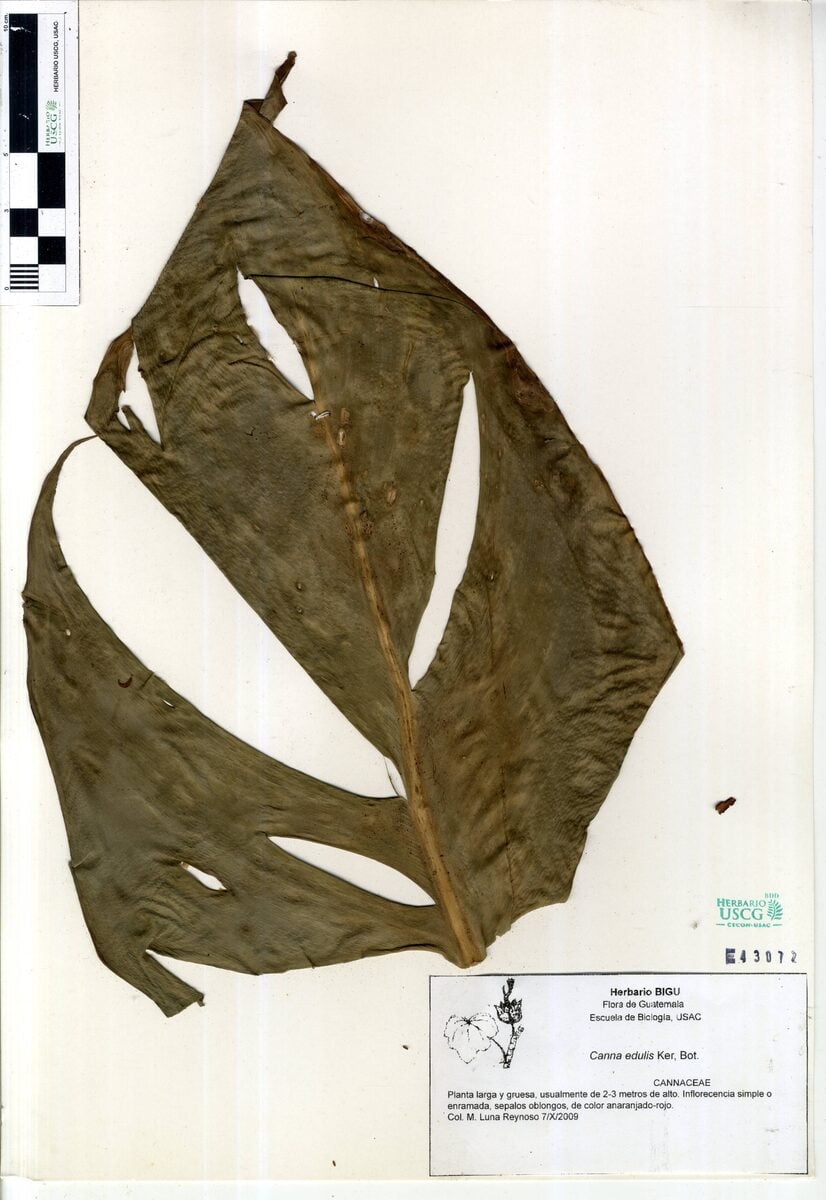
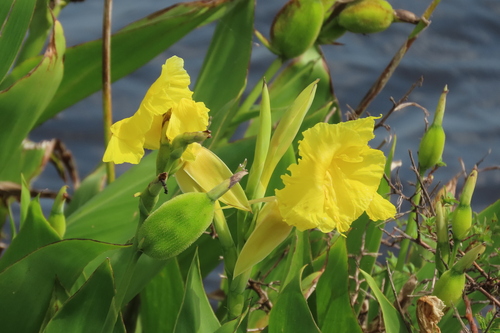
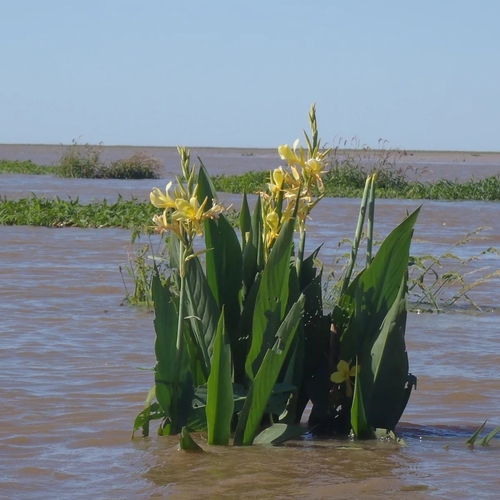
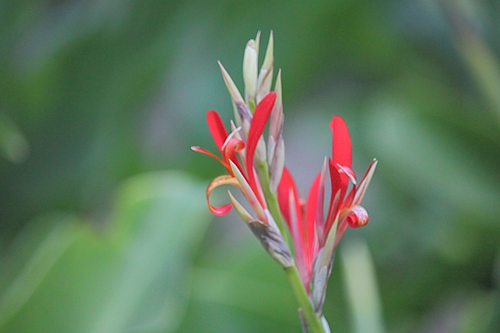
Canna discolor
Lindl.
iNaturalist· cc-by-nc
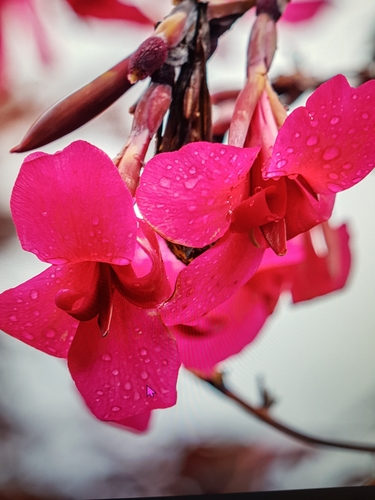
(c) madanielasanchez, some rights reserved (CC BY-NC)
iNaturalist· cc-by
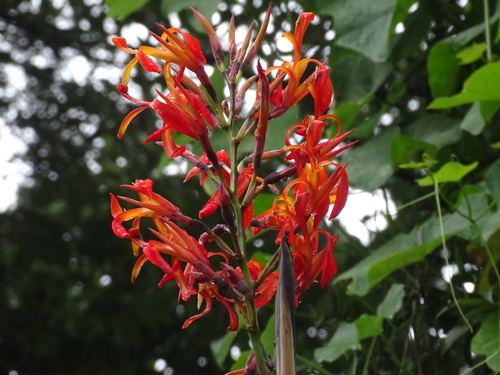
(c) Christoph Moning, some rights reserved (CC BY)
iNaturalist· cc-by-nc
(c) Mariano Ordano, some rights reserved (CC BY-NC)
Summary
Source: WikipediaCanna discolor also known as Achira in Colombia is a species of the Canna genus, belonging to the family Cannaceae, found naturally in the range from South Mexico to Colombia, widely introduced elsewhere. It is a perennial growing to 3m. It is hardy to zone 10 and is frost tender. In the north latitudes it is in flower from August to October, and the seeds ripen in October. The flowers are hermaphrodite. More than other Canna species, C. discolor is used extensively in agriculture in Asia. It grows high yields of very large rhizomes, sometimes the size of a man's arm, exceedingly rich in starch.
Description
A tall perennial herb in the Cannaceae family native to tropical regions (hardiness zones 10-12). It is damaged by frost.
This description is brief — help expand it
Edible Uses
The roots are eaten as a source of starch.
Distribution
It is a tropical plant. It suits hardiness zones 10-12. It is damaged by frost.
Where It Grows
Asia, Central America, China, Colombia, Indochina, Laos, Mexico, North America, SE Asia, South America, Vietnam,
Notes
Some authorities put it as a variety of Canna discolor.
Synonyms
References (2)
- Bircher, A. G. & Bircher, W. H., 2000, Encyclopedia of Fruit Trees and Edible Flowering Plants in Egypt and the Subtropics. AUC Press. p 80
- Romanowski, N., 2007, Edible Water Gardens. Hyland House. p 83