Inga lateriflora
Miq.
Lateralflower inga
iNaturalist· cc-by
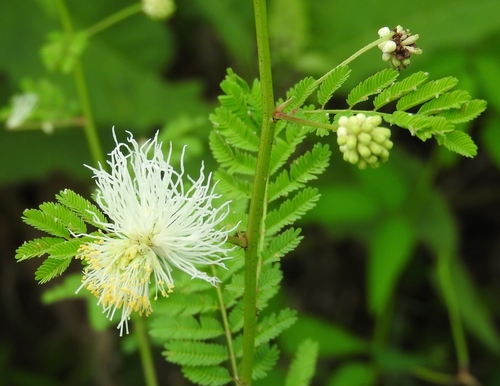
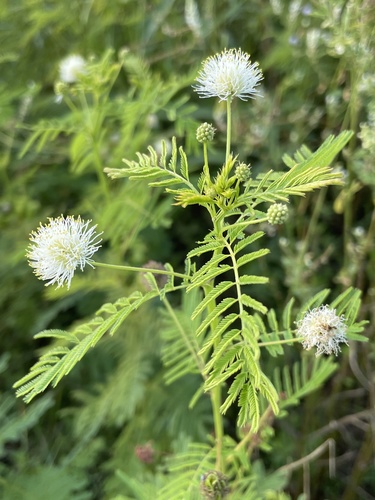
(c) Guillaume Delaitre, some rights reserved (CC BY), uploaded by Guillaume Delaitre
iNaturalist· cc-by
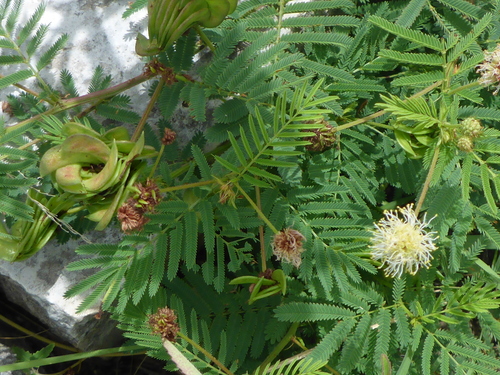
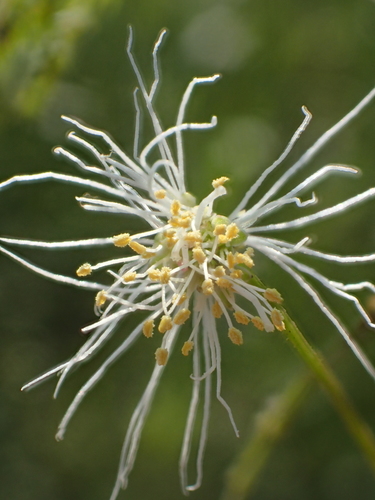
(c) Guillaume Delaitre, some rights reserved (CC BY)
Description
A tree. It grows 25 m tall. The twigs are thin and cylinder shaped. The leaves are compound. The flowers are in groups on young and old twigs. The flowers are yellowish-white. The fruit are pods 10-15 cm long by 1 cm wide. They are swollen over the seeds. There are about 11 seeds. The pod pulp is sweet and edible.
Edible Uses
The sweet pulp of the fruit and pods is eaten.
Traditional Uses
The pulp of the fruit is eaten.
This uses section is brief — help expand it
Medicinal Uses
An infusion of the bark, mixed with salt, is used to bathe sores and ulcers. The bark is used to treat sores, wounds and cuts.
Distribution
It is a tropical plant. It grows in savanna and rainforests.
Where It Grows
Amazon, Bolivia, Brazil, Colombia, French Guiana, Guianas, Guyana, Peru, South America, Suriname, Venezuela,
Cultivation
Plants grow easily from seeds. Seeds germinate in 1-2 weeks given moisture and shade.
Other Uses
A black dye is obtained from the bark. It is mainly used for colouring basketry. The wood of Inga species is generally attractive, but it has a coarse texture, is susceptible to attack by dry-wood termites and is not durable in the soil.
Notes
Also as Mimosaceae.
Synonyms
Also Known As
Baniwa, Doho arau, Guama yaragua, Guamillo, Guamo, Guamo cinta, Karayek, Pilon, Shimbillo, Shirada, Yaragua
References (8)
- Grandtner, M. M. & Chevrette, J., 2013, Dictionary of Trees, Volume 2: South America: Nomenclature, Taxonomy and Ecology. Academic Press p 356
- Kermath, B. M., et al, 2014, Food Plants in the Americas: A survey of the domesticated, cultivated and wild plants used for Human food in North, Central and South America and the Caribbean. On line draft. p 441
- Linnaea 19:131. 1847
- Lopez-Diago, D. & Garcia, N., 2021, Wild edible fruits of Colombia. Biota ColomBiana 22 (2) p 38
- Maas, P.J. M., Non-Timber Forest Products of the North-West District of Guyana Part 2. The 85 most important NTFP species. p 120
Show all 8 references Hide references
- Reis, S. V. and Lipp, F. L., 1982, New Plant Sources for Drugs and Foods from the New York Botanical Garden herbarium. Harvard. p 115
- Roa, J. A. G. & Boada, D. S. G., 2018, Fundación para el Fortalecimiento de la Fruticultura y Plantas Alimenticias no Convencionales en Colombia.
- van Roosmalen, M.G.M., 1985, Fruits of the Guianan Flora. Utrecht Univ. & Wageningen Univ. p 238