Bowenia serrulata
(W. Bull) C. Chamberlaine
Byfield fern
iNaturalist· cc-by-nc
(c) Stephen Thorpe, some rights reserved (CC BY-NC), uploaded by Stephen Thorpe
iNaturalist· cc-by-nc
(c) Stephen Thorpe, some rights reserved (CC BY-NC), uploaded by Stephen Thorpe
Summary
Source: WikipediaBowenia serrulata, the Byfield fern, is a cycad in the family Stangeriaceae. Its bipinnate fronds, arising from a subterranean caudex, give it the appearance of a fern. However it is not a fern as its vernacular name and appearance suggest. It is endemic to the vicinity of Byfield, Australia.
Description
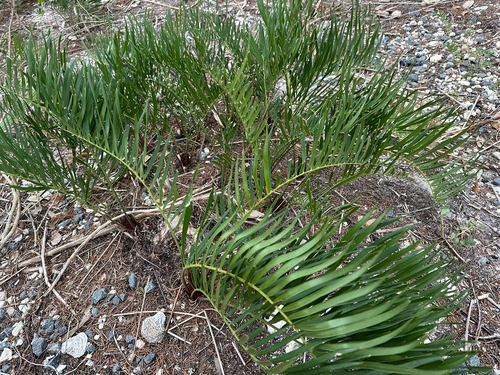
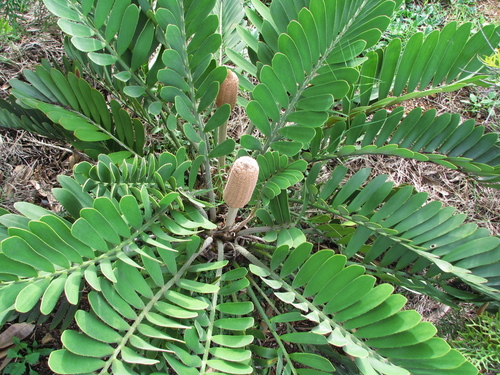
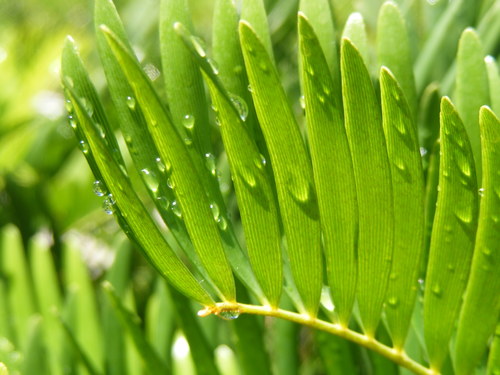
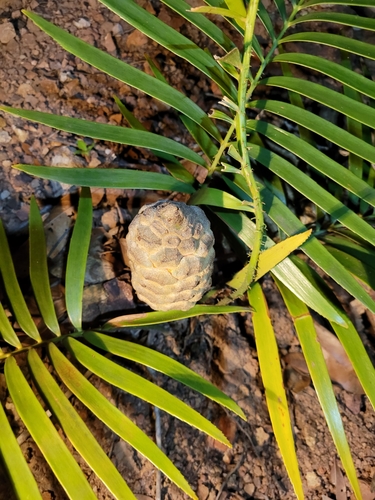
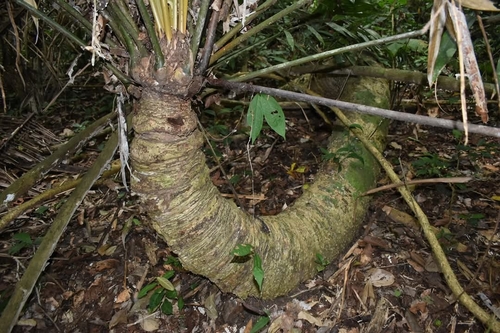
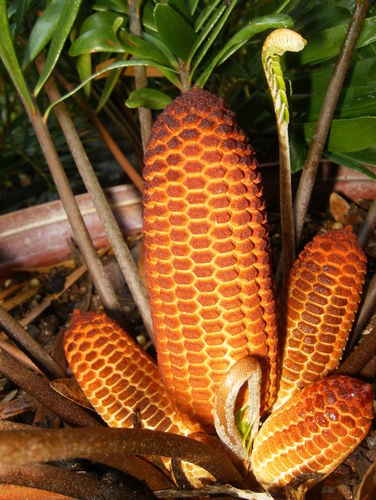
A small palm like plant. It has a trunk which is underground. The leaves are 1 m long and arch over. They are feather-like. The leaves are twice divided. The leaflets are leathery and oval. They are shiny green and have deep teeth along the edge. New growth is shiny bronze. Male and female flowers are separate and on separate plants. The male cones are oblong. The female cones are round. They occur in groups at ground level. The seeds are round and grey. They are 2 cm across.
Edible Uses
The roots (tubers) are baked and eaten.
Traditional Uses
CAUTION The leaves and seeds are toxic. The roots are baked and eaten.
This uses section is brief — help expand it
Known Hazards
The leaves and seeds are toxic.
Distribution
It grows in highland rainforests in Queensland. Near Rockhampton it grows from sea level to 700 m altitude. It needs some shade. It suits tropical, subtropical and warm temperate climates. It can only tolerate light frost. In Cairns Botanical Gardens.
Where It Grows
Australia*,
Cultivation
Plants can be grown from seed.
Production
Only one new frond is produced each year.
Notes
There are 2-3 Bowenia species. It has also been put in the family Strangeriaceae.
Nutrition
| Part | Moisture | kJ | kcal | Protein | Vit A | Vit C | Iron | Zinc |
|---|---|---|---|---|---|---|---|---|
| Root | 72.7 | — | — | 4.1 | — | — | 0.9 | 0.6 |
References (14)
- Bodkin, F., 1991, Encyclopedia Botanica. Cornstalk publishing, p 162
- Bot. Gaz. 54:419. 1912
- Cherikoff V. & Isaacs, J., The Bush Food Handbook. How to gather, grow, process and cook Australian Wild Foods. Ti Tree Press, Australia p 198
- Cooper, W. and Cooper, W., 2004, Fruits of the Australian Tropical Rainforest. Nokomis Editions, Victoria, Australia. p 1
- Elliot, W.R., & Jones, D.L., 1982, Encyclopedia of Australian Plants suitable for cultivation. Vol 2. Lothian. p 364
Show all 14 references Hide references
- Hibbert, M., 2002, The Aussie Plant Finder 2002, Florilegium. p 45
- Jones D, L, 1986, Ornamental Rainforest Plants in Australia, Reed Books, p 330
- Jones, D.L., 2000, Cycads of the world. Reed New Holland. p 106
- Lazarides, M. & Hince, B., 1993, Handbook of Economic Plants of Australia, CSIRO. p 35
- Leiper, G & Houser, J., Mutooroo. Plant Use by Australian Aboriginal People. Assembly press, Queensland. p54
- Lord, E.E., & Willis, J.H., 1999, Shrubs and Trees for Australian gardens. Lothian. p 93
- Marinelli, J. (Ed), 2004, Plant. DK. p 361
- Melzer, R., & Plumb, J., 2011, Plants of Capricornia. Belgamba, Rockhampton. p 37
- Townsend, K., 1994, Across the Top. Gardening with Australian Plants in the tropics. Society for Growing Australian Plants, Townsville Branch Inc. p 103