Parahancornia fasciculata
(Poir.) R. Benoist
Dukali
iNaturalist· cc-by-nc
(c) silland_p, some rights reserved (CC BY-NC)
iNaturalist· cc-by-nc
(c) silland_p, some rights reserved (CC BY-NC)
iNaturalist· cc-by-nc
(c) silland_p, some rights reserved (CC BY-NC)
Summary
Source: WikipediaParahancornia fasciculata is a flowering plant native to rainforest in South America. The latex from the tree is used in traditional medicine.
Description
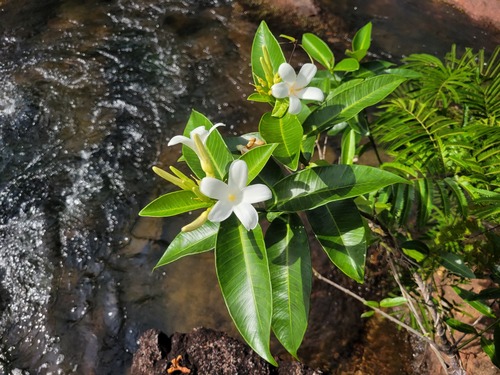
A tree. It grows 40 m tall. The trunk can be 45-100 cm across. The leaf stalk has a groove on the top side. The leaves are opposite. They are narrowly oval and 7-10 cm long by 3-4 cm wide. The flowers are in groups in the axils of leaves of at the ends of branches. The fruit is a round berry. It is 4.5-8 cm long by 4-8 cm wide. They are green to purplish-brown. The outside layer is about 1 cm thick. The flesh is yellow, edible and sweet tasting. There are several seeds. They are flat and oval. They are 1.5 cm long by 1 cm wide.
Edible Uses
The pulp of the fruit is eaten.
Traditional Uses
The pulp of the fruit is eaten.
This uses section is brief — help expand it
Medicinal Uses
The bitter-tasting latex contains caoutchouc and is reputedly a specific treatment for yaws. It is used externally for treating ulcerous sores and skin conditions. The latex is used in commercial preparations for treating internal ulcers.
Distribution
A tropical plant. It grows in rainforest, savanna and marsh forest.
Where It Grows
Amazon, Bolivia, Brazil, Colombia, French Guiana, Guianas, Guyana, Peru, South America, Suriname, Venezuela,
Cultivation
Plants are grown from seed.
Other Uses
The bark and sapwood, when cut, yield a copious quantity of latex. This is often mixed with balata (Manilkara bidentata) in order to improve, according to the natives' belief, the consistency of the latter. The heartwood is chocolate brown, clearly demarcated from the pinkish brown sapwood. Another report says that the heartwood is dull white to pale cream or pinkish. The grain is straight or irregular; the texture moderately fine to medium; the seasoned wood is odourless and tasteless. The wood is moderately hard and firm, durable according to one report, but not at all durable according to another. It is easy to cut and takes a smooth polish. The wood is recommended as a substitute for white pine and is used for general carpentry, interior work, furniture, door and window stock, concrete forms, and matchboxes. It is also recommended for box manufacture and plywood.
Production
In Guyana plants flower July to August and produce fruit July to February.
Synonyms
Also Known As
Amapa, Arbol de la vaca, Balata boti, Dikali, Docali, Doekali, Ducali, Leche de burra, Lobi mapa, Naranja podrida, Mampa, Mapa, Mappa, Pakih etni, Stopoli
References (12)
- Allorge-Boiteau, L., Flora of the Guianas. 140 Apocynaceae p 170
- Cavalcante, P.B. 1991. Frutas comestíveis da Amazônia. Edições CEJUP. (As Parahancornia amapa)
- Fouqué, A. 1972. Espèces fruitières d'Amérique tropicale. Institut français de recherches fruitierès outre-mer (ifac) (As Parahancornia amapa)
- Grandtner, M. M. & Chevrette, J., 2013, Dictionary of Trees, Volume 2: South America: Nomenclature, Taxonomy and Ecology. Academic Press p 479
- Kermath, B. M., et al, 2014, Food Plants in the Americas: A survey of the domesticated, cultivated and wild plants used for Human food in North, Central and South America and the Caribbean. On line draft. p 605
Show all 12 references Hide references
- Lopez-Diago, D. & Garcia, N., 2021, Wild edible fruits of Colombia. Biota ColomBiana 22 (2) p 30
- Martin, F. W., et al, 1987, Perennial Edible Fruits of the Tropics. USDA Handbook 642 p 82 (As Parahancornia amapa)
- Paz, F. S., et al, 2021, Edible Fruit Plant Species in the Amazon Forest Rely Mostly on Bees and Beetles as Pollinators. Journal of Economic Entomology, XX(XX), 2021, 1–13 (As Parahancornia amapa)
- Polak, A. M., 1992, Major Timber Trees of Guyana. A Field Guide. Tropenbos Series 2. Wageningen. p 145
- Reis, S. V. and Lipp, F. L., 1982, New Plant Sources for Drugs and Foods from the New York Botanical Garden herbarium. Harvard. p 242 (As Parahancornia amapa)
- Roa, J. A. G. & Boada, D. S. G., 2018, Fundación para el Fortalecimiento de la Fruticultura y Plantas Alimenticias no Convencionales en Colombia.
- van Roosmalen, M.G.M., 1985, Fruits of the Guianan Flora. Utrecht Univ. & Wageningen Univ. p 30