Couma guianensis
Aubl.
Guianas couma
iNaturalist· cc-by-nc
(c) Nils Servientis - Bivouac Naturaliste, some rights reserved (CC BY-NC)
iNaturalist· cc-by-nc
(c) christian marty, some rights reserved (CC BY-NC)
iNaturalist· cc-by-nc
(c) Jessica Launay, some rights reserved (CC BY-NC)
Description
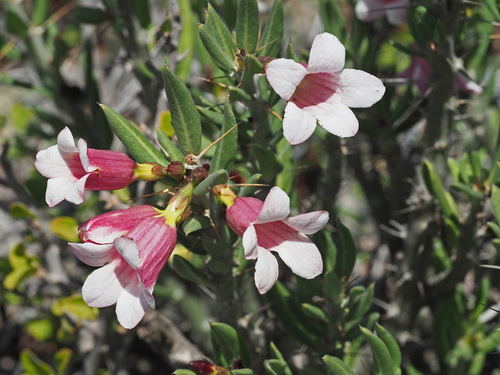
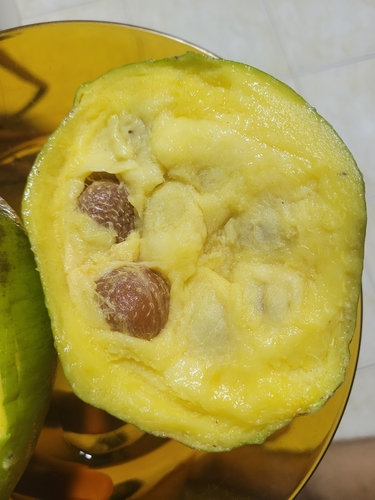
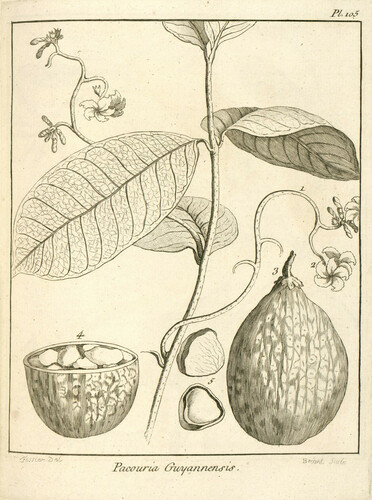
A tree. It grows 25 m tall. It is 7 m tall in dry places. The flowers are in flat topped groups. These occur singly or in pairs. The fruit is a round berry. They are 3-4 cm across. The fruit are green and turn red when ripe. The pulp is edible. There are 4-5 seeds. They are oval and 1 cm long.
Edible Uses
Fruit - raw. The pulp has a sweet, pleasant flavour. The fruit is about 3 - 4cm in diameter, turning red when ripe. A latex obtained from the plant is used as a nourishing drink, either on its own or diluted with water.
Traditional Uses
The fruit pulp is eaten raw. The latex is added to tea or coffee. It is also used for chewing gum.
This uses section is brief — help expand it
Medicinal Uses
The latex is used in traditional preparations added to tea or coffee.
Distribution
A tropical plant It grows in the rainforest and savanna. They grow up to 500 m above sea level.
Where It Grows
Amazon, Brazil*, Colombia*, Ecuador, French Guiana, Guianas, Guyana, Suriname, South America, Venezuela,
Cultivation
Plants are grown by seed. Seed can be dried and stored.
Other Uses
A latex is obtained from the trunk and branches.
Production
In Guyana plants flower before the leaves in August to September and produce fruit in September to October.
Synonyms
Also Known As
Akoema, Dukaballi, Gan mapa, Guaimaromacho, Karimein, Mapa, Milky oudou, Nicuye, Oluca, Pera, Poue, Sorva, Tapooka, Ukum, Vacahosca, Yuwa
References (13)
- Allorge-Boiteau, L., Flora of the Guianas. 140 Apocynaceae p 72
- Allorge, L., Flore des trois Guyanes, Apocynaceae. p 72
- Boggan, J. et al. 1997. Checklist of the plants of the Guianas, ed. 2. (L Guianas ed2)
- Cavalcante, P.B. 1991. Frutas comestíveis da Amazônia. Edições CEJUP.
- Fouqué, A. 1972. Espèces fruitières d'Amérique tropicale. Institut français de recherches fruitierès outre-mer (ifac)
Show all 13 references Hide references
- Grandtner, M. M. & Chevrette, J., 2013, Dictionary of Trees, Volume 2: South America: Nomenclature, Taxonomy and Ecology. Academic Press p 167
- Hist. pl. Guiane 39, t. 392. 1775
- Janick, J. & Paul, R. E. (Eds.), 2008, The Encyclopedia of Fruit & Nuts. CABI p 72
- Johnson, M. and Colquhoun, A., 1996, Preliminary Ethnobotanical Survey of Kurupukari: An Amerindian Settlement of Central Guyana. Economic Botany, Vol. 50, No. 2, pp. 182-194
- Kermath, B. M., et al, 2014, Food Plants in the Americas: A survey of the domesticated, cultivated and wild plants used for Human food in North, Central and South America and the Caribbean. On line draft. p 271
- Martin, F. W., et al, 1987, Perennial Edible Fruits of the Tropics. USDA Handbook 642 p 82
- Paz, F. S., et al, 2021, Edible Fruit Plant Species in the Amazon Forest Rely Mostly on Bees and Beetles as Pollinators. Journal of Economic Entomology, XX(XX), 2021, 1–13
- van Roosmalen, M.G.M., 1985, Fruits of the Guianan Flora. Utrecht Univ. & Wageningen Univ. p 26