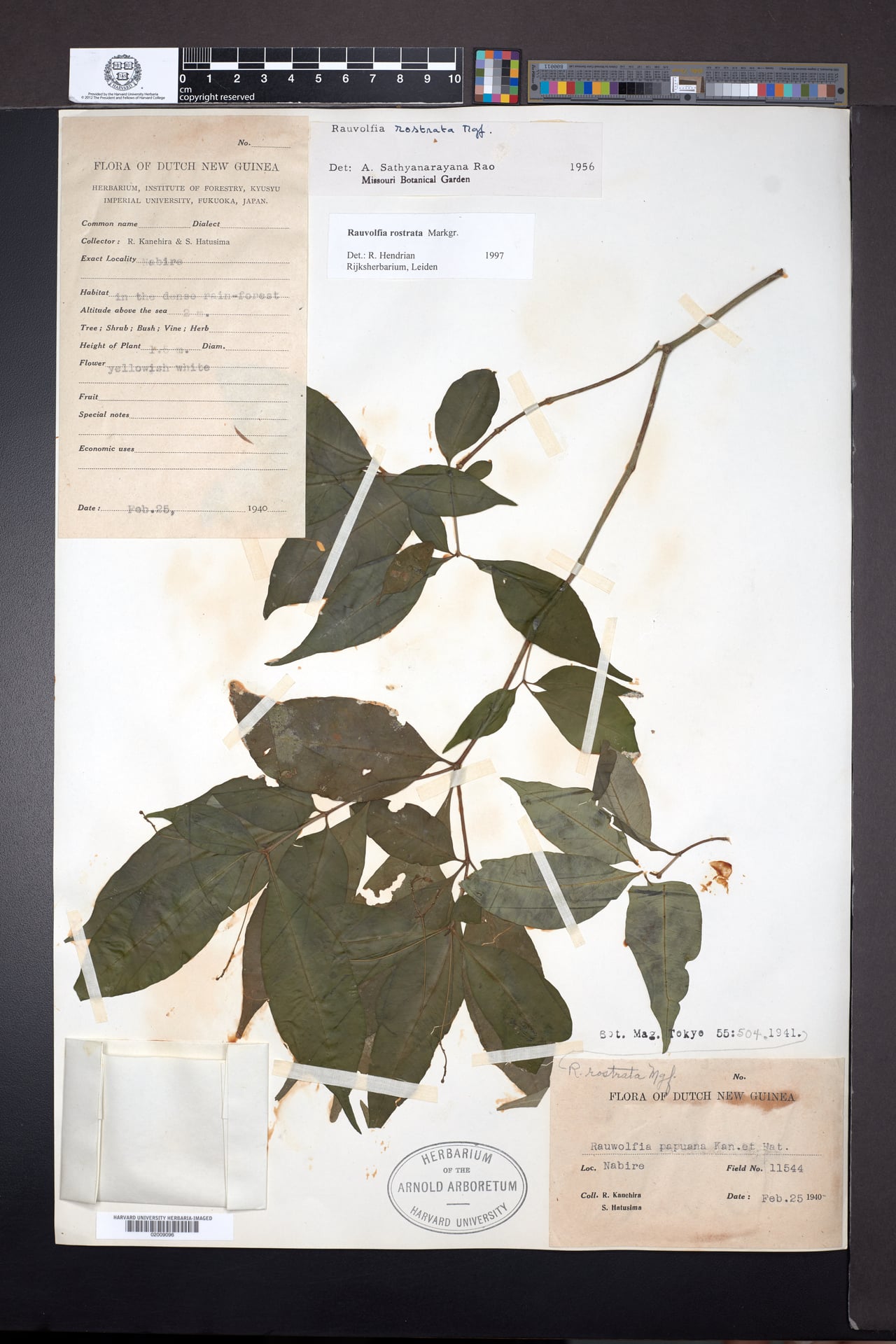
Lacmellea aculeata
(Ducke) Monach.
Prickly lacmellea
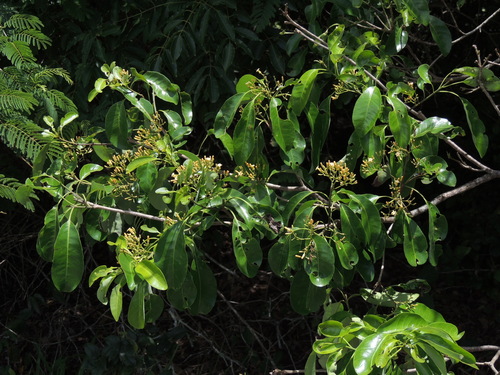
iNaturalist· cc-by-nc
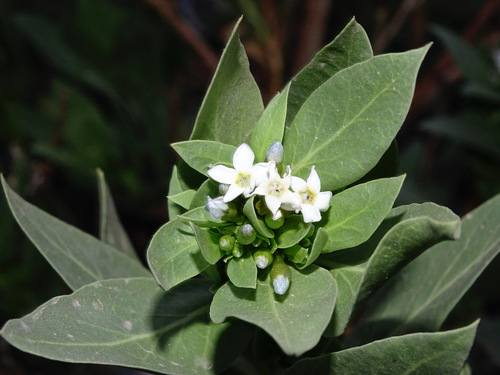
(c) Nils Servientis - Bivouac Naturaliste, some rights reserved (CC BY-NC), uploaded by Nils Servientis - Bivouac Naturaliste
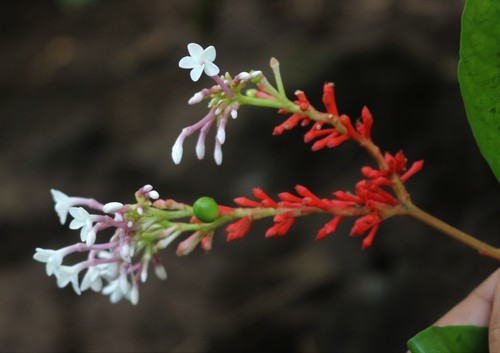
iNaturalist· cc-by-nc
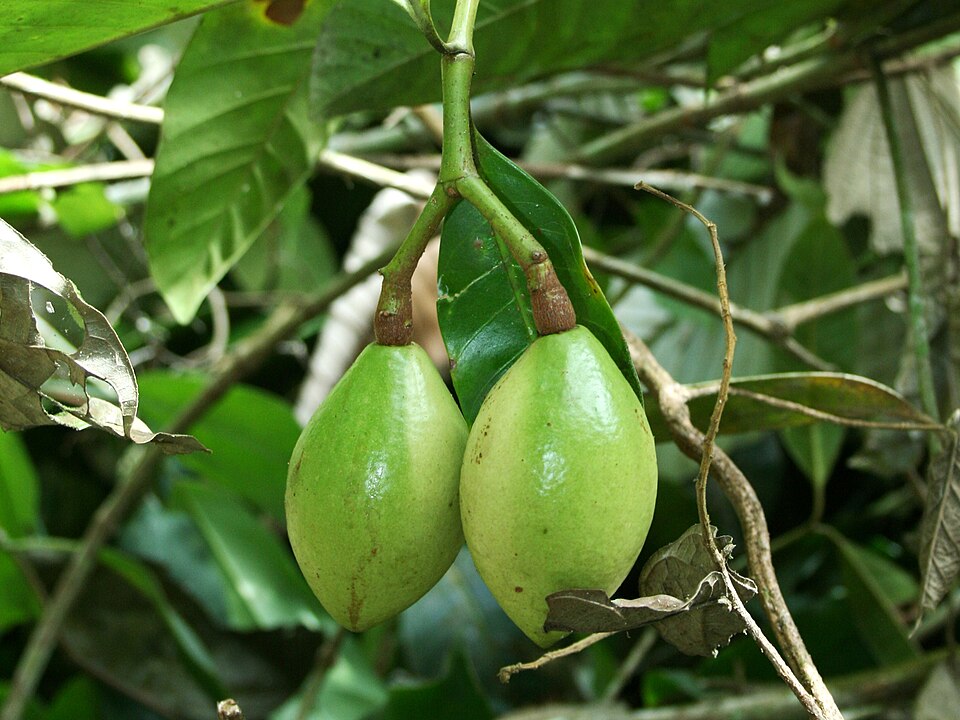
(c) Sébastien SANT, some rights reserved (CC BY-NC)
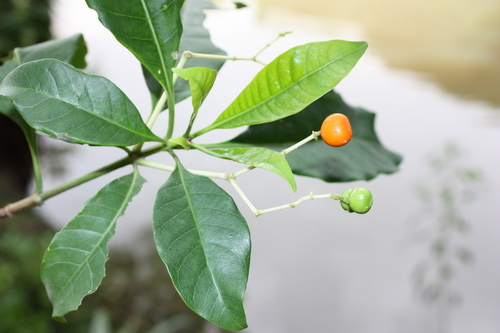
iNaturalist· cc-by-nc
(c) Sébastien SANT, some rights reserved (CC BY-NC)
Description
A shrub or tree. It grows 12-20 m tall. The trunk has 2 cm long black spines. The leaves are opposite. The flowers are at the ends of branches or in the axils of leaves. The stalks are forked. The fruit stalks are about 1 cm long. The fruit are pear shaped or round and 3.5 cm across. They are yellow or orange. There are prickles at the end. The pulp is edible. There are 1-3 seeds They are 1.5 cm long by 1 cm wide. They are brown.
Edible Uses
Fruit - raw. The pulp is sweet-tasting. The globose yellow to orange-yellow berry is about 35mm in diameter. The latex of some species is palatable.
Traditional Uses
The fruit pulp is eaten raw. The latex is used instead of milk.
This uses section is brief — help expand it
Medicinal Uses
The crude latex is drunk as an antidiarrhoeal and febrifuge.
Distribution
A tropical plant. It can grow in savanna or forests near rivers.
Where It Grows
Amazon, Bolivia, Brazil, Colombia, French Guiana, Guianas, Guyana, Peru, South America, Suriname, Venezuela,
Cultivation
A plant of mainly low elevations in the moist tropics.
Other Uses
The latex obtained from the plant is of low quality, but is sometimes used to adulterate rubber from Hevea brasiliensis.
Production
In Guyana plants flower in July to October and fruit March, May and August.
Other Information
It is a significant food.
Synonyms
Also Known As
Au-de-colher, Awaratalla, Baaka mapa, Blaka-prit'jari, Boeboeraballi, Boenoeraballi, Chicle huayo, Cumahy, Maka-mapa, Mpoukou mambaye, Pau de chicle, Pritijari, Tapeleyuwa, Ten
References (8)
- Allorge-Boiteau, L., Flora of the Guianas. 140 Apocynaceae p 115
- Fouqué, A. 1972. Espèces fruitières d'Amérique tropicale. Institut français de recherches fruitierès outre-mer (ifac)
- Grandtner, M. M. & Chevrette, J., 2013, Dictionary of Trees, Volume 2: South America: Nomenclature, Taxonomy and Ecology. Academic Press p 339
- Kermath, B. M., et al, 2014, Food Plants in the Americas: A survey of the domesticated, cultivated and wild plants used for Human food in North, Central and South America and the Caribbean. On line draft. p 465
- Mabberley, D.J. 1990. The plant-book: a portable dictionary of the higher plants. Cambridge University Press. NY
Show all 8 references Hide references
- Mori, S. A. et al. 1997–. Guide to the vascular plants of Central French Guiana (Mem. New York Bot Gard. 76). (F C French Guiana
- Roa, J. A. G. & Boada, D. S. G., 2018, Fundación para el Fortalecimiento de la Fruticultura y Plantas Alimenticias no Convencionales en Colombia.
- van Roosmalen, M.G.M., 1985, Fruits of the Guianan Flora. Utrecht Univ. & Wageningen Univ. p 27