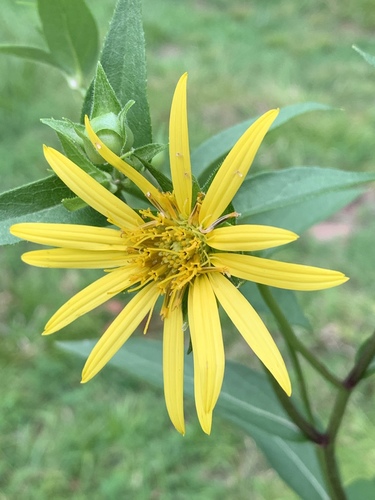
Nidorella resedifolia
DC.
Nidorella
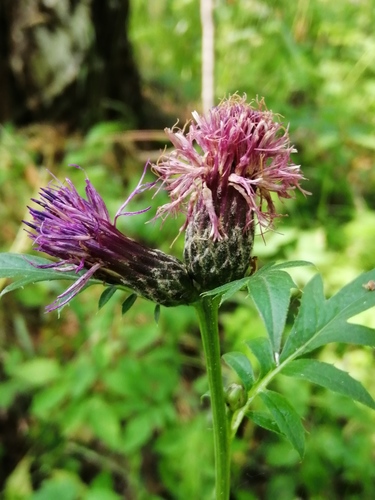
iNaturalist· cc-by-sa
(c) Nicola van Berkel, some rights reserved (CC BY-SA), uploaded by Nicola van Berkel
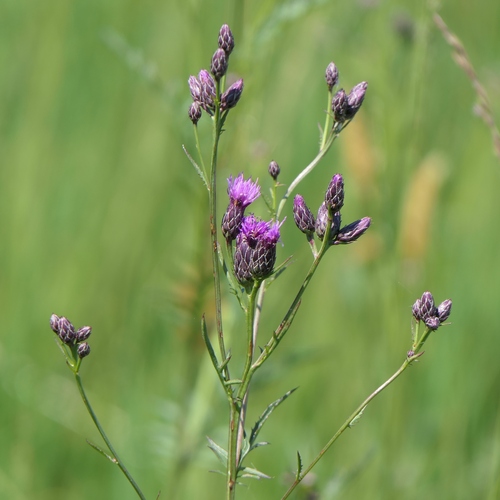
iNaturalist· cc-by-sa
(c) Dave U, some rights reserved (CC BY-SA), uploaded by Dave U
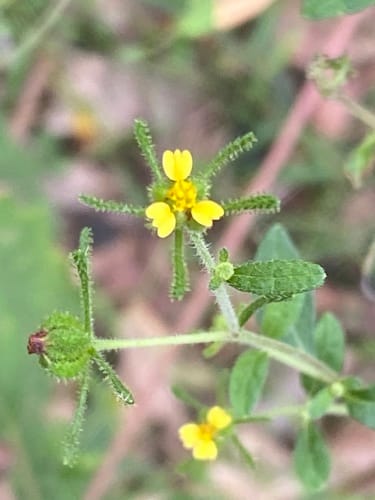
iNaturalist· cc-by-nc
(c) Felix Riegel, some rights reserved (CC BY-NC), uploaded by Felix Riegel
Summary
Source: WikipediaNidorella resedifolia, commonly known as the reseda-leaved nidorella or maridadi, is a species of flowering plant in the family Asteraceae. Native to eastern and southern Africa, it is a hardy herbaceous perennial often found in grasslands, savannas, and disturbed areas.
Description
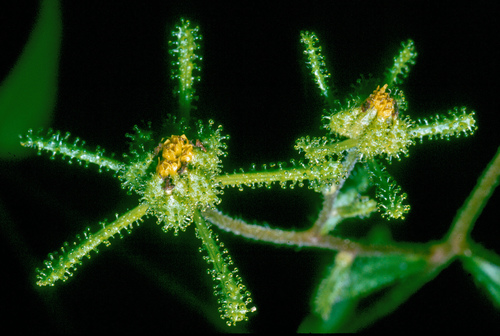
A herb. It grows 60 cm high. It keeps growing from year to year. It has many leaves. They are alternate. They have small points at the end. The leaves are a narrow spoon shape. They are 4 cm long by 5 mm wide. The flower heads are in dense clusters. The flowering clusters are hairy. They are bright yellow. There are some subspecies.
Edible Uses
The leaves are eaten cooked.
Traditional Uses
The leaves are eaten cooked.
This uses section is brief — help expand it
Known Hazards
While N. resedifolia is generally considered unpalatable to livestock due to its strong aromatic oils, it contains alkaloids that can be toxic if ingested in large quantities. Toxicity reports are rare because animals typically avoid the plant unless grazing pressure is high or during periods of drought. It is frequently confused with the more dangerous Senecio species (ragworts), which have a similar growth habit and yellow flowers.
Distribution
It is a tropical plant. It grows in damp shady areas on sand or clay. It grows in lowland and mountain regions. It grows between 10-2,135 m above sea level. It can grow in arid places.
Where It Grows
Africa, Angola, Botswana, Central Africa, East Africa, Eswatini, Lesotho, Madagascar, Malawi, Mozambique, Namibia, South Africa, Southern Africa, Swaziland, Tanzania, Zambia, Zimbabwe,
Production
They are harvested during the dry weather.
Synonyms
Also Known As
Efindapya, Khununbue, Ocindundu, Odibo, Okafetahamba, Okarumbo, Nesterkraut, Sungubuwa
References (7)
- Peters, C. R., O'Brien, E. M., and Drummond, R.B., 1992, Edible Wild plants of Sub-saharan Africa. Kew. p 91
- Pickering, H., & Roe, E., 2009, Wild Flowers of the Victoria Falls Area. Helen Pickering, London. p 38
- Roodt, V., 1998, Common Wild Flowers of the Okavango Delta. Medicinal Uses and Nutritional value. The Shell Field Guide Series: Part 2. Shell Botswana. p 47
- Royal Botanic Gardens, Kew (1999). Survey of Economic Plants for Arid and Semi-Arid Lands (SEPASAL) database. Published on the Internet; http://www.rbgkew.org.uk/ceb/sepasal/internet [Accessed 11th April 2011]
- Swaziland's Flora Database http://www.sntc.org.sz/flora
Show all 7 references Hide references
- Williamson, J., 2005, Useful Plants of Malawi. 3rd. Edition. Mdadzi Book Trust. p 176
- World Checklist of Useful Plant Species 2020. Royal Botanic Gardens, Kew