Cyperus alternifolius
L.
Chesa, Chetsa
wikimedia· cc0
Simon Springett (Springnuts at English Wikipedia) (via Wikimedia Commons)
wikimedia· cc-by-sa
Kurt Stüber [1] (via Wikimedia Commons)
wikimedia· cc-by-sa
HorsePunchKid (via Wikimedia Commons)
iNaturalist· cc-by
(c) Eleftherios Katsillis, some rights reserved (CC BY)
iNaturalist· cc-by
(c) Eleftherios Katsillis, some rights reserved (CC BY)
iNaturalist· cc-by
(c) Eleftherios Katsillis, some rights reserved (CC BY)
Summary
Source: WikipediaCyperus alternifolius, the umbrella papyrus, umbrella sedge or umbrella palm, is a grass-like plant in the large genus Cyperus of the sedge family Cyperaceae. The plant is native to West Africa, Madagascar and the Arabian Peninsula, but widely distributed throughout the world. It has gained the Royal Horticultural Society's Award of Garden Merit. The subspecies Cyperus alternifolius ssp. flabelliformis is also known as Cyperus involucratus Rottb..
Description
A leafless sedge. The stems are green and up to 1 m tall. They are slender and triangle shaped. They have ribs. The plant spreads 1 m wide. The leaves are sheaths only. The flowers are in spikes and are yellow or rust coloured. They are surrounded by 12 curving leaf-like bracts that hang down. These form a ring at the top.
Edible Uses
The plants are collected, dried, and burnt, then used in a solution to cook other leaves and vegetables.
Traditional Uses
The plants are collected, dried and burnt and then used in a solution to cook other leaves and vegetables.
This uses section is brief — help expand it
Medicinal Uses
The rhizome is given to children as a remedy for stomach ache. The plant (part not specified) is used as a treatment for malarial fevers, The dried ash of the plant is applied to fresh wounds as a disinfectant. The dried plant is reduced to an ash, this is then soaked in water and the solids filtered off. The water is then evaporated and the residual salt is applied to fresh wounds as a disinfectant.
Distribution
It is a tropical plant. It grows in wet and marshy places in the hills in Malawi. It needs a partly shaded position. It is damaged by drought or frost. It is highly salt tolerant.
Where It Grows
Africa*, Asia, Australia, Central America, East Africa, El Salvador, Ethiopia, Guam, Guatemala, Indochina, Laos, Madagascar*, Malawi, Mauritius, Mozambique, Nauru, Niue, Philippines, SE Asia, Slovenia, St Helena, Taiwan, United Arab Emirates, UAE,
Cultivation
Plants can be grown by seed or by division.
Other Uses
The culms and leaves are used in weaving for making mats, baskets, fans and paintbrushes.
Notes
There are about 600 Cyperus species. In Slovenia possibly in a hot house.
Synonyms
Also Known As
Namen, Premenjalnolistna ostrica, Zozoro
References (6)
- Bodkin, F., 1991, Encyclopedia Botanica. Cornstalk publishing, p 314
- Karim, F. M. & Dakheel, A, J., 2006, Salt-tolerant plants of the United Arab Emirates. 2006. International Center for Biosaline Agriculture, Dubai, UAE. p 87
- Mant. pl. 1:28. 1767
- Simpson, D. A. & Inglis, C. A., 2001, Cyperaceae of Economic, Ethnobotanical and Horticultural Importance: A checklist. Kew Bulletin Vol. 56, No. 2 (2001), pp. 257-360
- Standley, P. & Steyermark, J., 1958, Flora of Guatemala. Fieldiana: Botany, Volume 24 part 1 p 117
Show all 6 references Hide references
- Williamson, J., 2005, Useful Plants of Malawi. 3rd. Edition. Mdadzi Book Trust. p 92
More from Cyperaceae
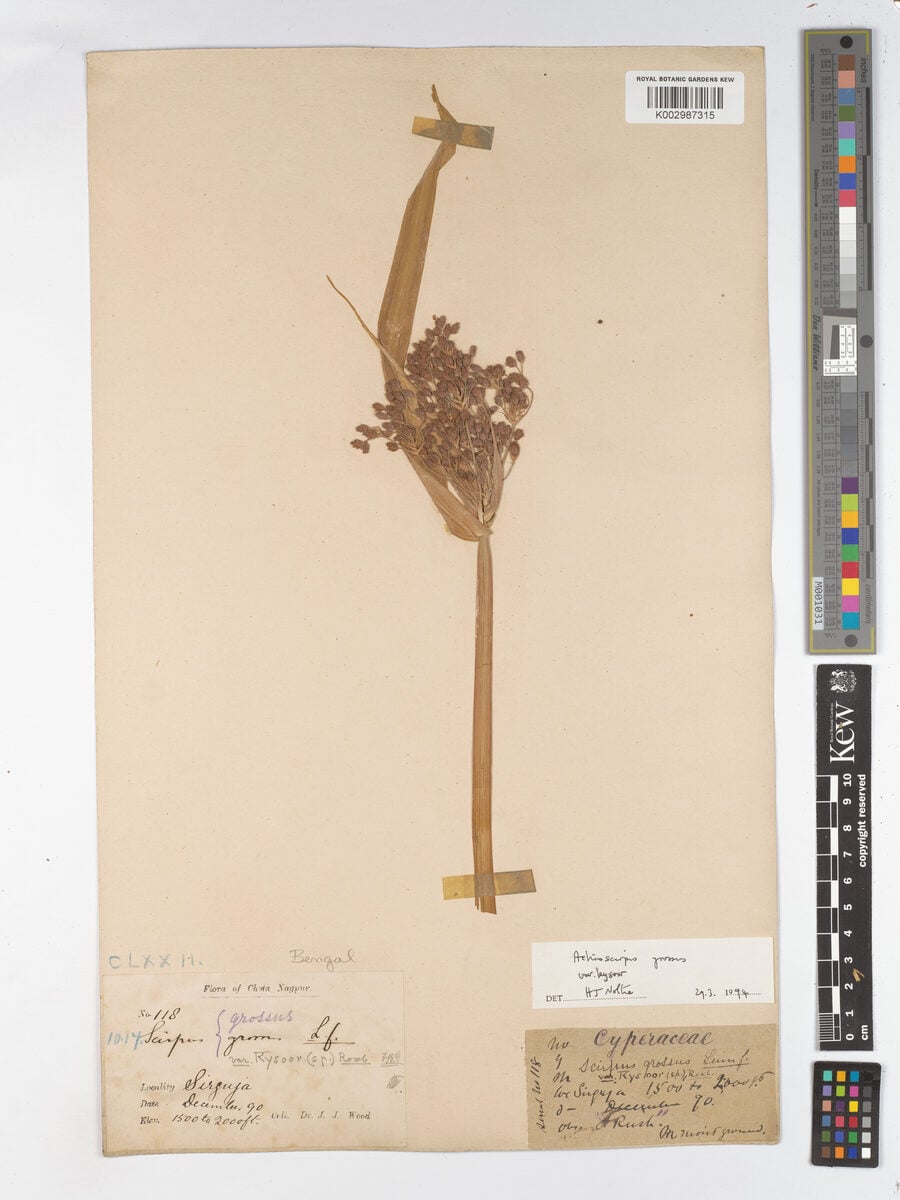
Actinoscirpus grossus var. kysoor
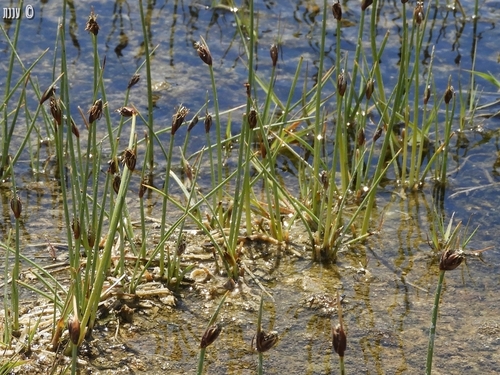
Amphiscirpus nevadensis
Nevada bulrush, Great basin bulrush
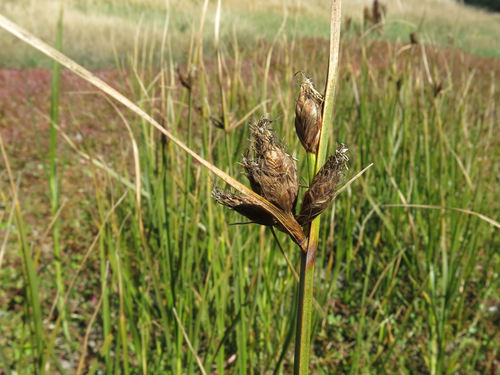
Bolboschoenus caldwellii
Sea club rush, Marsh club rush, Seaside bulrush
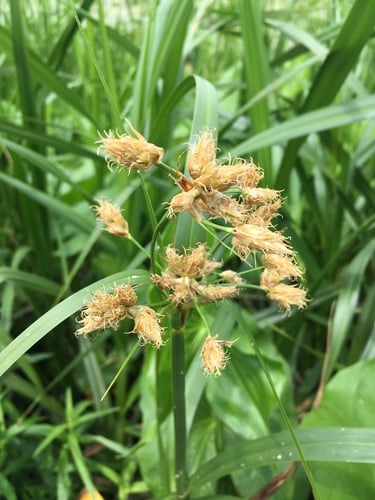
Bolboschoenus fluviatilis
Marsh club rush, River bulrush, Kukuraho, Purua grass
Bolboschoenus glaucus
Bolboschoenus maritimus
Sea club-rush, Seaside bulrush