Crotalaria natalitia
Meissner
Pioneer rattle pod
iNaturalist· cc-by-nc
(c) Troos van der Merwe, some rights reserved (CC BY-NC)
iNaturalist· cc-by-nc
(c) Troos van der Merwe, some rights reserved (CC BY-NC)
iNaturalist· cc-by-nc
(c) Troos van der Merwe, some rights reserved (CC BY-NC)
Description
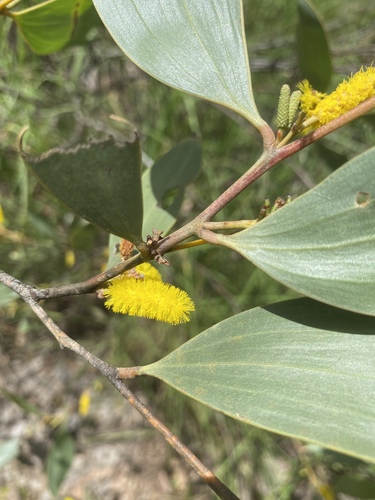
An erect herb or shrub. It grows 40-50 cm high. The branches are straight. They are covered with fine hairs. The leaves have 3 leaflets. The leaves are 2.5 cm long. The flowers are brownish-yellow. They are in groups of 5-10 at the ends of branches. The fruit are fattened pods 3.5 cm long and 1.3 cm wide.
Edible Uses
The leaves and flowers are cooked and eaten, traditionally prepared with potash and peanuts. The leaves can also be dried and pounded into powder.
Traditional Uses
The leaves and flowers are cooked and eaten. They are cooked with potash and peanuts added. The leaves can be dried and pounded.
This uses section is brief — help expand it
Medicinal Uses
The bark from fresh roots is chewed, and the juice swallowed as a treatment for boils. After several days the boils ripen, can be cut and squeezed out.
Known Hazards
No specific mention of toxicity has been seen for this species, but many members of this genus are known to contain pyrrolizidine alkaloids, the most potent of which in this genus are monocrotaline, retrorsine and retronecine. These alkaloids have a cumulative effect upon the body and, unless concentrations in a plant are high, occasional consumption is generally completely safe. Pyrrolizidine alkaloids are derived from amino acids including ornithine. Many of these alkaloids have pronounced hepatic toxicity, but the lungs and other organs may be affected as well. Mutagenic and carcinogenic activities of pyrrolizidine alkaloids have also been reported.
Distribution
A tropical plant. It grows between sea level to 3,000 m above sea level. It can grow in arid places.
Where It Grows
Africa, Angola, Burundi, Central Africa, Congo, East Africa, Eswatini, Ethiopia, Kenya, Malawi, Middle East, Mozambique, Rwanda, South Africa, Southern Africa, Sudan, Swaziland, Tanzania, Uganda, Yemen, Zambia, Zimbabwe,
Cultivation
Plants can be grown by seed.
Propagation
Seed - stored seed has a hard seedcoat and can benefit from scarification before sowing in order to speed up and improve germination. This can usually be done by pouring a small amount of nearly boiling water on the seeds (being careful not to cook them!) and then soaking them for 12 - 24 hours in warm water. By this time they should have imbibed moisture and swollen - if they have not, then carefully make a nick in the seedcoat (being careful not to damage the embryo) and soak for a further 12 hours before sowing. Cuttings
Other Uses
The plant is sometimes used as a green manure.
Production
Leaves are collected during the rain season. Leaves can be dried, pounded and stored.
Other Information
It is sold in local markets. It is of local importance.
Also Known As
Ithumba, Lundale, Luwere, Makasewe, Marajea, Mazamba, Mchekecheke, Nyangasi, Nzegenzege, Thusya
References (10)
- East African Herbarium records, 1981,
- Fowler, D. G., 2007, Zambian Plants: Their Vernacular Names and Uses. Kew. p 36
- Fox, F. W. & Young, M. E. N., 1982, Food from the Veld. Delta Books. p 225
- Grubben, G. J. H. and Denton, O. A. (eds), 2004, Plant Resources of Tropical Africa 2. Vegetables. PROTA, Wageningen, Netherlands. p 230
- London J. Bot. 2:67. 1843
Show all 10 references Hide references
- Peters, C. R., O'Brien, E. M., and Drummond, R.B., 1992, Edible Wild plants of Sub-saharan Africa. Kew. p 132
- Royal Botanic Gardens, Kew (1999). Survey of Economic Plants for Arid and Semi-Arid Lands (SEPASAL) database. Published on the Internet; http://www.rbgkew.org.uk/ceb/sepasal/internet [Accessed 28th April 2011]
- Ruffo, C. K., Birnie, A. & Tengnas, B., 2002, Edible Wild Plants of Tanzania. RELMA p 240
- Swaziland's Flora Database http://www.sntc.org.sz/flora
- Williamson, J., 2005, Useful Plants of Malawi. 3rd. Edition. Mdadzi Book Trust. p 83