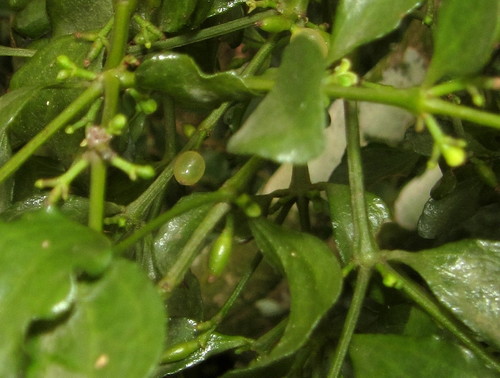
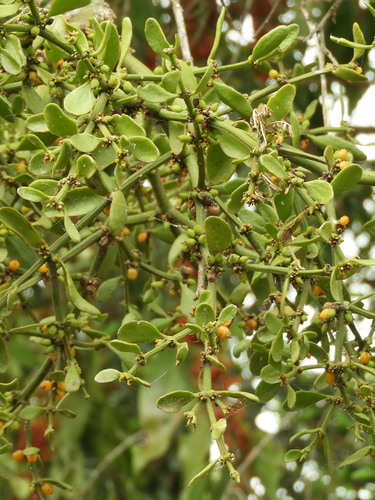
Santalum haleakalae
Hilllebr.
Haleakalae sandalwood
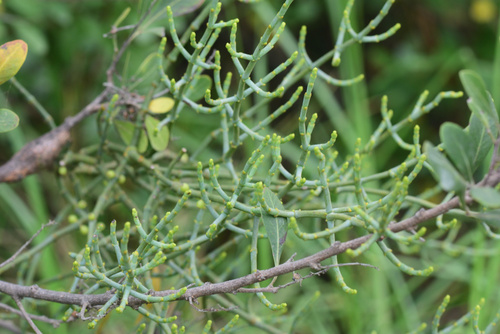
iNaturalist· cc-by-nc-nd
(c) sea-kangaroo, some rights reserved (CC BY-NC-ND), uploaded by sea-kangaroo
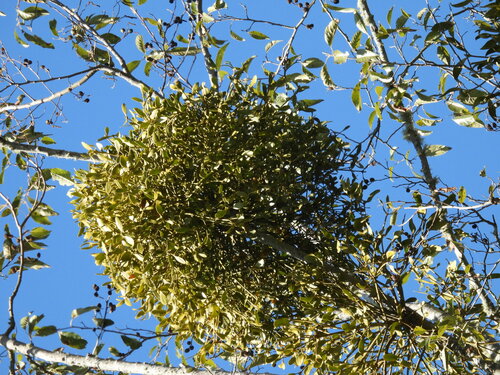
iNaturalist· cc-by-nc
(c) eehinger, some rights reserved (CC BY-NC)
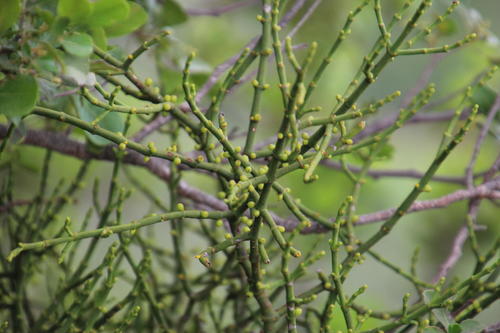
iNaturalist· cc-by-nc
(c) Kenneth R. Wood (NTBG), some rights reserved (CC BY-NC)
Summary
Source: WikipediaSantalum haleakalae, known as Haleakala sandalwood or ʻIliahi in Hawaiian, is a species of flowering tree in the sandalwood family, that is endemic to the islands of Maui, Lanai, and Molokai in the Hawaiian Islands, part of the United States. It grows in subalpine shrublands at elevations of 1,900 to 2,700 m (6,200 to 8,900 ft), especially on the slopes of Haleakalā.
Description
Santalum haleakalae is a slow-growing evergreen tree reaching 3 m tall and wide, hardy to UK zone 10. Flowers are bee and insect-pollinated. It tolerates light sandy and medium loamy soils, prefers well-drained conditions, and grows in nutritionally poor soil. Adapted to mildly acidic through basic pH levels and very acidic soils. Thrives in semi-shade or full sun, prefers dry conditions with drought tolerance, and withstands maritime exposure.
Edible Uses
The seeds are tasty, though their scarcity and high value for propagation make using them as food somewhat impractical.
Medicinal Uses
A drink made from finely ground heartwood powder, combined with Piper methysticum, Eugenia reinwardtiana, Bobea species, and Alphitonia ponderosa, followed by a laxative, was traditionally used to treat venereal diseases in both males and females. For severe sores, the powdered wood is combined with wood from Melicope hawaiensis and Bobea species, along with Piper methysticum and the bark of Syzygium malaccense. A shampoo made from a leaf infusion — sometimes with added ashes of Myoporum sandwicense — has been used to treat dandruff and eliminate head lice.
Distribution
It is a tropical plant. It grows between 1,900 to 2,700 m above sea level.
Where It Grows
Hawaii, Pacific, USA,
Cultivation
Santalum haleakalae is a plant of sub-alpine elevations in the Hawaiian Islands, where it is found at elevations from 1,800 - 2,700 metres. It is found in moderately wet to arid areas, often with a 2 - 5 month dry season, and where there can be frosts. Prefers a position with moderate side shade, but little overhead shade; it grows poorly in deeper shade, but can do well in full sun if attached to a suitable host. Tolerant of a range of soil conditions, including infertile and shallow soils, but grows best in a light to medium, well-drained soil. Prefers a neutral to slightly alkaline soil with a pH 6.1 - 7.4, but can tolerate 4 - 7.4. Established plants are able to survive a long dry season (up to 5 - 6 months) when attached parasitically to suitably drought_tolerant host plants. Although the tree has become much less common in its native habitat due to the ravages of introduced grazing animals and rats, the tree does actually have the potential to become invasive, spreading by seeds and root suckers. However, this has not been seen as a problem in the past, mainly due to the high value of the wood and the ease with which they can be shaded out by taller trees. A slow-growing species, showing annual height increases of 30 - 70cm a year when young. Growth is faster in fertile soils but the tree is then at risk of being shaded out or overtopped by taller, faster growing trees on such sites. Under good conditions, plants begin flowering from an early age, typically about 3 - 4 years, but heavy flowering and fruiting may take 7 - 10 years. Trees can flower and produce fruit throughout the year, usually with two peaks. The flowers produce a weak fragrance. Trees produce root suckers, especially if cut down, when a ring of suckers will often appear several metres away from the original stump. A semi-parasitic plant, obtaining some of its nutriment from the roots of other plants. The plant has green leaves containing chlorophyll, and is thus able to photosynthesize - it relies on host plants only for water and soil nutrients, not for sugars, which it can produce itself. It normally has more than one host at a time. In the field, seedlings should be planted near potential host plants. Seedlings are generally planted within existing vegetation near potentially suitable hosts. Success is generally good, especially in locations where seedlings can be watered occasionally and weed competition is controlled. Periodic trimming of the secondary host may benefit seedlings. Flowering Time: Late Spring/Early Summer Mid Summer Late Summer/Early Fall. Bloom Color: White/Near White. Spacing: 8-10 ft. (2.4-3 m) 10-12 ft. (3-3.6 m) 12-15 ft. (3.6-4.7 m) 15-20 ft. (4.7-6 m).
Propagation
Seed viability is fairly short, so sow as soon as the seed is ripe in a shady nursery tray. Optimum germination temperature is 28–31°C. Nicking the seedcoat without damaging the embryo can speed up germination; with fresh seed and nicking, up to 90% can sprout within three weeks. Prick out into individual containers when large enough to handle, optionally including a host plant in the same pot. Increase light levels gradually as the seedling develops. Plant out when around 20–25 cm tall, ensuring container-grown plants are established near a host tree within 6 months.
Other Uses
A high-quality essential oil from the heartwood is highly valued today for perfumery, cosmetics, incense sticks, and aromatherapy. Traditionally it scented coconut oil for application to hair and body, and was used on cultural artifacts such as tapa cloth. Powdered heartwood and sapwood are formed into incense or joss sticks for eastern religious ceremonies, using sawdust, carving shavings, or post-distillation residue. The finest wood is reserved for carving religious statues, handicrafts, art, and decorative furniture, with larger basal pieces and roots preferred. In Hawaii it has also served to make musical instruments such as the musical bow. Though it burns well, it does not make useful charcoal; small amounts are added to fires for scent and as a mosquito repellent. Due to scarcity and very high cash value, traditional use is now rare, though historically it was used for canoe paddles, carvings, medicine, and burning as an insect repellent. Powdered heartwood was also sprinkled over new tapa cloth to perfume and waterproof it.
Synonyms
Also Known As
Llihi
References (1)
- Elevitch, C.R.(ed.), 2006, Traditional Trees of the Pacific Islands: Their Culture, Environment and Use. Permanent Agriculture Resources, Holualoa, Hawaii. p 695