Cordiera sessilis
(Vell.) Kuntze
Sessile cordiera
iNaturalist· cc-by-nc
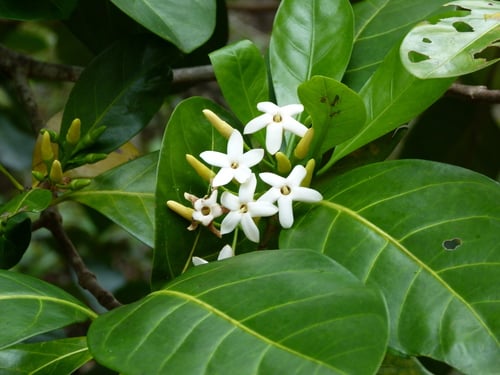
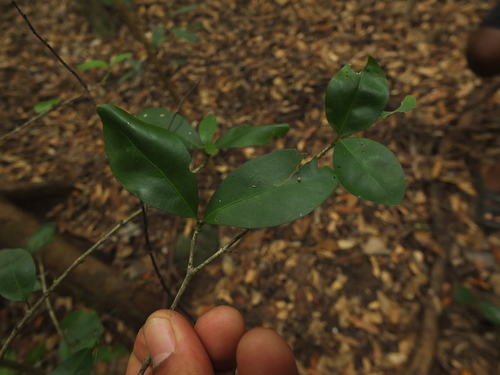
(c) Onildo João Marini Filho, some rights reserved (CC BY-NC), uploaded by Onildo João Marini Filho
iNaturalist· cc-by-nc
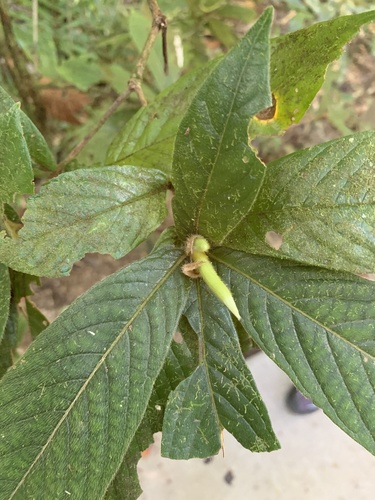
(c) Onildo João Marini Filho, some rights reserved (CC BY-NC), uploaded by Onildo João Marini Filho
iNaturalist· cc-by-nc
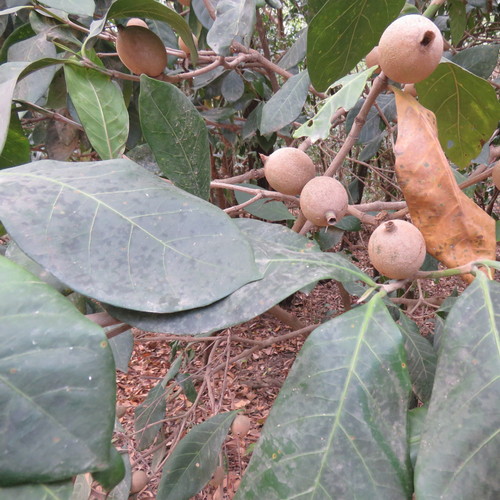
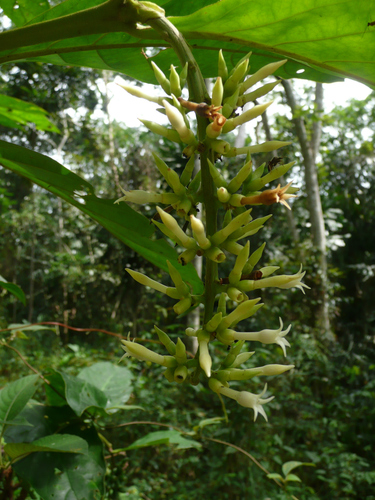
(c) Ricardo Dislich, some rights reserved (CC BY-NC), uploaded by Ricardo Dislich
Description
A bush or large shrub. It loses many of its leaves during the year. It grows 2-4 m tall. The crown is dense and round. The trunk is short and has branches from the base. It is 15-20 cm across. The bark is wrinkled. The leaves are simple and opposite. The leaves are papery and smooth on both surfaces and shiny on the top surface. The leaves are 14-22 cm long and 4-7 cm wide. The leaf stalks are 6-12 mm long and have a groove along them. There are 6-7 pairs of side veins. Plants are separately male and female. The flowers are white and the female flowers occur singly while the male flowers are in groups of 8-15 in the axils of leaves. The fruit are round berries 3-5 cm across. The pulp is fleshy and sweet. The skin is thin. There are many small seeds.
Edible Uses
Fruit - raw. The thin-skinned fruit has a fleshy pulp containing many small seeds, and a sweet flavour. The black, globose fruits are around 3cm in diameter.
Traditional Uses
The fruit are eaten fresh.
This uses section is brief — help expand it
Distribution
A tropical plant. It grows throughout most of Brazil. It grows near streams and in soil that is clayey and fertile in Brazil.
Where It Grows
Bolivia, Brazil*, Paraguay, South America,
Cultivation
The plants are grown from seed.
Propagation
Seed - best sown as soon as it is ripe in a sunny position in a nursery seedbed. A germination rate in excess of 50% can be expected, with the seed sprouting within 28 - 42 days.
Other Uses
The wood is fine-textured, straight-grained, heavy, soft, with poor mechanical properties and of low natural durability. It is too small to be of much use other than for fuel and making charcoal.
Synonyms
Also Known As
Asuka revira, Bola, Marmelada-de-cachorro, Marmelada-preta, Nigua, Puruna
References (8)
- Bortolotto, I. M., et al, 2018, Lista preliminar das plantas alimenticias nativas de Mato Grosso do Sul, Brasil. Iheringia, Serie Botanica, Porto Alegre, 73 (supl.):101-116
- Grandtner, M. M. & Chevrette, J., 2013, Dictionary of Trees, Volume 2: South America: Nomenclature, Taxonomy and Ecology. Academic Press p 164
- Kermath, B. M., et al, 2014, Food Plants in the Americas: A survey of the domesticated, cultivated and wild plants used for Human food in North, Central and South America and the Caribbean. On line draft. p 264
- Lorenzi, H., 2002, Brazilian Trees. A Guide to the Identification and Cultivation of Brazilian Native Trees. Vol. 02 Nova Odessa, SP, Instituto Plantarum p 300 (As Alibertia sessilis)
- Lorenzi, H., Bacher, L., Lacerda, M. & Sartori, S., 2006, Brazilian Fruits & Cultivated Exotics. Sao Paulo, Instituto Plantarum de Estuados da Flora Ltda. p 286
Show all 8 references Hide references
- Peres, M. K., 2011, Diasporos do Cerrado Atrativos para Fauna: Chave Interativa Caracterizacao Visual e Relacoes Ecologicas. Masters thesis. Universidade de Brasilia.
- Reis, S. V. and Lipp, F. L., 1982, New Plant Sources for Drugs and Foods from the New York Botanical Garden herbarium. Harvard. p 283 (As Alibertia sessilis)
- www.colecionandofrutas.org