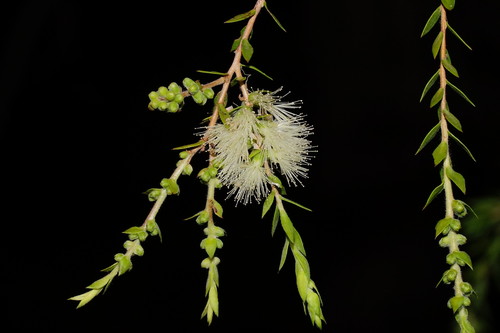
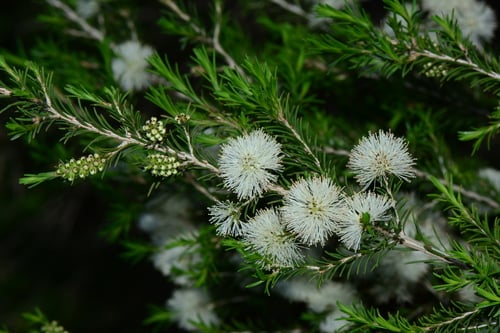
Eugenia candolleana
DC.
Rainforest plum
iNaturalist· cc-by-nc
(c) Diego Monsores, some rights reserved (CC BY-NC), uploaded by Diego Monsores
iNaturalist· cc-by-nc
(c) Gelio Marques, some rights reserved (CC BY-NC), uploaded by Gelio Marques
iNaturalist· cc-by-nc
(c) Diego Monsores, some rights reserved (CC BY-NC), uploaded by Diego Monsores
Summary
Source: WikipediaEugenia candolleana, or rainforest plum, is a tree native from Atlantic rainforest of Brazil, known locally by the Portuguese names cambuí roxo ('purple cambuí') or murtinha ('little myrtle'). It is quite rare in the wild, and has seen limited use in landscaping for its bright green foliage and purple-black fruits. The species is named after the 19th-century Swiss botanist Augustin Pyramus de Candolle. The common name cambuí means 'thin-branched tree' in Tupi-Guarani language, and is applied to over 100 different species.
Description
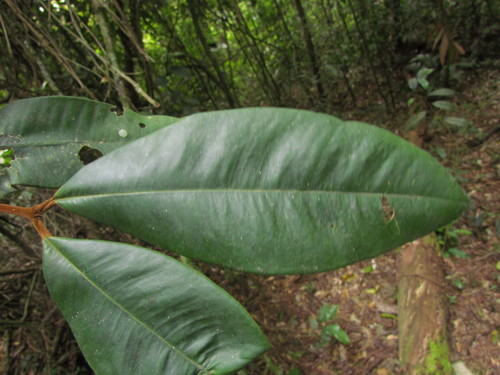
A tree. It loses its leaves during the year. It grows 4-7 m tall. The leaves are sword shape and taper to the tip. They are somewhat leathery and smooth on both surfaces. They are 5-9 cm long and shiny. The flowers are in groups in the axils of leaves. There are a few, small, white flowers. The fruit are black and shiny. They are about 3 cm across. The pulp is thick and firm. It has a sweet flavour. There are 1-2 seeds that can easily be separated from the pulp.
Edible Uses
Fruit - raw or made into marmalade. A firm, thick, fleshy, succulent pulp with a sweet, pleasant flavour. The fruit is up to 3cm in diameter.
Traditional Uses
The fruit are eaten raw. They are also used for marmalade.
This uses section is brief — help expand it
Medicinal Uses
The fruit are consumed fresh or made into jams. In the folk medicine of the region of Sergipe, the infusion of leaves has been used for the treatment of pain and fever. The essential oil distilled from the leaves (green 0.14% by weight) contains isomers of guaiol and cadinol, δ-elemene and viridiflorene.
Distribution
A tropical plant. It grows naturally in the Atlantic forest in Brazil.
Where It Grows
Brazil*, South America,
Cultivation
Plants are grown from seed. The seeds are collected from ripe fruit and the pulp removed. The seeds need to be planted fresh. Seedlings emerge in 40-50 days.
Propagation
Seed - best sown as soon as it is ripe in a partially shaded position in a nursery seedbed. A germination rate of only a little over 10% can be expected, with the seed sprouting within 40 - 50 days. Seedlings grow away slowly.
Other Uses
The wood is fine-textured, irregular-grained, heavy, hard, with average susceptibility to wood eating organisms. Because of its small dimensions, it is only used as a fuel and to make charcoal.
Production
Plants grow slowly.
Other Information
It is a cultivated fruit tree. It is a popular fruit.
Also Known As
Ameixa-de-mata, Cambui, Murta
References (3)
- Lorenzi, H., Bacher, L., Lacerda, M. & Sartori, S., 2006, Brazilian Fruits & Cultivated Exotics. Sao Paulo, Instituto Plantarum de Estuados da Flora Ltda. p 194
- Lorenzi, H., 2009, Brazilian Trees. A Guide to the Identification and Cultivation of Brazilian Native Trees. Instituto Plantarum de Estuados da Flora Ltda. Vol. 3 p 242
- www.colecionandofrutas.org