Syzygium lineatum
(DC.) Merr. & L. M. Perry
Guava berry, Striped myrtle tree
iNaturalist· cc-by-nc
(c) Ethan Beaver, some rights reserved (CC BY-NC)
iNaturalist· cc-by-nc
(c) Ethan Beaver, some rights reserved (CC BY-NC)
iNaturalist· cc-by-nc
(c) beesng, some rights reserved (CC BY-NC)
Description
A tree. It grows to 25 m high. The trunk is 35 cm across. There are buttresses 70 cm high. The dark is grey brown. It is smooth and slightly scaly. The leaves are oval or sword shaped and 5-11 cm long by 2-5 cm wide. They are broadest in the middle. They taper to the tip. The edges can be wavy. The base tapers narrowly. There are 16-25 pairs of secondary veins. The flowering stalks are both in the axils of upper leaves and at the ends. They are 2-10 cm long. The flowering stalk is 2 cm long. The flowers are white or pale yellow. They occur in 3's. The fruits are white. They are oval and 10-13 mm long by 10 mm wide. There are calyx lobes in a ring at the tip. The outer layer is pith, sweet and has a smell.
Edible Uses
Fruit. The pulp is eaten. The fruit is a berry with thick and fleshy, spongy, leathery or brittle rind, oblong-ovoid or ellipsoid, up to 13 mm long.
Traditional Uses
The young shoots are eaten. The ripe fruit are sometimes eaten.
This uses section is brief — help expand it
Medicinal Uses
The roots and young shoots are used in local medicine.
Distribution
A tropical plant. It grows in lowland forests and in peat swamp. It is often along streams. In Indonesia it grows up to 1,100 m altitude.
Where It Grows
Asia, Brunei, Cambodia, Central America, China, Cuba, Indochina, Indonesia, Laos, Malaysia, Myanmar, SE Asia*, Singapore, Thailand, Vietnam, West Indies,
Cultivation
Plants can be grown from seeds.
Propagation
Seed - best sown as soon as it is ripe.
Other Uses
The bark is a source of tannins. The wood is used for tool handles and the construction of houses. We do not have any more specific information for the wood of this species, but the various species of Syzygium tend to have somewhat similar timber. The general description of syzygium timber is as follows:- The heartwood is a golden brown, greyish brown or brown, with pink or purplish glints; it is not clearly demarcated from the 1 - 4cm wide band of sapwood. The texture is fine; the grain slightly interlocked, sometimes wavy or irregular; there are resin deposits. The wood is heavy; moderately hard; somewhat durable, being moderately resistant to fungi and termites, but susceptible to dry wood borers. It seasons slowly, with a high risk of checking and distortion; once dry it is moderately stable in service. It works well with ordinary tools, nailing and screwing are good so long as the wood is pre-bored; gluing is correct. The wood is used for musical instruments, tool handles, furniture components, ship building, heavy carpentry, flooring, joinery etc.
Synonyms
Also Known As
Chang hua pu tao, Kayu udang, Kitamaga, Manting, Nagasaren, Pohon jambu gelam tikus, Pring phnom Thabye
References (9)
- Ariyanti, E. E., et al, 2012, Distribution of Syzygium spp. (Klampok) in some areas of Bromo Tengger Semeru National Park, East Java. Proc. Soc Indon Biodiv. Intl Conf. Vol 1 pp 135-142 July 2012
- Argent, G et al, nd, Manual of the Larger and More important non Dipterocarp Trees of Central Kalimantan Indonesia. Volume 2 Forest Research Institute, Samarinda, Indonesia. p 472
- Cengel, D. J. & Dany, C., (Eds), 2016, Integrating Forest Biodiversity Resource Management and Sustainable Community Livelihood Development in the Preah Vihear Protected Forest. International Tropical Timber Organization p 119
- Hedrick, U.P., 1919, (Ed.), Sturtevant's edible plants of the world. p 299 (As Eugenia lineata)
- J. Arnold Arbor. 19:109. 1938
Show all 9 references Hide references
- Martin, F.W. & Ruberte, R.M., 1979, Edible Leaves of the Tropics. Antillian College Press, Mayaguez, Puerto Rico. p 207
- Ochse, J. J. et al, 1931, Vegetables of the Dutch East Indies. Asher reprint. p 533 (As Eugenia lineata Duthie)
- Sukarya, D. G., (Ed.) 2013, 3,500 Plant Species of the Botanic Gardens of Indonesia. LIPI p 532
- Terra, G.J.A., 1973, Tropical Vegetables. Communication 54e Royal Tropical Institute, Amsterdam, p 46
More from Myrtaceae
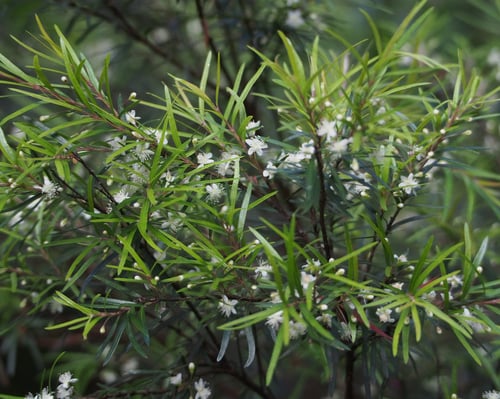
Austromyrtus tenuifolia
Narrow leafed myrtle, Narrow-leafed midgenberry
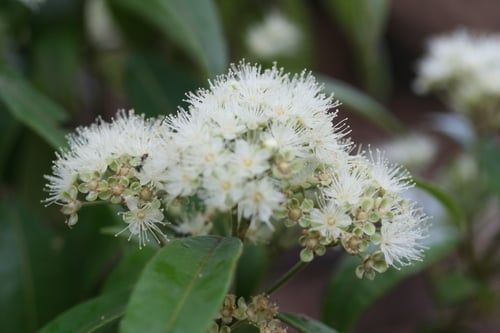
Backhousia citriodora
Lemon Myrtle, Lemon Ironwood, Lemon Scented Myrtle
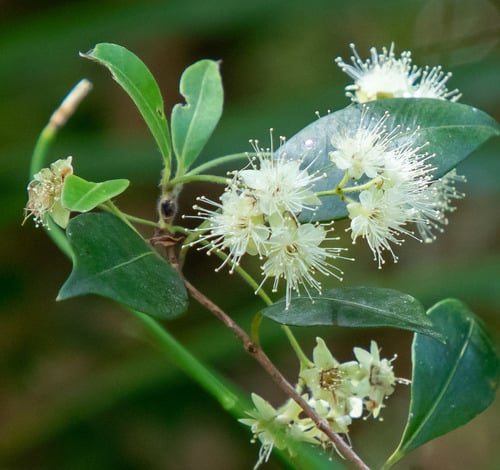
Backhousia myrtifolia
Nutmeg myrtle, Grey Myrtle, Ironwood, Cinnamon myrtle
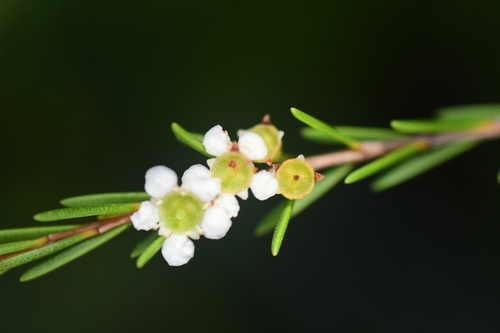
Baeckea frutescens
Childbirth Tea
Baeckea gunniana
Alpine Baeckia, Mountain heath myrtle
Callistemon citrinus
Lemon-scented Bottlebrush