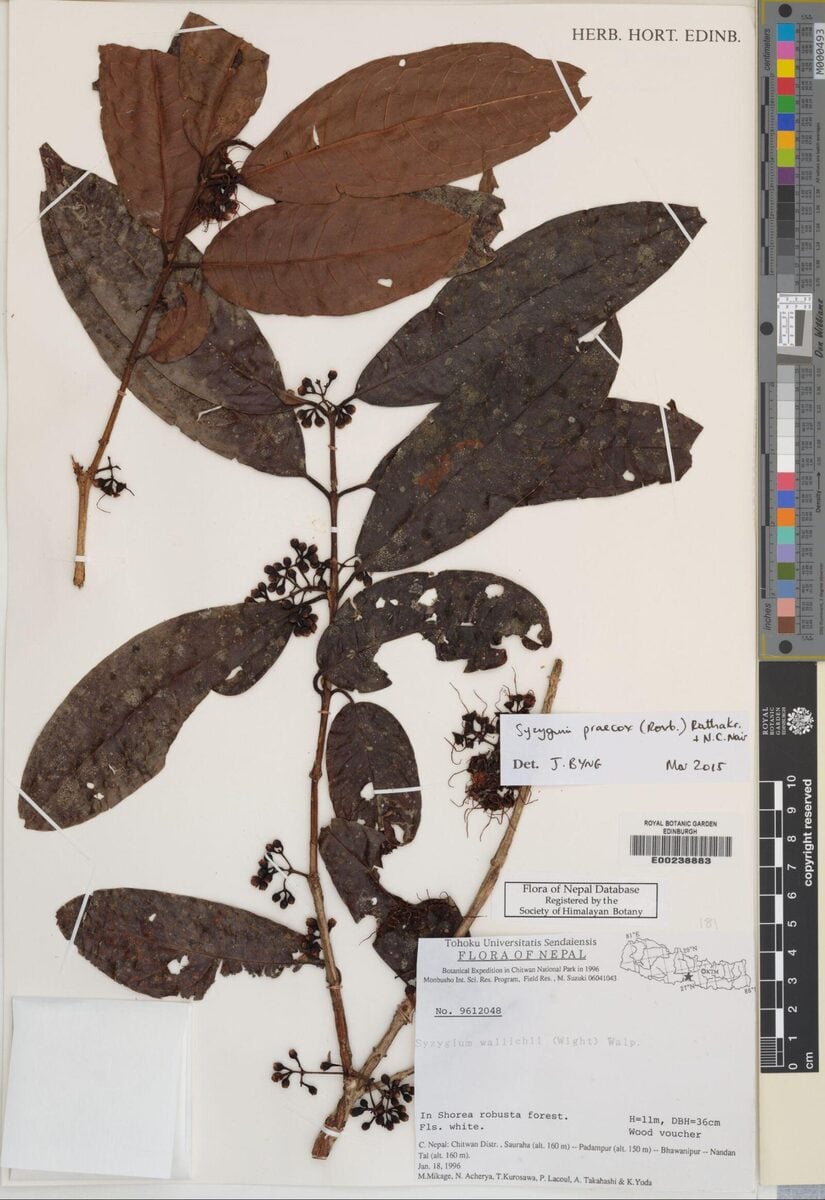
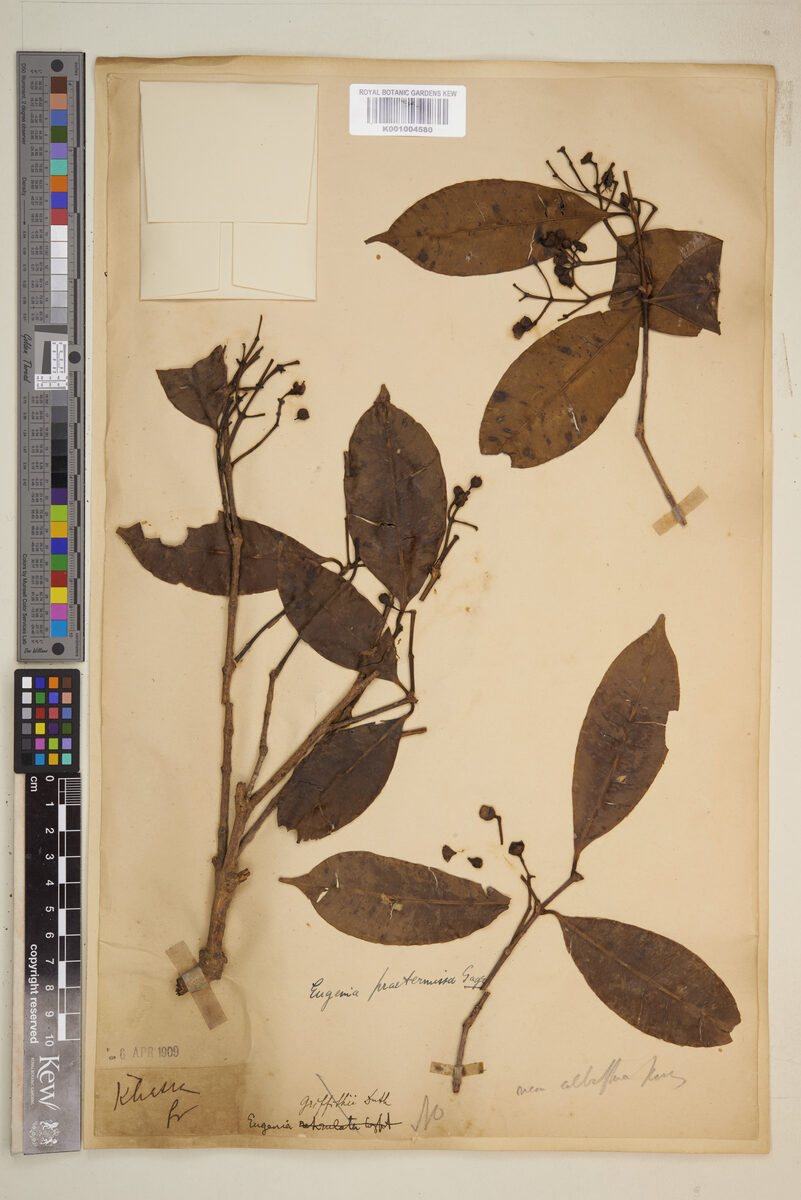
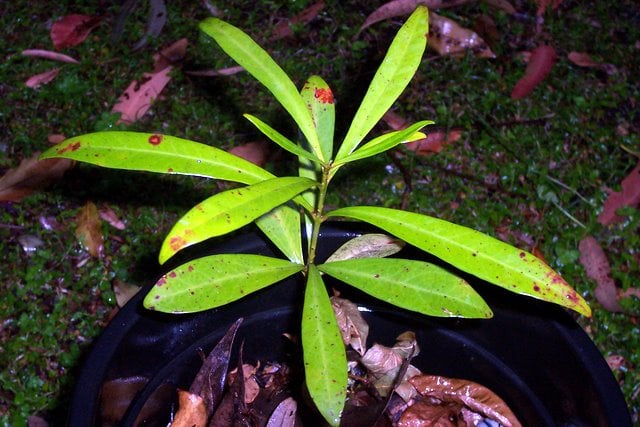
Eugenia punicifolia
(Kunth) DC.
Crimson leaf eugenia
iNaturalist· cc-by-nc
(c) Geovane Siqueira, some rights reserved (CC BY-NC), uploaded by Geovane Siqueira
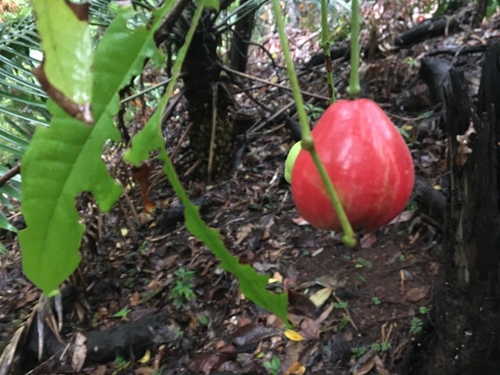
iNaturalist· cc-by-nc-nd
(c) Emilie Ducouret, some rights reserved (CC BY-NC-ND), uploaded by Emilie Ducouret
iNaturalist· cc-by-nc-nd
(c) Emilie Ducouret, some rights reserved (CC BY-NC-ND), uploaded by Emilie Ducouret
Summary
Source: WikipediaEugenia punicifolia is a species of plant in the family Myrtaceae. It is found in Bolivia, Argentina, Brazil, Colombia, Cuba, French Guiana, Guyana, Paraguay, Peru, Suriname, and Venezuela.
Description
A shrub. It grows 3 m tall but can be 8 m tall. The flowers occur singly or in pairs. The fruit is narrowly oval and 1.2 cm long by 1 cm wide. It is yellow to red. The pulp is sweet tasting and edible. There is one seed. It is shiny.
Edible Uses
Fruit - raw or cooked. A sweet flavour. Said to be an important source of vitamins and minerals. The red or yellow, ellipsoid fruit is around 13mm long and 8mm wide, containing a single see.
Traditional Uses
The pulp of the fruit is eaten raw.
This uses section is brief — help expand it
Medicinal Uses
The fruits are consumed fresh or used to make juices, ice creams, and jellies. The leaves and bark are used in traditional medicine to treat wounds, diabetes, and fevers. Research has demonstrated that the plant possesses anti-inflammatory, gastroprotective, pain-relieving, blood sugar-lowering, blood pressure-reducing, antioxidant, and antifungal properties.
Distribution
It is a tropical plant. It grows in savannas and of the edges of forests. In Argentina it grows below 500 m above sea level.
Where It Grows
Amazon, Argentina, Bolivia, Brazil, Colombia, Cuba, French Guiana, Guianas, Guyana, Paraguay, Peru, South America*, Suriname, Trinidad, Venezuela, West Indies,
Synonyms
Also Known As
Aperta cu, Nangapiry, Nanica, Nhanica, Sabanakersi, Tichal blanco
References (15)
- Bortolotto, I. M., et al, 2018, Lista preliminar das plantas alimenticias nativas de Mato Grosso do Sul, Brasil. Iheringia, Serie Botanica, Porto Alegre, 73 (supl.):101-116
- Fouqué, A., 1972, Espèces fruitières d'Amérique tropicale. Institut français de recherches fruitierès outre-mer
- Grandtner, M. M. & Chevrette, J., 2013, Dictionary of Trees, Volume 2: South America: Nomenclature, Taxonomy and Ecology. Academic Press p 241
- Hedrick, U.P., 1919, (Ed.), Sturtevant's edible plants of the world. p 300 (As Eugenia nhanica)
- Kermath, B. M., et al, 2014, Food Plants in the Americas: A survey of the domesticated, cultivated and wild plants used for Human food in North, Central and South America and the Caribbean. On line draft. p 356 (As Eugenia nhanica)
Show all 15 references Hide references
- Leticia, Z., et al, 2015, Do Socioeconomic characteristics explain the knowledge and use of native food plants in semiarid environments in Northeastern Brazil? Journal of Arid Environments 115:53-61
- Lopez-Diago, D. & Garcia, N., 2021, Wild edible fruits of Colombia. Biota ColomBiana 22 (2) p 44
- Martin, F.W., C.W. Campbell and R.M. Ruberté, 1987, Perennial edible fruits of the tropics - An inventory. United States Department of Agriculture, Agricultural Research Service, Agriculture Handbook No. 642. Washington, D.C., USA (As Eugenia nhanica)
- Miguel, E., et al, 1989, A checklist of the cultivated plants of Cuba. Kulturpflanze 37. 1989, 211-357
- NYBG herbarium "edible"
- Peres, M. K., 2011, Diasporos do Cerrado Atrativos para Fauna: Chave Interativa Caracterizacao Visual e Relacoes Ecologicas. Masters thesis. Universidade de Brasilia.
- Prodr. 3:267. 1828 "punicaefolia"
- Roa, J. A. G. & Boada, D. S. G., 2018, Fundación para el Fortalecimiento de la Fruticultura y Plantas Alimenticias no Convencionales en Colombia.
- van Roosmalen, M.G.M., 1985, Fruits of the Guianan Flora. Utrecht Univ. & Wageningen Univ. p 324
- www.colecionandofrutas.org