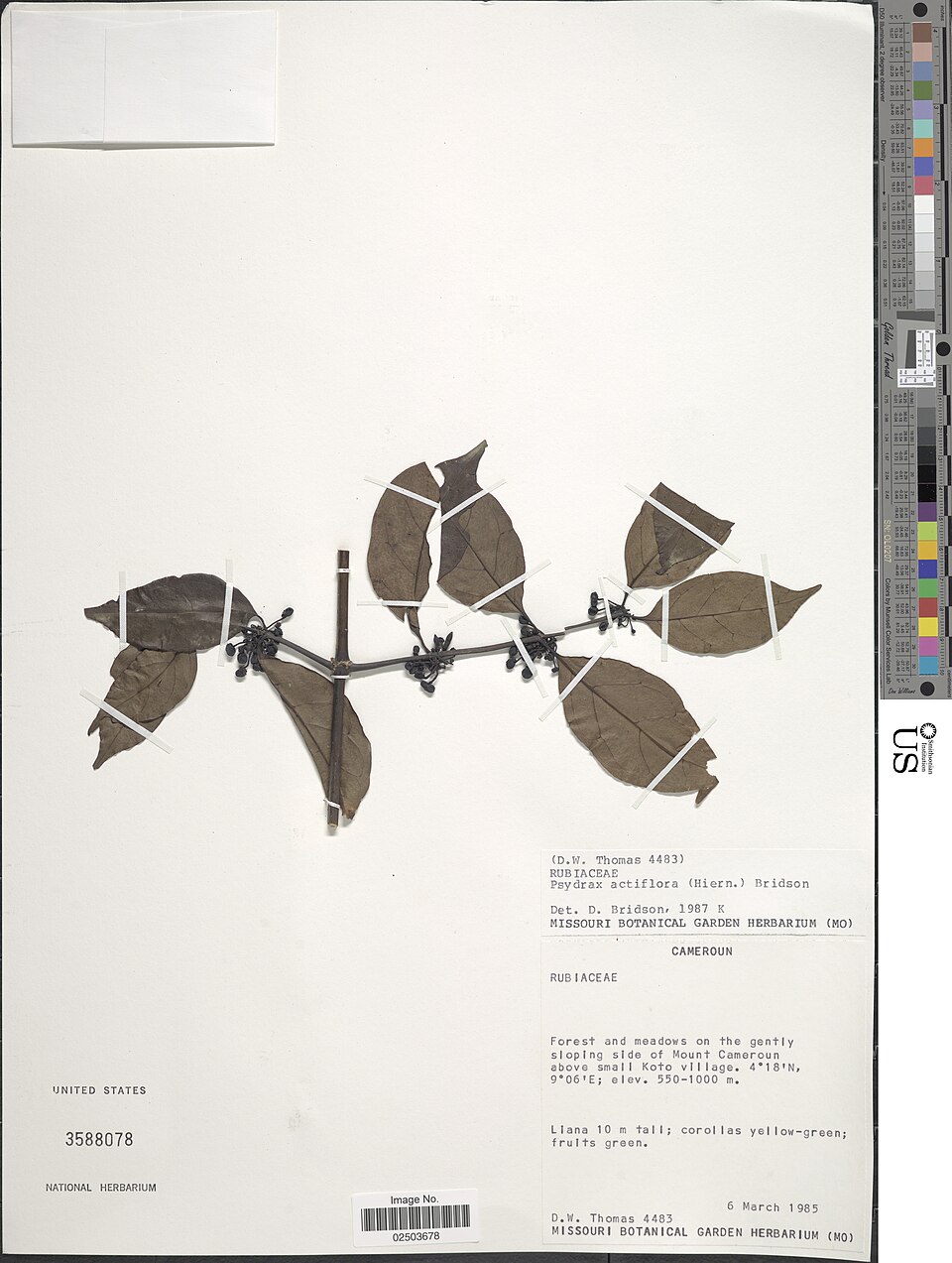
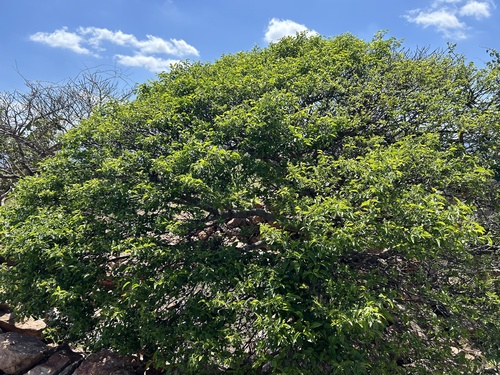
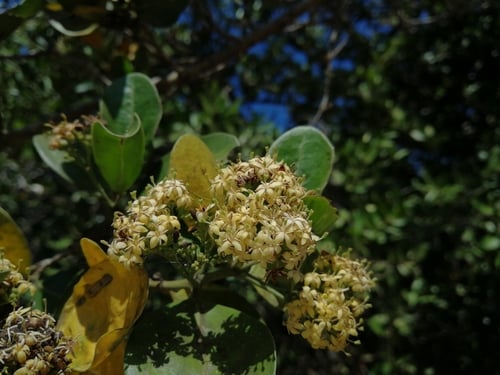
Alibertia patinoi
(Cuatrec.) Delprete & C. H. Perss.
Borojo
iNaturalist· cc-by
(c) Jean-Luc Crucifix, some rights reserved (CC BY)
iNaturalist· cc-by-nc
(c) Leonardo Álvarez-Alcázar, some rights reserved (CC BY-NC), uploaded by Leonardo Álvarez-Alcázar
iNaturalist· cc-by
(c) Skjold Søndergaard, some rights reserved (CC BY), uploaded by Skjold Søndergaard
Summary
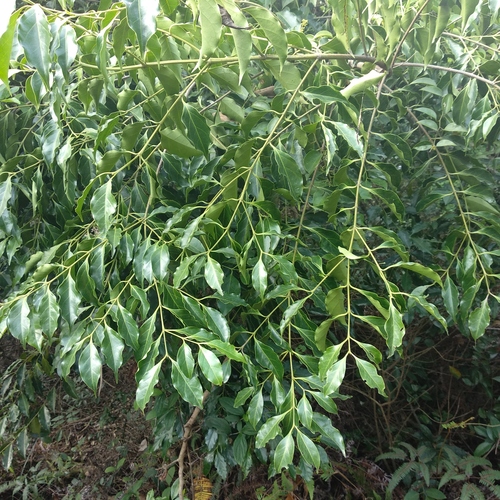
Source: WikipediaAlibertia patinoi, commonly known as borojó, is a small (2-5m), dioecious tropical rainforest tree, one of the few edible fruit bearing species in the Rubiaceae family. Borojó, native to the world's wettest lowlands (the Chocó–Darién moist forests ecoregion), grows in the Chocó Department of northwestern Colombia and in the Esmeraldas Province of northwestern Ecuador. Borojó is an Emberá word meaning: boro = head, jo = fruit - head-shaped fruit, or round, globulous fruit. The species has also been reported from Panama, Venezuela and Costa Rica.
Description
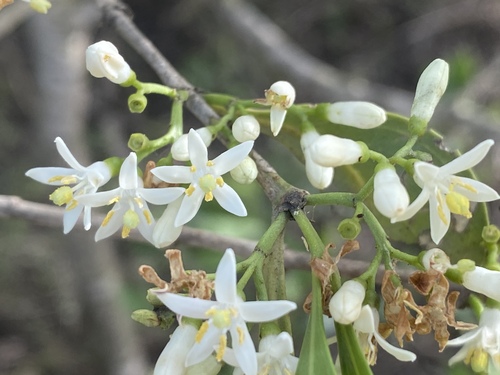
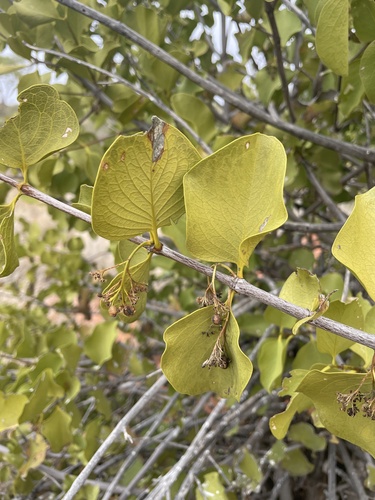
A small tree or shrub. It is 3-5 m tall. The male and female flowers are on separate plants. The male flowers are in a white cluster. The female flowers occur singly at the tip of the plant. The fruit are round with dark brown pulp and many small seeds. There can be 90 to 600 small seeds. The fruit are round and 7-12 cm long and wide. They are edible. The fruit are ripe when they fall to the ground.
Edible Uses
The fruit is eaten fresh and used to make juice, jellies, preserves, sauces, ice cream, and sherbets.
Traditional Uses
The fruit is eaten fresh. They are also used for juice. They can be used in jellies, preserves, sauces, ice cream and sherberts.
This uses section is brief — help expand it
Distribution
It is a tropical plant. It grows in the warm tropical lowlands. It grows in areas with a rainfall of 4,000 mm per year. The temperature is 28°C and the humidity 85%. It can grow to 1,200 m altitude. It usually grows in the shade of other trees. It needs a rainfall of over 4,000 mm.
Where It Grows
Amazon, Central America, Colombia*, Costa Rica, Ecuador, Nauru, Panama, South America,
Cultivation
Plants are grown from seeds. They germinate in 30-60 days. Plants need to be 3.5 m apart.
Other Information
It is sold in local markets and is popular. It is cultivated.
Synonyms
Also Known As
Achugarban, Achu gar banwala, Achu garbam wala, Borojo, Borojo hembra, Borojo macho, Borojo yura, Patino borojoa, Madrono, Uwekawe, Wala
References (17)
- Asprilla-Perea, J., & Diaz-Puente, J.M., 2018, Traditional use of wild edible food in rural territories within tropical forest zones: A case study from the northwestern Colombia. New Trends and Issues Proceedings on Humanities and Social Sciences [Online]. 5(1), 162–181.
- Chizmar Fernandez, C., et al, 2009, Plantas comestibles de Centroamerica. Instituto de Biodiversidad, Costa Rica. p 268 (As Borojoa patinoi)
- Facciola, S., 1998, Cornucopia 2: a Source Book of Edible Plants. Kampong Publications, p 211 (As Borojoa patinoi)
- Grandtner, M. M., 2008, World Dictionary of Trees. Wood and Forest Science Department. Laval University, Quebec, Qc Canada. (Internet database http://www.WDT.QC.ca) (As Borojoa patinoi)
- Grandtner, M. M. & Chevrette, J., 2013, Dictionary of Trees, Volume 2: South America: Nomenclature, Taxonomy and Ecology. Academic Press p 70 (As Borojoa patinoi)
Show all 17 references Hide references
- Hermandez Bermejo, J.E., and Leon, J. (Eds.), 1994, Neglected Crops. 1492 from a different perspective. FAO Plant Production and Protection Series No 26. FAO, Rome. p17 (As Borojoa patinoi)
- Kermath, B. M., et al, 2014, Food Plants in the Americas: A survey of the domesticated, cultivated and wild plants used for Human food in North, Central and South America and the Caribbean. On line draft. p 138 (As Borojoa patinoi)
- Kew Plants of the World Online
- Mabberley, 1990, The Plant Book. (As Borojoa patinoi)
- Penafield Anchundia, D. D., 2017, Traditional food consumption and its nutritional contribution in Guasaganda, Central Ecuador. PhD Ghent University p 72 (As Borojoa patinoi)
- Roa, J. A. G. & Boada, D. S. G., 2018, Fundación para el Fortalecimiento de la Fruticultura y Plantas Alimenticias no Convencionales en Colombia. (As Borojoa patinoi)
- Secr. Agric. Gan., Colomb., Serv. Divulg., Ser. Bot. Aplic. 2:474. 1949; Revista Acad. Colomb. Ci. Exact. 7:474. 1950 (As Borojoa patinoi)
- Smith, N., Mori, S.A., et al, 2004, Flowering Plants of the Neotropics. Princeton. p 332 (As Borojoa patinoi)
- Torre, de la, L., et al, 2008, Enciclopedia de las Plantas Útiles del Ecuador. Herbario QCA. Pontificia Universidad Católica del Ecuador. p 541 (As Borojoa patinoi)
- Villachica, H., (Ed.), 1996, Frutales Y hortalizas promisorios de la Amazonia. FAO, Lima. p 59 (As Borojoa patinoi)
- Wiersema, J. H. & Leon, B., 2013, World Economic Plants. A Standard Reference CRC Press. 2nd Ed. p 107 (As Borojoa patinoi)
- World Checklist of Useful Plant Species 2020. Royal Botanic Gardens, Kew