Cecropia glaziovii
Snethglade
Red snakewood tree
iNaturalist· cc-by-nc
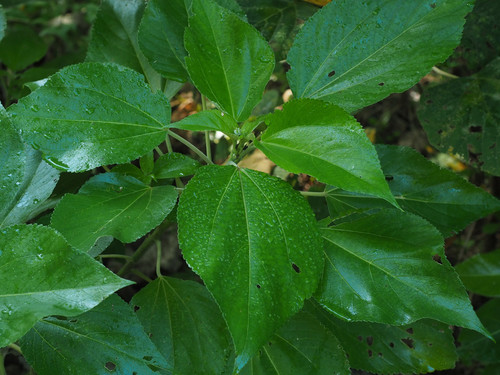
(c) Diego Monsores, some rights reserved (CC BY-NC), uploaded by Diego Monsores
iNaturalist· cc-by
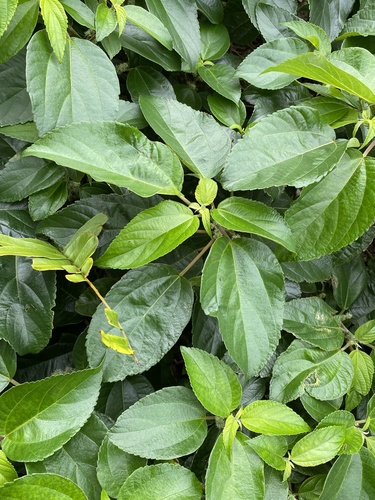
(c) Victor Farjalla Pontes, some rights reserved (CC BY), uploaded by Victor Farjalla Pontes
iNaturalist· cc-by-nc
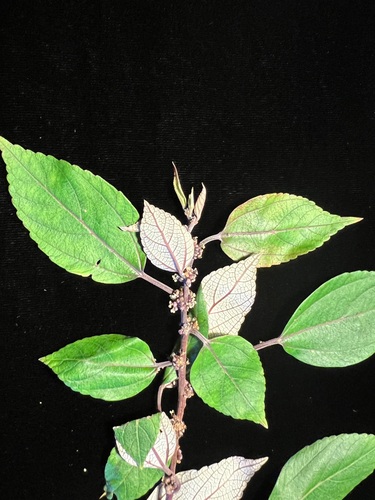
(c) Marcio Santos Ferreira, some rights reserved (CC BY-NC), uploaded by Marcio Santos Ferreira
Description
A tree. It grows 8-16 m high. The trunk is upright. It is 20-30 cm across. The bark is smooth and has leaf scars. The leaves are alternate and have 7-11 lobes. They are 25-40 cm across. The fruit is an aggregate fruit with a fleshy pulp and sweet flavour.
Edible Uses
The fruit is eaten fresh; ripe fruits are harvested and allowed to rot to facilitate seed removal for propagation.
Known Hazards
The branches and leaf petioles of Cecropia species are often hollow and can harbour stinging ants. The trees attract the ants by means of producing a honey-like sap and the ants respond by working to keep the tree free of leaf-eating pests - which can include humans.
Distribution
It is a tropical plant. It grows in forests in coastal plains in Brazil. It grows up to 1,300 m above sea level.
Where It Grows
Brazil*, South America,
Cultivation
The plants are grown from seed. The ripe fruit are harvested and allowed to rot in a plastic bag to make it easier to remove the seeds. The small seeds are washed out in running water using a seive. The seeds are put near the soil surface in a shady place to germinate. They germinate in 3-4 weeks.
Propagation
Seed - requires light to germinate. It can be sown in light shade in a nursery seedbed, but should not be covered, just lightly pressed into the soil. A reasonable germination rate can be expected, with the seeds sprouting within 3 - 4 weeks. Greenwood cuttings in a frame with bottom heat.
Other Uses
The fibrous bark has been used to make coarse cloth and rustic ropes. The bark is a source of tannins. The leaves have a rough texture and are traditionally used as a type of sandpaper to smooth the surface of items such as Calabash fruit shells (Cresentia cujete) that are being used to make containers etc. Sapwood and heartwood are not differentiated. The wood is light in weight, soft and not durable. It is generally used for low value items such as boxes, linings, toys, plywood, pencils, matchsticks, shoe heels etc. Because it is light in weight, it can be used like balsa wood to make aeroplane models etc. It is also used for making rafts and buoys. The wood is used for making charcoal for gunpowder manufacture, and also for cellulose paste to make paper etc. With their sparse canopy and attractive foliage that is green above and silver-felted below, members of this genus generally provide a dramatic canopy but only cast a very light shade, allowing other plants to be grown right up to the base of their trunk. Many members of the genus can be used as pioneer species when developing a new woodland.
Notes
Also put in the family Cecropiaceae.
Synonyms
Also Known As
Embabua, Embauba-parda, Embauva-vermelha, Embauva, Imbauva
References (5)
- Alimenticias - FloraSBS
- Brack, P., et al, 2020, Frutas nativas do Rio Grande do Sul, Brasil: riqueza e potencial alimentício. Native fruits of Rio Grande do Sul, Brazil: richness and potential as food. Rodriguésia 71: e03102018
- Grandtner, M. M. & Chevrette, J., 2013, Dictionary of Trees, Volume 2: South America: Nomenclature, Taxonomy and Ecology. Academic Press p 112
- Kinupp, V. F., 2007, Plantas alimenticias nao-convencionais da regiao metropolitana de Porto Alegre, RS, Brazil p 104
- Lorenzi, H., 2002, Brazilian Trees. A Guide to the Identification and Cultivation of Brazilian Native Trees. Vol. 02 Nova Odessa, SP, Instituto Plantarum p 79