Borassus madagascariensis
Boj.
Madagascar Palmyra palm
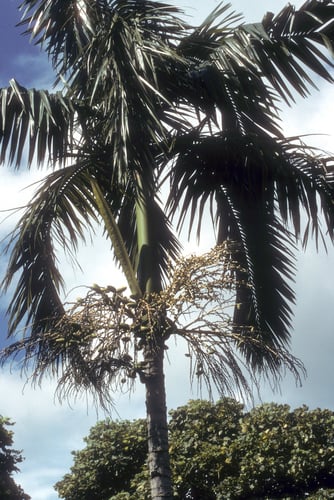
iNaturalist· cc-by-nc
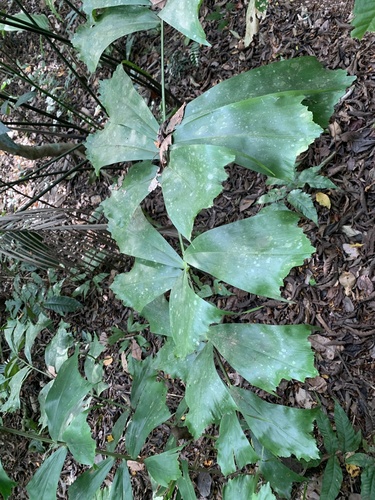
(c) Pablo Fraire, some rights reserved (CC BY-NC), uploaded by Pablo Fraire
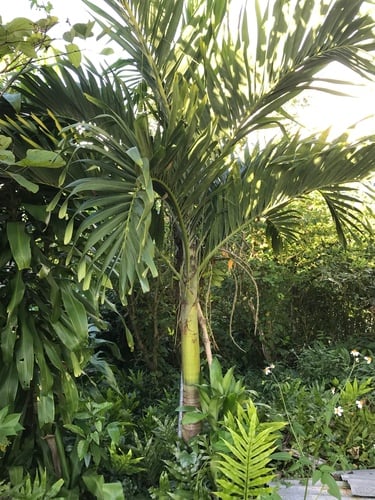
iNaturalist· cc-by-nc
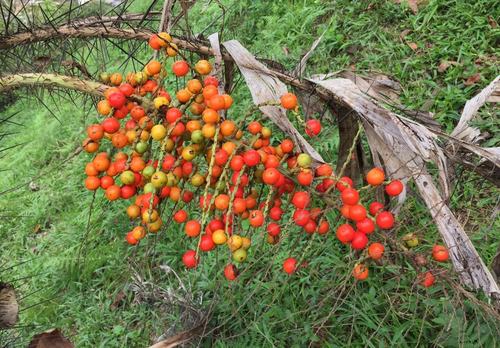
(c) Andry.A.R, some rights reserved (CC BY-NC), uploaded by Andry.A.R
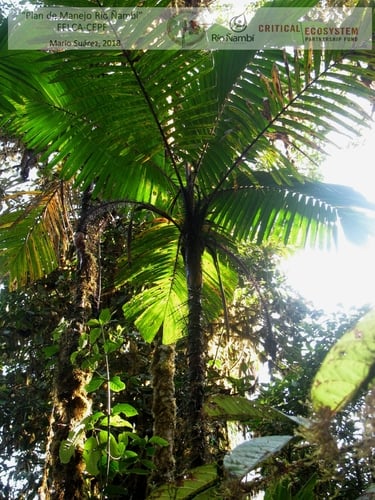
iNaturalist· cc-by-nc
(c) Arne Hartig, some rights reserved (CC BY-NC)
Summary
Source: WikipediaBorassus madagascariensis is a species in the palm family Arecales endemic to Madagascar. The palm is native to western Madagascar, where it is found along lowland watercourses in the dry forests below 100 meters elevation. It has a fragmented distribution and is known from only five locations. The palm heart and newly germinated seedlings are edible, and an alcoholic drink is produced from the fruit.
Description
A solitary palm. It is 10-16 m high. The trunk is 40-60 cm across. There is a swelling near the middle. The leaves are up to 12-20 in the crown. They are arranged in a spiral. They are 5 m long and compound wit leaflets spread out like fingers on a hand. The fruit are round and fleshy. They are 15-18 cm across. The seeds are 7-9 cm long.
Edible Uses
The palm heart is eaten fresh. Newly germinated seedlings are eaten fresh or cooked as porridge. The stem pith yields a slightly bitter sago-like starch. The fruit is fermented to produce an alcoholic drink.
Traditional Uses
The palm heart is eaten. The newly germinated seedlings are eaten fresh. They are also cooked as a porridge. The stem pith gives a slightly bitter sago-like starch. The fruit is used to produce an alcoholic drink. Caution: Alcohol is a cause of cancer.
Known Hazards
The fruit is used to produce alcoholic drinks; alcohol is a cause of cancer.
Distribution
A tropical plant. It grows at low altitudes along rivers in alluvial soil.
Where It Grows
Africa, East Africa, Madagascar*,
Notes
There are 7-10 Borassus species.