Sterculia striata
A. St.-Hil. & Naudin
Chicha, Striated sterculia
iNaturalist· cc-by
(c) João Medeiros, some rights reserved (CC BY)
iNaturalist· cc-by
(c) João Medeiros, some rights reserved (CC BY)
iNaturalist· cc-by-nc
(c) Laurent Quéno, some rights reserved (CC BY-NC)
Description
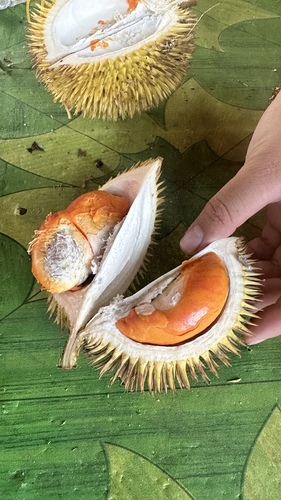
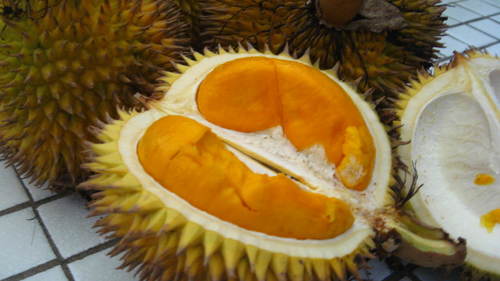
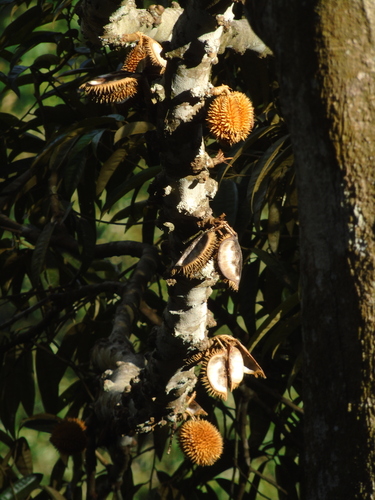
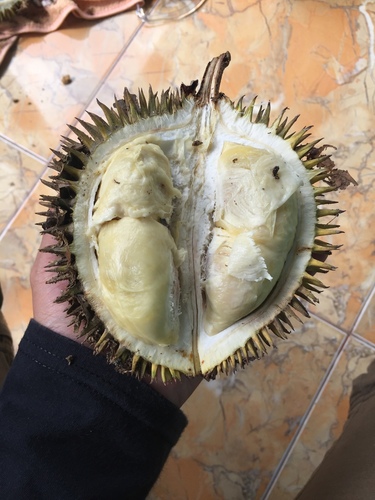
A tree. It grows 8-14 m high. The crown is pyramid shaped. The trunk is 40-50 cm across. The leaves are simple. They have 3-5 lobes and are heart shaped. The leaf stalk is 10-11 cm long. The leaves are 24-28 cm long by 18-20 cm wide. The flowers are in groups in the axils of leaves or at the ends of branches. The fruit is made up of 3-5 woody capsules. They are green outside and red inside. They contain 5 seeds each. The seeds are black.
Edible Uses
The seeds are eaten fresh or roasted and are highly enjoyed.
Traditional Uses
The seeds are eaten fresh or roasted.
This uses section is brief — help expand it
Medicinal Uses
No medicinal uses documented.
Distribution
It is a tropical plant. It grows in Brazil in the Amazon and savannah. It grows in semi-deciduous forest.
Where It Grows
Bolivia, Brazil*, South America,
Cultivation
Plants are grown from seed. The ripe fruit are harvested and put in the sun to fully open. The seeds are only viable for about 60 days. Fresh seed are planted and germinate in 20-30 days. Seedlings can be transplanted into the field in 5 months.
Propagation
Seed - best sown as soon as it is ripe in a partially shaded position in individual containers. A high germination rate can be expected, with the seed sprouting within 20 - 30 days. The seedlings grow away quickly and they should be ready to plant out 5 months later. A physical dormancy caused by the hard seed coat of the mature seeds of many species in this genus can be overcome by scarifying the seed. This is carried out by cutting away or abrading some of the seed coat to allow the ingress of water, though great care must be taken not to damage the embryo. The aril surrounding the seed should also be removed - this is easiest when it has been softened through soaking in water. The seeds germinate optimally at temperatures between 20 - 30°c. They can be sown in a nursery seedbed or in containers. A germination rate of about 95%, occurring within about 2 weeks can be expected if the seed has been properly treated.
Other Uses
The wood is moderately heavy, soft, with poor mechanical properties and of low durability when exposed to the elements. It is used for internal work, carpentry, making boxes, matches, pencils, toys and as a source of pulp for making paper. A fast-growing pioneer species within its native range. It can be used for restoring native woodland or establishing a woodland garden, being an especially good choice where the soil is dry and stony.
Production
Plants grow at a moderate rate.
Other Information
The seeds are enjoyed.
Notes
Also put in the family Sterculiaceae.
Nutrition
| Part | Moisture | kJ | kcal | Protein | Vit A | Vit C | Iron | Zinc |
|---|---|---|---|---|---|---|---|---|
| Seeds | 6.9 | 1847 | 442 | 19.6 | — | — | 8.4 | 2.3 |
Synonyms
Also Known As
Amendoim-de-macaco, Arachacha, Castanha-de-macaco, Castanheiro-do-moto, Checha-do-norte, Chicha-do-cerrado, Chicha, Manduvi, Mendoni-guacu, Mendubi-guacu, Pau-rei, Sapucaia, Xixa
References (8)
- Bortolotto, I. M., et al, 2015, Knowledge and use of wild edible plants in rural communities along Paraguay River, Pantanal, Brazil. Journal or Ethnobiology and Ethnomedicine. 11:46
- Bortolotto, I. M., et al, 2018, Lista preliminar das plantas alimenticias nativas de Mato Grosso do Sul, Brasil. Iheringia, Serie Botanica, Porto Alegre, 73 (supl.):101-116
- Fraguas, R. M., 2015, Chemical constituents of chichá (Sterculia striata St. Hil. et Naud.) seeds. African Journal of Agricultural Research. 10(9) pp. 965-969
- Grandtner, M. M. & Chevrette, J., 2013, Dictionary of Trees, Volume 2: South America: Nomenclature, Taxonomy and Ecology. Academic Press p 629
- Hunter, D., et al, 2019, The potential of neglected and underutilized species for improving diets and nutrition. Planta (2019) 250:709-729
Show all 8 references Hide references
- Lorenzi, H., 2002, Brazilian Trees. A Guide to the Identification and Cultivation of Brazilian Native Trees. Vol. 01 Nova Odessa, SP, Instituto Plantarum p 346
- Lorenzi, H., Bacher, L., Lacerda, M. & Sartori, S., 2006, Brazilian Fruits & Cultivated Exotics. Sao Paulo, Instituto Plantarum de Estuados da Flora Ltda. p 164
- www.colecionandofrutas.org