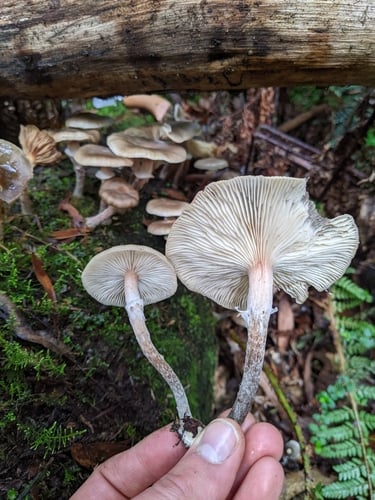
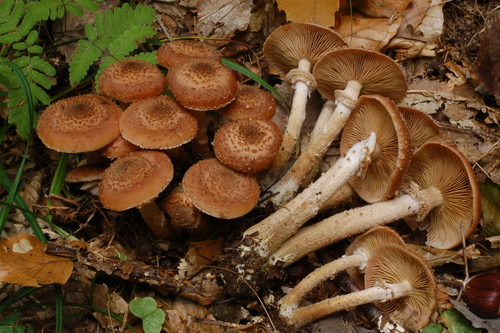
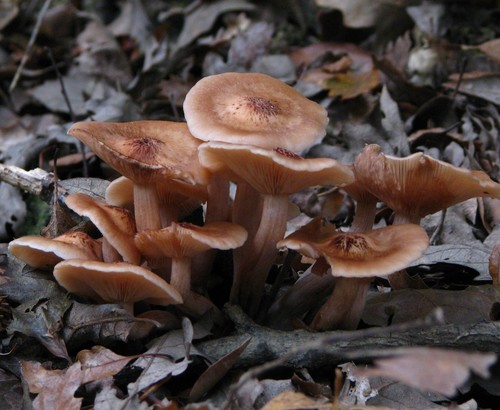
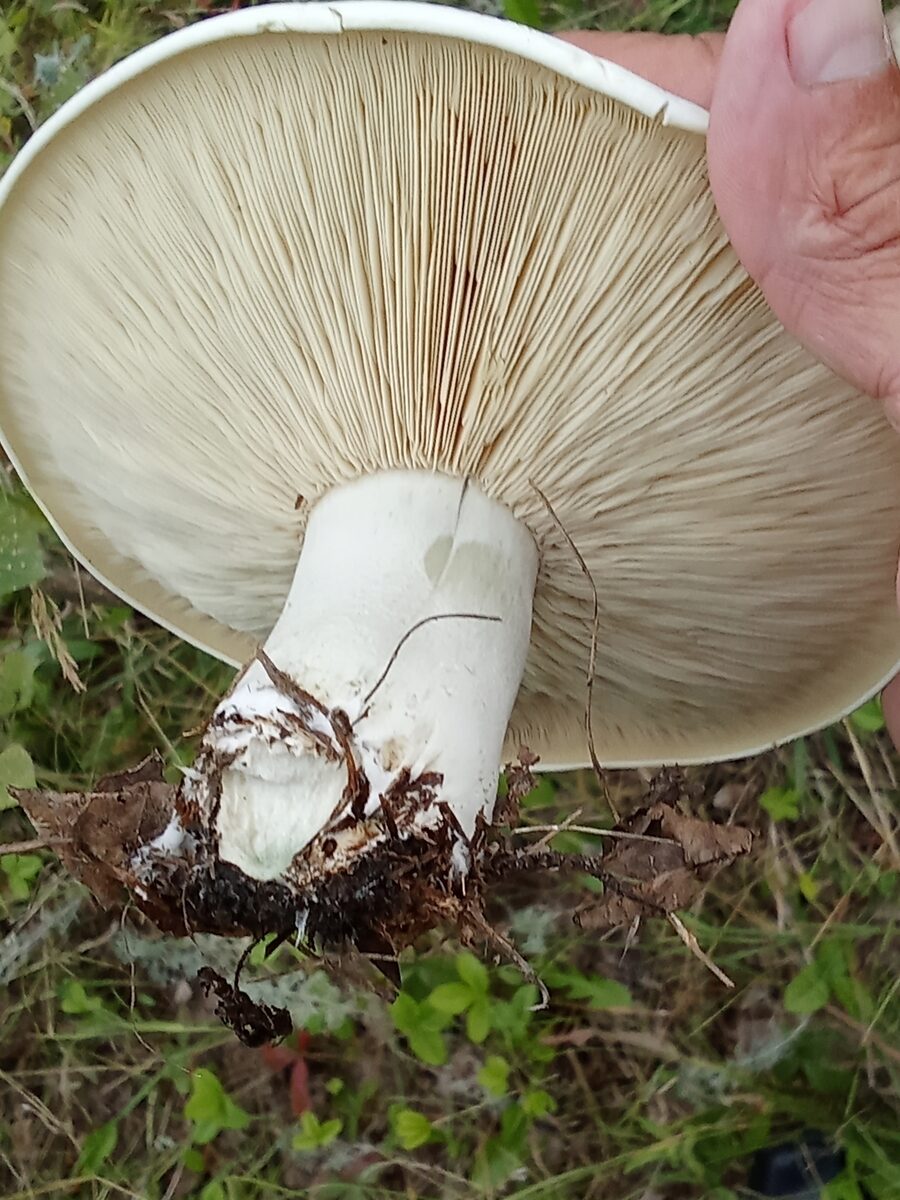
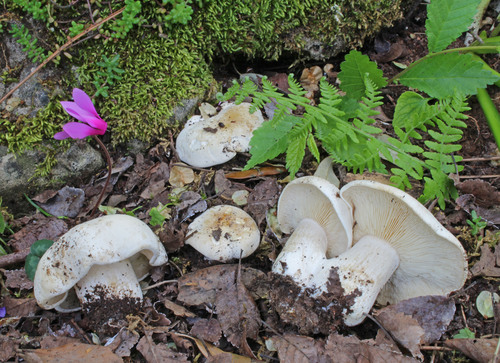
Pleurocybella porrigens
(Pers.) Singer
Angel wings, Angel trumpets
iNaturalist· cc-by-nc-nd
(c) Carita Bergman, some rights reserved (CC BY-NC-ND), uploaded by Carita Bergman
iNaturalist· cc-by
(c) Jessica Williams, some rights reserved (CC BY)
iNaturalist· cc-by
(c) Jessica Williams, some rights reserved (CC BY)
Summary
Source: WikipediaPleurocybella porrigens, also known as the angel wing, is a species of fungus in the family Phyllotopsidaceae. It medium-sized fruit bodies are whitish and fan-shaped. It is a wood-decay fungus on conifer wood and is widespread in temperate forests of the Northern Hemisphere.
Description
A mushroom found in temperate regions.
This description is brief — help expand it
Edible Uses
The fruiting bodies are eaten.
Traditional Uses
The fruiting bodies are eaten.
This uses section is brief — help expand it
Known Hazards
P. porrigens was once generally regarded as edible, though bland. As of 2011, it is a suspect in two outbreaks in Japan involving fatal encephalopathy. Most victims had preexisting kidney disorders. The first incident occurred in September and October 2004 across nine prefectures in Japan, documenting the sickening of 59 people and the eventual death of 17. Most of those who died had preexisting liver problems and the average age of those affected was 70. Death occurred between 13 and 29 days after the onset of symptoms, which occurred at most three weeks after consumption of the species. The second incident occurred in 2009, when a 65-year-old man who had been on hemodialysis died from acute encephalopathy after eating P. porrigens. The mechanism of action for the toxicity of P. porrigens has not been definitively established, but several possibilities have been suggested. It has been demonstrated that P. porrigens contains an unusual amino acid which is toxic to the brain cells of rats in cell culture studies, but it has not yet been possible to definitively determine that this was the cause of the fatal encephalopathies. Other mechanisms have been suggested for P. porrigens's apparent toxicity, including the possibility that the fungus may contain toxic levels of cyanide salts.
Distribution
It is a temperate plant.
Where It Grows
Asia, Canada, China, Hong Kong, Japan, North America,
Synonyms
Also Known As
Beixing nicer
References (5)
- Amai, 1938, (As Pleurotus porrigens)
- Boa, E. R., 2004, Wild edible fungi and their importance to people. FAO Non Wood Forest Products Booklet 17
- Facciola, S., 1998, Cornucopia 2: a Source Book of Edible Plants. Kampong Publications, p 255
- Kiple, K.F. & Ornelas, K.C., (eds), 2000, The Cambridge World History of Food. CUP p 320 (As Pleurotus porrigens)
- Tanaka,