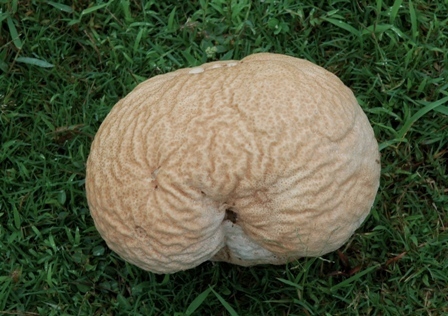
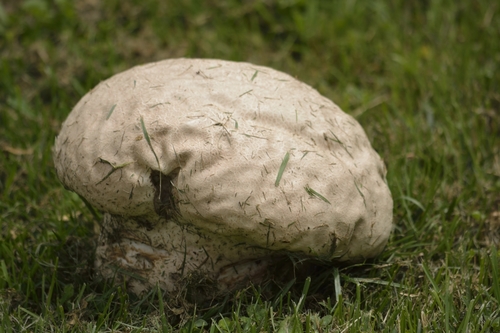
Calvatia gigantea
(Batsch : Pers.) Lloyd
Giant puffball
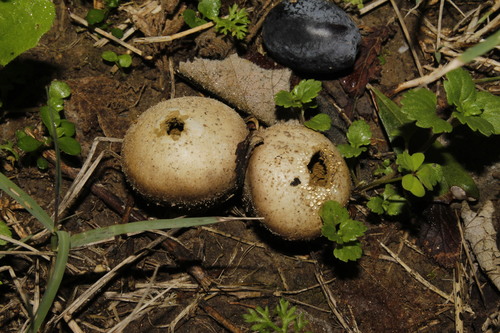
iNaturalist· cc-by-nc
(c) Krystelle Denis, some rights reserved (CC BY-NC), uploaded by Krystelle Denis
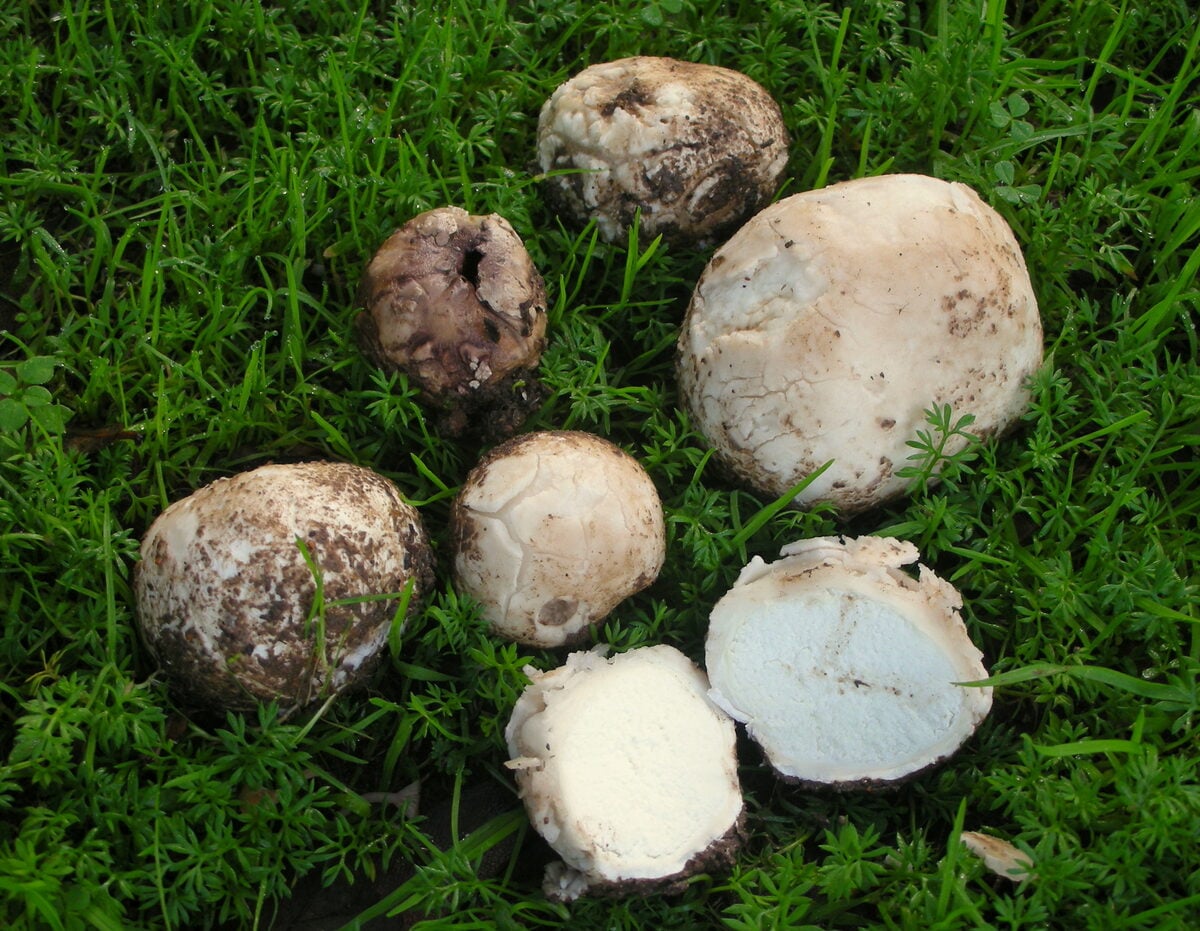
iNaturalist· cc-by-nc
(c) Kyle Jones, some rights reserved (CC BY-NC)
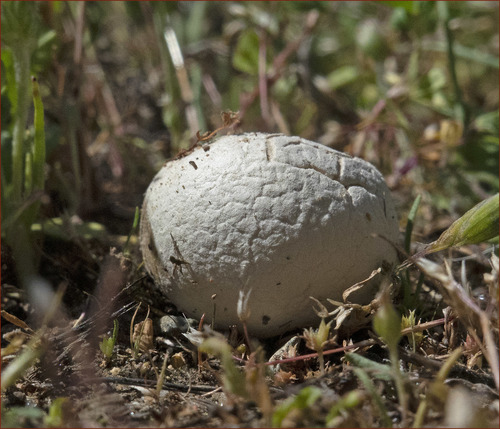
iNaturalist· cc-by-nc
(c) Brian Charles, some rights reserved (CC BY-NC)
Summary
Source: WikipediaCalvatia gigantea, commonly known in English as the giant puffball, is a puffball mushroom found in meadows, fields, and deciduous forests in late summer and autumn. It is found in temperate areas throughout the world. It is edible when young.
Description
A mushroom. The fruiting body can be 25-100 cm across.
This description is brief — help expand it
Edible Uses
The large white mushrooms are edible when young, as are all true puffballs, but they can cause digestive issues if the spores have begun to form—as indicated by the flesh being yellowish or greenish-brown instead of pure white. An overripe puffball will fall apart and release spores when touched or if cut open, and should be discarded. Some people experience a laxative effect from eating this species.
Traditional Uses
The fruiting bodies are eaten when young and white and firm-fleshed. They can be braised, fried, grilled, sauteed or cooked in other ways. They can be sliced and fried like pancakes or added to soups and salads.
Distribution
It is a temperate plant.
Where It Grows
Asia, Bulgaria, Canada, China, Europe, India, North America, Northeastern India, USA,
Production
In NW India they are harvested in April to May.
Notes
There are about 35 Calvatia species.
Dangerous Lookalikes
This plant can be confused with the following toxic species. Always verify identification carefully before consuming any wild plant.
Death Cap (button stage)
Amanita phalloides
Archenzo
Giant puffball
Calvatia gigantea
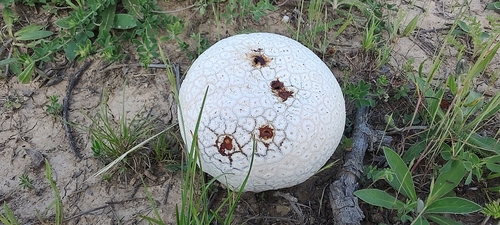
(c) Krystelle Denis, some rights reserved (CC BY-NC), uploaded by Krystelle Denis
Death Cap (button stage): When cut in half reveals developing gills, stem, and cap outline inside the round exterior.
Giant puffball: Uniform pure white flesh when cut in half, no internal structures visible, very large when mature.
Synonyms
Also Known As
Damabo, Mangde
References (10)
- Bhaben, T., et al, 2010, Wild edible fungal resources by ethnic tribes of nagaland, India. Indian Journal of Traditional Knowledge. Vol 10(3) p 513
- Facciola, S., 1998, Cornucopia 2: a Source Book of Edible Plants. Kampong Publications, p 252
- Hall, I. R., et al, 2003, Edible and Poisonous Mushrooms of the World. Timber Press. p 274
- Kuhnlein, H. V. and Turner, N. J., 1991, Traditional Plant Foods of Canadian Indigenous Peoples. Food and Nutrition in History and Anthropology Volume 8. Gordon and Breach. p 26
- Mir, M. Y., 2014, Documentation and ethnobotanical survey of wild edible plants used by the tribals of Kupwara, J & K, India. International Journal of Herbal Medicine. 2(4): 11-18
Show all 10 references Hide references
- Ostry, M. E., et al, 2010, Field Guide to Common Macrofungi in Eastern Forests and Their Ecosystem Functions. USDA Forest Service General Technical Report NRS-79 p 24
- Schneider, E., 2001, Vegetables from Amaranth to Zucchini: The essential reference. HarperCollins. p 509
- Stoyneva-Gartner, M.P. & Uzunov, B.A., 2015, An Ethnobiological Glance on Globalization Impact on the Traditional Use of Algae and Fungi as Food in Bulgaria. J Nutr Food Sci 2015, 5:5
- Thatoi, H. & Singdevsachan, S. K., 2014, Diversity, nutritional composition and medicinal potential of Indian mushrooms: A review. African Journal of Biotechnology 13(4): 523-545
- www.plantnames.unimelb.edu.au