Bombax ceiba
(Burm.) L.
Kapok tree, Red silk-cotton tree
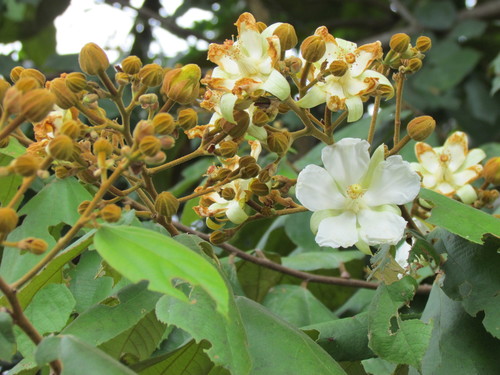
iNaturalist· cc-by-nc
(c) Raymond Khoo, some rights reserved (CC BY-NC), uploaded by Raymond Khoo
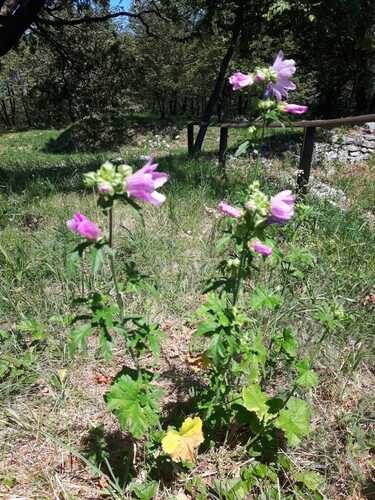
iNaturalist· cc-by-nc
(c) pyktsang, some rights reserved (CC BY-NC)
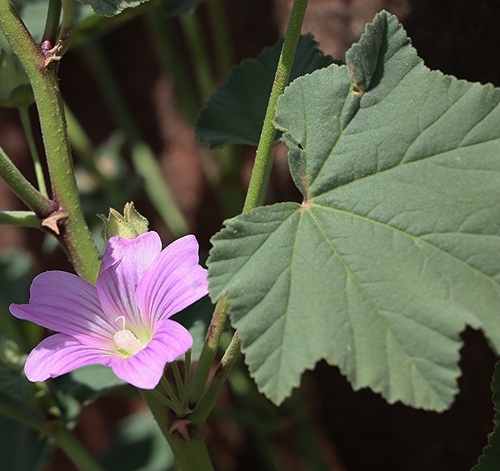
iNaturalist· cc-by-sa
(c) Douglas Goldman, some rights reserved (CC BY-SA), uploaded by Douglas Goldman
Summary
Source: WikipediaBombax ceiba, like other trees of the genus Bombax, is commonly known as cotton tree. More specifically, it is sometimes known as Malabar silk-cotton tree; red silk-cotton; red cotton tree; or ambiguously as silk-cotton or kapok, both of which may also refer to Ceiba pentandra. This Asian tropical tree has a straight tall trunk and its leaves are deciduous in winter. Red flowers with 5 petals appear in the spring before the new foliage. It produces a capsule which, when ripe, contains white fibres like cotton. Its trunk bears spikes to deter attacks by animals. Although its stout trunk suggests that it is useful for timber, its wood is too soft to be very useful.
Description
A large tree. It loses its leaves in the dry season. It grows to 20-25 m tall and spreads to 8-15 m wide. The stem is erect. It has buttresses when mature. The trunk and branches are covered with large pyramid shaped spines. The crown is umbrella shaped. The bark is pale ash coloured. It develops cracks along its length with age. The leaves are arranged like fingers on a hand. The leaves are rounded and 30-50 cm across. There are 5-7 leaflets which are elliptical. These are 12-20 cm long. The leaves are bright green and leathery. The trees flower during the dry season when the tree has no leaves. The flowers are red, open or cup shaped and 10-15 cm across. The flowers are often clustered near the ends of branches. The flowers appear while the leaves have fallen from the tree. The flower petals are thickened and curved backwards in the upper half. The fruit is a brown oval capsule. This seed envelope is about 15 cm long. It has 5 angles and many seeds. The seeds are covered with soft, silky cotton.
Edible Uses
Edible Parts: Flowers Inner bark Leaves Oil Root Seed Seedpod Edible Uses: Gum Oil Tea Edible portion: Roots, Leaves, Flowers, Fruit, Seeds - oil, Gum. Flowers - cooked or pickled. They are highly valued as a curry vegetable. The flower buds and the calyx of not fully opened flowers are eaten cooked as a vegetable. Flowers are dried and pounded and used for bread also used in five flower tea. Young leaves - cooked and eaten as a vegetable. Ripe seeds are eaten roasted. An edible fatty oil is obtained from the seed. The seeds contain 22-25% oil. Young roots - The taproot is peeled and eaten raw or roasted. Rich in starch. Gum. The buds, young pods and roots of seedling can be eaten cooked. The young bark is used as a famine food.
Traditional Uses
The taproot of young plants is peeled then roasted and eaten. Flowers are cooked as a vegetable or pickled. The flowers are dried and pounded and used for bread. They are also used in five flower tea. The young leaves are boiled with condiments then eaten. The unripe and ripe fruits are cooked as vegetables. The seeds yield an edible fatty oil. The mature roasted seeds are eaten. The buds, young pods and roots of seedling can be eaten cooked. The young bark is used as a famine food. It is crushed and added to flour.
Medicinal Uses
Antipyretic Antitussive Astringent Cholera Demulcent Diuretic Dysentery Hypoglycaemic Hypotensive Leprosy Mouthwash Refrigerant Stings Tonic Urinary The flowers are astringent and refrigerant. They are used to treat cutaneous troubles. The young roots are diuretic and tonic. They are used in the treatment of cholera, tubercular fistula, coughs, urinary complaints, nocturnal pollution, abdominal pain due to dysentery, and impotency. The gum is astringent, demulcent and tonic. It is used in the treatment of dysentery, haemoptysis in pulmonary tuberculosis, influenza and menorrhagia. The leaves are hypotensive and hypoglycaemic. A decotion of the shoots have reputedly been used to treat ulcers of the palate, syphilis, leprosy and spider or snake bites. Combined with the roots of Moghania macrophylla, the fruit of Terminalia chebula and borax, they are used to treat enlarged spleen; they are combined with Capparis zeylanica and Carissa carandas to treat oedema; and with fenugreek to treat corns on the foot. The seedlings have reputed antipyretic activity (when ground with a few leaves of fistula and Semecarpus anacardium). They are combined with Vitis spp. (part not specified) to treat carbuncle; and with Terminalia alata to treat haematuria. The knots or the stem are used on bleeding gums (cooked in mustard oil with the bark of Zyzyphus rugosa and Ichnocarpus frutescens and then eaten). The bark is reputedly used against cholera (usually combined with many other plants), pleurisy, stings and as a diuretic. It is used in bandages for lasting fractures or given in infusion for toothache before visiting the dentist.
Known Hazards
Seed is poisonous if ingested
Distribution
A tropical plant. It grows in tropical monsoonal rainforest. It suits humid locations. It requires an open sunny position. It will grows on most soils. It can grow in limestone areas. It is drought and frost tender. Trees must have a temperature above 13°C. In Nepal plants grow to 1200 m altitude. In the Indian Himalayas it grows between 1,200-1,400 m above sea level. They are found at low altitudes throughout the Philippines. In India they grow in all deciduous forests. It can grow in arid places. It suits hardiness zones 10-12. In Sichuan and Yunnan.
Where It Grows
Africa, Andamans, Asia, Australia, Bangladesh, Bhutan, Cambodia, Central America, China, East Africa, East Timor, Hawaii, Himalayas, India, Indochina, Indonesia, Iraq, Laos, Malaysia, Middle East, Myanmar, Nepal, Northeastern India, NW India, Pacific, Pakistan, Papua New Guinea, PNG, Philippines, SE Asia, Sikkim, Solomon Islands, South America, Sri Lanka, Tanzania, Thailand, Timor-Leste, USA, Vietnam, West Indies, West Timor,
Cultivation
It grows best in areas where annual daytime temperatures are within the range 28 - 42°c, though it can tolerate 5 - 49°c. It can resist occasional light frosts, with new growth being killed at -1°c, but dormant growth being tolerant down to -3°c. It prefers a mean annual rainfall of 750 - 4,000mm, tolerating 500 - 5,000mm and preferring a distinct dry season. Grows best in a sunny position. Prefers a deep, rich, well-drained soil, but tolerating a wide range of conditions. Established plants are drought tolerant, and can also withstand occasional inundation of the soil. Prefers a pH in the range 5.5 - 6.5, tolerating 4.9 - 7.2. A fast-growing plant, especially when young. The plant can commence flowering when around 8 - 10 years old from seed. The plant produces suckers, especially when young, though they often die after 2 - 3 years, especially as the tree grows older. Young trees can be coppiced, but older trees will often fail to grow back after being cut down. The tree has a thick bark which acts as an insulation and allows it to recover from fires.
Propagation
Seed - sown fresh, without pre-treatment, they have a high germination rate. Some reports suggest germination rates can be improved by pre-soaking the seeds for 12 hours prior to sowing, this is likely to refer to seeds that have dried somewhat. Seeds can be sown in a sunny position, either in situ or in nursery beds. Sprouting takes place in 10 - 25 days. Transplant 5cm tall seedlings to individual containers and plant out 12 months later. Cuttings of half-ripe wood.
Other Uses
Bedding Containers Fibre Gum Insulation Oil Packing Pioneer Soap making String Tannin Waterproofing Wood Other uses rating: High (4/5). Large Flowering Tree, Public Open Spaces, Specimen, Xerophytic. Agroforestry Uses: A fast-growing plant, tolerant of full sun even when small and with a wide range of uses, it can be used as a pioneer when restoring native woodland[ 404 , K ]. It can also be used as a pioneer when establishing a large woodland garden, being able to remain as a canopy tree as the garden matures. Other Uses The seed floss is used as a stuffing material for pillows, cushions etc. It is considered to be vermin-proof. Waterproof and buoyant, it can be used as the filling in life jackets. It is sometimes also as an insulating material in refrigerators etc; can be used as a packing material; and has sound-proofing properties. It is of lower quality than the floss obtained from Ceiba pentandra. A fibre is obtained from the inner bark. It is suitable for cordage. A transparent gum exudes from the bark and sapling root. It is called 'Gum of Malabar'. The gum contains tannins. The gum can be mixed with ashes and castor oil, and is then used as a cement for caulking iron saucepans. An oil obtained from the seed is used to make soap and for illumination etc. It can be used as a substitute for cottonseed oil. The fibrous bark is used for making ropes. The greyish, dark-streaked wood is coarse-textured, straight-grained, light in weight, very soft and pithy. It can be used to make packing cases, toys, matches, pencils etc. Large trunks are often hollowed out to make canoes. The wood has been recommended as a source of cellulose. This plant is attractive to bees, butterflies and/or birds. Special Uses Attracts Wildlife Carbon Farming Food Forest
Production
It is fast growing. The seeds contain 22-25% oil that is edible. In Sikkim seeds are available April to June.
Other Information
It is not known if it is used for food in Papua New Guinea. The fruit are only occasionally used. The flowers are sold in markets in Nepal.
Notes
There are about 8 Bombax species. It was previously put in the family Bombacaceae. In the subfamily Bombacoideae.
Nutrition
| Part | Moisture | kJ | kcal | Protein | Vit A | Vit C | Iron | Zinc |
|---|---|---|---|---|---|---|---|---|
| Flower | 94.1 | — | — | 0.4 | — | — | — | — |
| Roots | — | — | — | — | — | — | — | — |
| Leaves | — | — | — | — | — | — | — | — |
| Fruit | — | — | — | — | — | — | — | — |
| Seeds - oil | — | — | — | — | — | — | — | — |
| Bark | — | — | — | — | — | — | — | — |
| Gum | — | — | — | — | — | — | — | — |
Synonyms
Also Known As
Boichu, Bombax, Booruga, Boorunga, Bouro, Bula, Buroh, Doak-ngew, Edel daru, Edelsong, Gao rung, Gon rung, Guan niu, Hambo, Illavam, Kaanti-senbal, Kadung, Kantakadruma, Kantesavar, Kate savar, Katesawar, Kawl-tung-peng, Kempu-booruga, Kempuburuga, Koki, Kroik, Leptan, Letpan, Mai-nio, Malabulak, Moc mien, Mu mian, Mulilavu, Mullelava, Mullila-pula, Mullilavau, Mullilavu, Mullubooruga, Mu mian yang, Neibie, Ngiew, Ngiu deng, Ngiu pa, Nglo, Ntoo yaj huab, Nuoliu, Pagun, Pan-ya, Panchu, Pemagesar, Pemguyser, Phakong, Pharkong, Pohon kapuk merah, Poola, Pula-maram, Pulai, Rakta-pushpa, Red Silk Cotton tree, Ro-ka, Roktosimul, Salmali, Samar, Samro, Sanar, Saur, Savar, Savri, Sawar, Semal, Semale, Sémul, Senur, Shaimbal, Shembal, Shemolo, Shevari, Shevri, Shimla, Shimul cotton, Simal, Simalo, Simalu, Simbal, Simla, Simlo, Simolu, Simuli, Singi, Syamling, Yi ka bu duo si
References (127)
- Abbasi, A. M., et al, 2013, Ethnobotanical appraisal and cultural values of medicinally important wild edible vegetables of Lesser Himalayas-Pakistan. Journal of Ethnobiology and Ethnomedicine 9:66
- Abbasi, A. M., Khan, M & Zafar, M., 2013, Ethno-medicinal assessment of some selected wild edible fruits and vegetables of Lesser-Himalayas, Pakistan. Pak. J. Bot. 45 (SI):215-222 (As Bombax malabaricum)
- Acharya K. P. and Acharya, R., 2010, Eating from the Wild: Indigenous knowledge on wild edible plants in Parroha VDC of Rupandehi District, Central Nepal. International Journal of Social Foresttry. 3(1):28-48
- Ambasta, S.P. (Ed.), 2000, The Useful Plants of India. CSIR India. p 76
- Aryal, K. P., et al, 2018, Diversity and use of wild and non-cultivated edible plants in the Western Himalaya. Journal of Ethnobiology and Ethnomedicine (2018) 14:10
Show all 127 references Hide references
- Ashton, M. S., et al 1997, A Field Guide to the Common Trees and Shrubs of Sri Lanka. WHT Publications Ltd. pdf p 125
- Azam, F. M. S., et al, 2014, Are Famine Food Plants Also Ethnomedicinal Plants? An Ethnomedicinal Appraisal of Famine Food Plants of Two Districts of Bangladesh. Evidence-Based Complementary and Alternative Medicine Volume 2014, Article ID 741712, 28 pages
- Baishya, S. Kr., et al, 2013, Survey of Wild Edible Fruits of Dhubri District, Assam, India. Plant Archives Vol 13 (1): 155-158
- Balkrishna, A., et al, 2022, Indigenous Uses of Plants among Forest-dependent Communities of Seijosa, Arunachal Pradesh. International Journal of Economic Plants 2022, 9(1):064-080
- Barwick, M., 2004, Tropical and Subtropical Trees. A Worldwide Encyclopedic Guide. Thames and Hudson p 55
- Bhatia, H., et al, 2018, Traditionally used wild edible plants of district Udhampur, J&K, India. Journal of Ethnobiology and Ethnomedicine (2018) 14:73
- Bircher, A. G. & Bircher, W. H., 2000, Encyclopedia of Fruit Trees and Edible Flowering Plants in Egypt and the Subtropics. AUC Press. p 61 (As Bombax malabaricum)
- Bodkin, F., 1991, Encyclopedia Botanica. Cornstalk publishing, p 154
- Bodkin, F., 1991, Encyclopedia Botanica. Cornstalk publishing, p 154 (As Bombax malabaricum)
- Bohra, N., et al, 2017, Ethnobotany of wild edible plants traditionally used by the local people in the Ramnagar regions from Nainital District, Uttarakhand, India. Biolife 5(1): 12-19
- Bole, P.V., & Yaghani, Y., 1985, Field Guide to the Common Trees of India. OUP p 101 (As Salmalia malabarica)
- Brickell, C. (Ed.), 1999, The Royal Horticultural Society A-Z Encyclopedia of Garden Plants. Convent Garden Books. p 182
- Brock, J., 1993, Native Plants of Northern Australia, Reed. p 98
- Burkill, I.H., 1966, A Dictionary of the Economic Products of the Malay Peninsula. Ministry of Agriculture and Cooperatives, Kuala Lumpur, Malaysia. Vol 1 (A-H) p 348 (As Bombax malabaricum)
- Cao, Y., et al, 2020, Ethnobotanical study on wild edible plants used by three trans-boundary ethnic groups in Jiangcheng County, Pu’er, Southwest China. Journal of Ethnobiology and Ethnomedicine (2020) 16:66
- Chauhan, S. H., et al, 2018, Consumption patterns of wild edibles by the Vasavas: a case study from Gujarat, India. Journal of Ethnobiology and Ethnomedicine (2018) 14:57
- Cherikoff V. & Isaacs, J., The Bush Food Handbook. How to gather, grow, process and cook Australian Wild Foods. Ti Tree Press, Australia p 198
- Chowdery, T., et al, 2014, Wild edible plants of Uttar Dinajpur District, West Bengal. Life Science Leaflets. 47:pp 20-36 http://lifesciencesleaflets.ning.com
- Cooper, W. and Cooper, W., 2004, Fruits of the Australian Tropical Rainforest. Nokomis Editions, Victoria, Australia. p 92
- Cowie, I, 2006, A Survey of Flora and vegetation of the proposed Jaco-Tutuala-Lore National Park. Timor-Lests (East Timor) www.territorystories.nt/gov.au p 45
- Croft, J.R., in Henty, E.E., (Ed.), 1981, Handbooks of the Flora of Papua New Guinea, Melbourne University Press, p 5
- Cundall, P., (ed.), 2004, Gardening Australia: flora: the gardener's bible. ABC Books. p 242
- DARLINGTON & AMMAL, (As Bombax malabaricum)
- Dangol, D. R., 2002, Economic uses of forest plant resources in western Chitwan, Nepal. Banko Janakari, 12(2): 56-64
- Dangol, D. R. et al, 2017, Wild Edible Plants in Nepal. Proceedings of 2nd National Workshop on CUAOGR, 2017.
- Dey, A. & Mukhererjee, A., 2015, Living and Survival Amidst Hunger: Wild Edible Botanicals as a Prime Forestt Productivity in the Rural Purulia District, West Bengal, India from Colonial to Present. Research Journal of Foresttry 9(3): 71-86
- Dobriyal, M. J. R. & Dobriyal, R., 2014, Non Wood Forestt Produce an Option for Ethnic Food and Nutritional Security in India. Int. J. of Usuf. Mngt. 15(1):17-37
- Eiadthong, W., et al, 2010, Management of the Emerald Triangle Protected Forestts Complex. Botanical Consultant Technical Report. p 47
- Elliot, W.R., & Jones, D.L., 1982, Encyclopedia of Australian Plants suitable for cultivation. Vol 2. Lothian. p 333
- Engel, D.H., & Phummai, S., 2000, A Field Guide to Tropical Plants of Asia. Timber Press. p 28
- Etherington, K., & Imwold, D., (Eds), 2001, Botanica's Trees & Shrubs. The illustrated A-Z of over 8500 trees and shrubs. Random House, Australia. p 133
- Ethnobotany of Karbis. Chapter 4 in p 103
- Facciola, S., 1998, Cornucopia 2: a Source Book of Edible Plants. Kampong Publications, p 51 (As Salmalia malabarica)
- French, B.R., 2010, Food Plants of Solomon Islands. A Compendium. Food Plants International Inc. p 300
- GAMMIE (As Bombax malabaricum)
- Gardner, S., et al, 2000, A Field Guide to Forestt Trees of Northern Thailand, Kobfai Publishing Project. p 73
- Gautam, R. S., et al, 2020, Wild Edible Fruits of Nepal. Int. J. Appl. Sci. Biotechnol. Vol 8(3): 289-304
- GUPTA & KANODIA,
- Havel, J.J., 1975, Forestt Botany, Volume 3 Part 2 Botanical taxonomy. Papua New Guinea Department of Forestts, p 178
- Hearne, D.A., & Rance, S.J., 1975, Trees for Darwin and Northern Australia. AGPS, Canberra p 33, Pl 9 (As Bombax malabaricum)
- Hedrick, U.P., 1919, (Ed.), Sturtevant's edible plants of the world. p 108 (Probably also as Eriodendron anfractuosum)
- Heywood, V.H., Brummitt, R.K., Culham, A., and Seberg, O. 2007, Flowering Plant Families of the World. Royal Botanical Gardens, Kew. p 65
- Hiddins, L., 1999, Explore Wild Australia with the Bush Tucker Man. Penguin Books/ABC Books. p 162
- Hu, Shiu-ying, 2005, Food Plants of China. The Chinese University Press. p 544
- Jackes, B.R., 2001, Plants of the Tropics. Rainforest to Heath. An Identification Guide. James Cook University. p 44
- Jacquat, C., 1990, Plants from the Markets of Thailand. D.K. Book House p 71
- Jadhav, R., et al, 2015, Forestt Foods of Northern Western Ghats: Mode of Consumption, Nutrition and Availability. Asian Agri-History Vol. 19, No. 4: 293-317
- Jiwajinda, S., et al, 2002, Suppressive Effects of Edible Thai Plants on Superoxide and Nitric Oxide Generation. Asian Pacific Journal of Cancer Prevention, Vol 3, 2002
- Jones D, L, 1986, Ornamental Rainforest Plants in Australia, Reed Books, p 198
- Joshi, N., et al, 2007, Traditional neglected vegetables of Nepal: Their sustainable utilization for meeting human needs. Tropentag 2007. Conference on International Agricultural Research for Development.
- Kachenchart, B., et al, 2008, Phenology of Edible Plants at Sakaerat Forestt. In Proceedings of the FORTROP II: Tropical Foresttry Change in a Changing World. Bangkok, Thailand.
- Kala, C. P., 2007, Prioritization of cultivated and wild edibles by local people in the Uttaranchal hills of Indian Himalaya. Indian Journal of Traditional Knowledge. 6(1) pp 239-244
- Kala, C. P., 2009, Aboriginal uses and management of ethnobotanical species in deciduous forests of Chhattisgarh state in India. Journal of Ethnobiology and Ethnomedicine. 5:32
- Khan, M. & Hussain, S., 2014, Diversity of wild edible plants and flowering phenology of district Poonch (J & K) in the northwest Himalaya. Indian Journal of Sci, Res. 9(1): 032-038
- Kiran, K. C., et al, 2019, Diversity and Seasonal Availability of Potential Wild Edible Plants from Vidarbha Region of Maharashtra State, India. Int.J.Curr.Microbiol.App.Sci (2019) 8(2): 1434-1446
- Krishen P., 2006, Trees of Delhi, A Field Guide. DK Books. p 212
- Kumar, P. D., et al, 2015, Ethnobotanical Knowledge and Usage of Wild Plants in Theog Forest Division, Himachal Pradesh, North Western Himalaya. The Journal of Ethnobiology and Traditional Medicine. Photon 124(2015) 922-935
- Kuvar, S. D. & Shinde, R. D., 2019, Wild Edible Plants used by Kokni Tribe of Nasik District, Maharashtra. Journal of Global Biosciences. Volume 8, Number 2, 2019, pp. 5936-5945
- Lazarides, M. & Hince, B., 1993, Handbook of Economic Plants of Australia, CSIRO. p 34
- Lim, T. K., 2015, Edible Medicinal and Non Medicinal Plants. Volume 9, Modified Stems, Roots, Bulbs. Springer p 16
- Liu, Yi-tao, & Long, Chun-Lin, 2002, Studies on Edible Flowers Consumed by Ethnic Groups in Yunnan. Acta Botanica Yunnanica. 24(1):41-56
- Llamas, K.A., 2003, Tropical Flowering Plants. Timber Press. p 261
- Luo, B., et al, 2019, Wild edible plants collected by Hani from terraced rice paddy agroecosystem in Honghe Prefecture, Yunnan, China. Journal of Ethnobiology and Ethnomedicine 15:56
- Macmillan, H.F. (Revised Barlow, H.S., et al), 1991, Tropical Planting and Gardening. Sixth edition. Malayan Nature Society. Kuala Lumpur. p 355
- Maheshwari, J.K., & Singh, J.P., 1984, Contribution to the Ethnobotany of Bhoxa Tribe of Bijnor and Pauri Garhwal Districts, U.P. J. Econ. Tax. Bot. Vol.5. No.2 pp 253-
- Maiden, J. H., 1889, The Useful Native Plants of Australia (including Tasmania). The Technology Museum of NSW, Sydney. p 11 (As Bombax malabaricum)
- Manandhar, N.P., 2002, Plants and People of Nepal. Timber Press. Portland, Oregon. p 116
- Martin, F.W. & Ruberte, R.M., 1979, Edible Leaves of the Tropics. Antillian College Press, Mayaguez, Puerto Rico. p 179 (As Bombax malabaricum)
- Misra S. & Misra M., 2016, Ethnobotanical and Nutritional Evaluation of Some Edible Fruit Plants of Southern Odisha, India. International Journal of Advances in Agricultural Science and Technology, Vol.3 Issue.1, March- 2016, pg. 1-30
- Monsalud, M.R., Tongacan, A.L., Lopez, F.R., & Lagrimas, M.Q., 1966, Edible Wild Plants in Philippine Forestts. Philippine Journal of Science. p 447 (As Salmalia malabarica)
- Morley, B. & Everard, B., 1970, Wild Flowers of the World. Ebury press. Plate 115
- Morley, B.D., & Toelken, H.R., (Eds), 1983, Flowering Plants in Australia. Rigby. p 125
- Murtem, G. & Chaudhrey, P., 2016, An ethnobotanical note on wild edible plants of Upper Eastern Himalaya, India. Brazilian Journal of Biological Sciences, 2016, v. 3, no. 5, p. 63-81.
- Nakahara, K. et al, 2002, Antimutagenicity of Some Edible Thai Plants, and a Biocative Carbazole Alkaloid, Mahanine, Isolated from Micromelum minutum. Journal of Agricultural and Food Chemistry. 50: 4796-4892
- Narayanan Ratheesh, M. K. et al, 2011, Wild edible plants used by the Kattunaikka, Paniya and Kuruma tribes of Wayanad District, Kerala, India. Journal of Medicinal Plants Research Vol. 5(15), pp. 3520-3529
- Nicholson, N & H., 2000, Australian Rainforest Plants, V. Terania Rainforest Publishing. NSW. p 2, 14
- Paczkowska, G. & Chapman, A.R., 2000, The Western Australian Flora. A Descriptive Catalogue. Western Australian Herbarium. p 180
- Pandey, K. C. & Pande, N., 2016, Ethnobotanical Documentation of Wild Edible Plants used by Gujjar Community of Tarai West Forest Division Ramnagar, Nainital, India, Current World Environment. Vol. 11(3), 808-818
- Pandy, R. K. & Saini, S. K., 2007, Edible plants of tropical forests among tribal communities of Madhya Pradesh. Indian Journal of Traditional Knowledge. 6(1), pp 185-190
- Patiri, B. & Borah, A., 2007, Wild Edible Plants of Assam. Geethaki Publishers. p 14
- Peekel, P.G., 1984, (Translation E.E.Henty), Flora of the Bismarck Archipelago for Naturalists, Division of Botany, Lae, PNG. p 370, 368
- Pegu, R., et al, 2013, Ethnobotanical study of Wild Edible Plants in Poba Reserved Forestt, Assam, India. Research Journal of Agriculture and Foresttry Sciences 1(3):1-10
- Perry, F., and Hay, R., 1982, Guide to Tropical and Subtropical Plants. Sun Books p 14
- Pham-Hoang Ho, 1999, An Illustrated Flora of Vietnam. Nha Xuat Ban Tre. p 514
- Polinag, M. A., 2003, Food from the Wilderness. Department of Environment and Natural Resources. Laguna. (As Salmalia malabarica)
- Prashanth Kumar, G.M. and Shiddamallayya, N., 2015, Ethnobotanical Study of Less Known Wild Edible Plants of Hakki Pikki Tribes of Angadihalli, Hassan District, Karnataka. Journal or Medicinal Plants Studies 3(5):80-85
- Prakash, V., & Megrotra B.N., 1987, Ethnobotanical Studies on the Flora of Khandala, Maharashtra State. J. Econ. Tax. Bot. Vol. 9 No. 1 pp 205-208
- Purseglove, J.W., 1968, Tropical Crops Dicotyledons, Longmans. p 33 (As Bombax malabaricum)
- Rashid, H. E., 1977, Geography of Bangladesh. Westview. p 318 (As Salmalia malabarica)
- Radha, B., et al, 2013, Wild Edible Plant Resources of the Lohba Range of Kedarnath Forestt Division (KFD), Garhwal Himalaya, India. Int. Res J. Biological Sci. Vol. 2 (11), 65-73
- Radke, P & A, Sankowsky, G & N., 1993, Growing Australian Tropical Plants. Frith & Frith, Australia. p 23
- Reddy, B. M., 2012, Wild edible plants of Chandrapur district, Maharashtra, India. Indian Journal of Natural Products and Resources. 3(1) pp 110-117
- Royal Botanic Gardens, Kew (1999). Survey of Economic Plants for Arid and Semi-Arid Lands (SEPASAL) database. Published on the Internet; http://www.rbgkew.org.uk/ceb/sepasal/internet [Accessed 4th April 2011] (As Bombax malabaricum)
- Sadhale, A., et al, 1991, Ethnobotanical studies of sacred grove at Ajiwali, Pune district. J. Econ. Tax. Bot. Vol. 15 No. 1 pp 167-172 (As Salmalia malabarica)
- SAXENA;
- Scarth-Johnson, V., 2000, National Treasures. Flowering Plants of Cooktown and Northern Australia. Vera Scarth-Johnson Gallery Association. Cooktown, Australia. p 113
- SHANKARNARAYAN & SAXENA
- Shrestha, S., 2021, Wild Edible Plants of Dhankuta, Eastern Nepal. Rupantaran : A Multidisciplinary Journal Vol. V : pp 100-109, September, 2021 p 103
- Sp. pl. 1:511. 1753, nom. cons.
- Staples, G.W. and Herbst, D.R., 2005, A tropical Garden Flora. Bishop Museum Press, Honolulu, Hawaii. p 196
- Sukarya, D. G., (Ed.) 2013, 3,500 Plant Species of the Botanic Gardens of Indonesia. LIPI p 159
- Sundriyal, M., et al, 1998, Wild edibles and other useful plants from the Sikkim Himalaya, India. Oecologia Montana 7:43-54 (As Salmalia malabarica)
- Sundriyal, M., et al, 2004, Dietary Use of Wild Plant Resources in the Sikkim Himalaya, India. Economic Botany 58(4) pp 626-638
- Sundriyal, M. & Sundriyal, R. C., 2004, Structure, Phenology, Fruit Yield, and Future Prospects of some Prominent Wild Edible Plant Species of the Sikkim Himalaya, India. Journal of Ethnobiology 24(1): 113-138 (As Bombax malabarica)
- Swaminathan, M.S., and Kochnar, S.L., 2007, An Atlas of Major Flowering Trees in India. Macmillan. p 42
- Tang Ya, BOMBACACEAE [Draft], Flora of China
- Teron, R. & Borthakur, S. K., 2016, Edible Medicines: An Exploration of Medicinal Plants in Dietary Practices of Karbi Tribal Population of Assam, Northeast India. In Mondal, N. & Sen, J.(Ed.) Nutrition and Health among tribal populations of India. p 150
- Tewari, D.N., 1994, Important Plants of India. International Book Distributors, India. p 5
- Thapa, L. B., et al, 2014, Wild Edible Plants used by endangered and Indigenous Raji Tribe in Western Nepal. International Journal of Applied Sciences and Biotechnology. Vol 2(3):243-252
- Thitiprasert, W., et al, 2007, Country report on the State of Plant Genetic Resources for Food and Agriculture in Thailand (1997-2004). FAO p 95
- Toppo, P. et al, 2016, Wild edible plants of Dhamtari district of Chhattisgarh, India. Van Sangyan Vol. 3, No. 4
- Townsend, K., 1994, Across the Top. Gardening with Australian Plants in the tropics. Society for Growing Australian Plants, Townsville Branch Inc. p 101
- Tsering, J., et al, 2017, Ethnobotanical appraisal on wild edible plants used by the Monpa community of Arunchal Pradesh. Indian Journal of Traditional Knowledge. Vol 16(4), October 2017, pp 626-637
- Uprety, Y., et al, 2012, Diversity of use and local knowledge of wild edible plant resources in Nepal. Journal of Ethnobotany and Ethnomedicine 8:16
- Uprety, Y., et al, 2016, Traditional use and management of NTFPs in Kangchenjunga Landscape: implications for conservation and livelihoods. Journal of Ethnobiology and Ethnomedicine (2016) 12:19
- Van Sam, H. et al, 2004, Trees of Laos and Vietnam: A Field Guide to 100 Economically or Ecologically Important Species. Blumea 29 (2004) 201-349
- Vigilante, T., et al, 2013, Island country: Aboriginal connections, values and knowledge of the Western Kimberley islands in the context of an island biological survey. Records of the Western Australian Museum Supplement 81: 145-182 (As var. leiocarpum)
- Wheeler, J.R.(ed.), 1992, Flora of the Kimberley Region. CALM, Western Australian Herbarium, p 198
- Whitney, C. W., et al, 2014, Conservation and Ethnobotanical Knowledge of a Hmong Community in Long Lan, Luang Prabang, Lao People’s Democratic Republic. Ethnobotany Research and Applications 12:643-658
- Wightman, G. M. & Andrews, M.R., nd, Plants of Northern Territory Monsoon Vine Forestts (Vol 1). Conservation Commission of Northern Territory. p 24
- World Checklist of Useful Plant Species 2020. Royal Botanic Gardens, Kew
- Xu, You-Kai, et al, 2004, Wild Vegetable Resources and Market Survey in Xishuangbanna, Southwest China. Economic Botany. 58(4): 647-667.