Dombeya rotundifolia
(Hochst) Planch.
Wild pear
iNaturalist· cc-by-nc
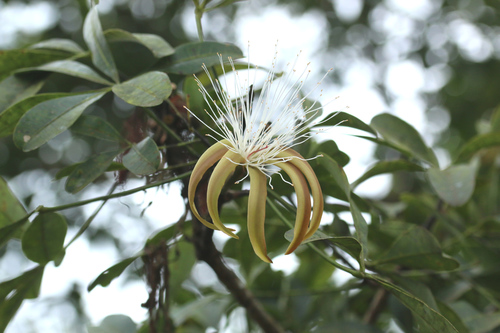
(c) Linda Loffler, some rights reserved (CC BY-NC), uploaded by Linda Loffler
iNaturalist· cc-by-nc
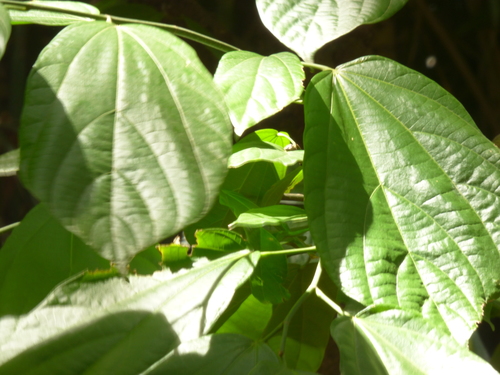
(c) Tony Benn, some rights reserved (CC BY-NC)
Summary
Source: WikipediaDombeya rotundifolia, the dikbas or "South African wild pear" (it is not related to pear trees), is a species of small deciduous tree with dark grey to blackish deeply fissured bark, found in Southern Africa and northwards to central and eastern tropical Africa. Formerly placed in the Sterculiaceae, that artificial group has now been abandoned by most authors and the plants are part of an enlarged Malvaceae. The species was first described as Xeropetalum rotundifolium by Christian Ferdinand Friedrich Hochstetter in 1844. In 1851 Jules Émile Planchon placed the species in genus Dombeya as D. rotundifolia.
Description
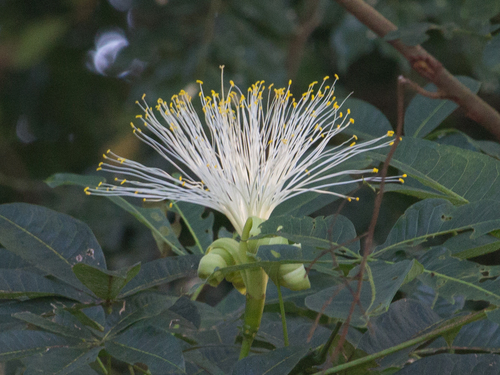
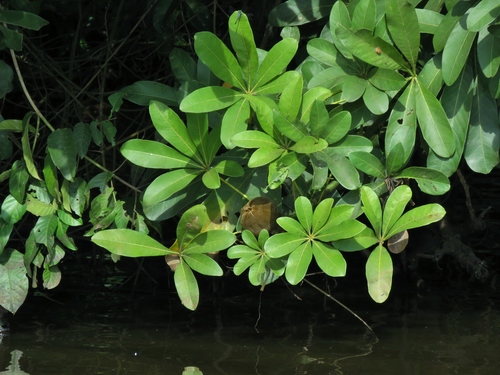
A softy hairy tree. It grows up to 9 m tall. It has many branches and loses its leaves during the year. The leaves are large, leathery and rounded with a heart shaped base. The flowers are pink or white and in branched clusters. The flowers usually occur when the tree is without leaves. The fruit are small and dark. They are the size of an olive.
Edible Uses
The fruit is eaten raw and has a pleasant acid taste. The flowers are cooked and eaten as a side-dish, sometimes with pumpkin leaves added.
Traditional Uses
The fruit are eaten raw. They have a pleasant acid taste. The flowers are cooked and eaten as a side-dish to which pumpkin leaves are sometimes added.
Medicinal Uses
No medicinal uses mentioned in available data.
Distribution
A tropical plant. It grows in grassland in Malawi at 1,500 m altitude. It can grow between 60-2,135 m above sea level. It grows in hot arid places. It can tolerate frost. It often grows over limestone parent material. It can tolerate drought. It can re-grow after fire. It can grow in arid places. Brisbane Botanical Gardens.
Where It Grows
Africa, Australia, Botswana, Central Africa, Congo, East Africa, Eswatini, Kenya, Malawi, Mozambique, Namibia, Rwanda, South Africa, Southern Africa, Swaziland, Tanzania, Uganda, Zambia, Zimbabwe,
Cultivation
It is easily grown from seeds. Seeds should be sown when fresh and seedlings can be transplanted. It can also be grown from cuttings.
Propagation
Seed - sow in deep seed trays in a semi-shaded position, The seed usually germinates within 3 weeks. Prick out the seedlings into individual containers once the first true leaves have formed and grow on in light shade. Cuttings of semi-ripe wood, preferably with some bottom heat to encourage rooting.
Other Uses
The bark from young shoots is made into rope. The wood is bluish grey; the grain is interlocked; the texture fine. The wood is heavy, strong, tough and durable. It has limited potential as a general purpose timber, however, because the pieces available are usually too small and twisted. The wood and the strong but flexible branches are made into furniture, poles, mine props, bows, tool handles and ornaments. The wood can be used for fuel. The flowers are visited by bees that use the nectar to produce pale amber-coloured honey.
Production
It is fast growing,
Notes
Some Botanists put the Dombeya in the Byttneriaceae and the Sterculiaceae.
Synonyms
Also Known As
Chitoque, Chiwalika, Cinga, Curo, Molobare, Muchol'e mupundururo, Mukondotowa, Mupunduru, Musiyasitu, Naduwa, Nchiu, Nhiz Nhliziyo, Nhliziyo, Nhliziyonkhulu, Umbikanyaka, Umukore, Umuwane, Umwane, Umwuwane, Xitou:'e
References (17)
- East African Herbarium records, 1981,
- Facciola, S., 1998, Cornucopia 2: a Source Book of Edible Plants. Kampong Publications, p 239
- Fowler, D. G., 2007, Zambian Plants: Their Vernacular Names and Uses. Kew. p 45
- Fox, F. W. & Young, M. E. N., 1982, Food from the Veld. Delta Books. p 348
- https://growwild.co.za Edible Indigenous plants
Show all 17 references Hide references
- Kunkel,
- Long, C., 2005, Swaziland's Flora - siSwati names and Uses http://www.sntc.org.sz/flora/
- Mannheimer, C. A. & Curtis. B.A. (eds), 2009, Le Roux and Muller's Field Guide to the Trees and Shrubs of Namibia. Windhoek: Macmillan Education Namibia. p 336
- Peters, C. R., O'Brien, E. M., and Drummond, R.B., 1992, Edible Wild plants of Sub-saharan Africa. Kew. p 188
- Plowes, N. J. & Taylor, F. W., 1997, The Processing of Indigenous Fruits and other Wildfoods of Southern Africa. in Smartt, L. & Haq. (Eds) Domestication, Production and Utilization of New Crops. ICUC p 190
- Roodt, V., 1998, Trees & Shrubs of the Okavango Delta. Medicinal Uses and Nutritional value. The Shell Field Guide Series: Part 1. Shell Botswana. p 197
- Royal Botanic Gardens, Kew (1999). Survey of Economic Plants for Arid and Semi-Arid Lands (SEPASAL) database. Published on the Internet; http://www.rbgkew.org.uk/ceb/sepasal/internet [Accessed 11th June 2011]
- Ruiters-Welcome, A. K., 2019, Food plants of southern Africa. Ph.D. thesis. Univ. of Johannesburg p 75
- Welcome, A. K. & Van Wyk, B.-E., 2019, An inventory and analysis of the food plants of southern Africa. South African Journal of Botany 122 (2019) 136–179
- Williamson, J., 2005, Useful Plants of Malawi. 3rd. Edition. Mdadzi Book Trust. p 103
- World Checklist of Useful Plant Species 2020. Royal Botanic Gardens, Kew
- www.zimbabweflora.co.zw 2011