Bomarea acutifolia
(Link. & Otto.) Herb.
Yatzi
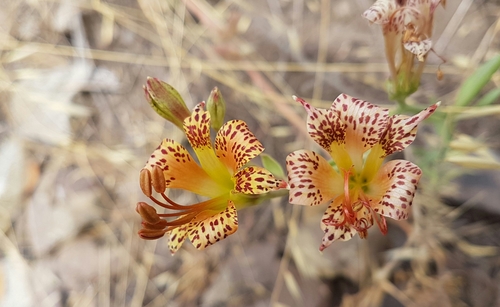
iNaturalist· cc-by-nc
(c) geomanuel, some rights reserved (CC BY-NC), uploaded by geomanuel
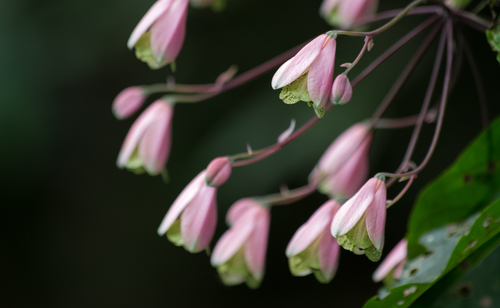
iNaturalist· cc-by-nc
(c) Cerón-Jiménez, O.E., some rights reserved (CC BY-NC)
Summary
Source: WikipediaBomarea acutifolia is a perennial climbing vine hardy to UK zone 9. Flowers August to October. The hermaphroditic plant is pollinated by bees. Prefers light sandy and medium loamy soils with good drainage and mildly acid to neutral pH. Requires full sun and moist soil.
Description
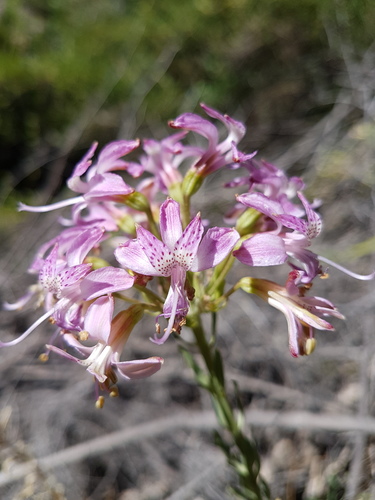
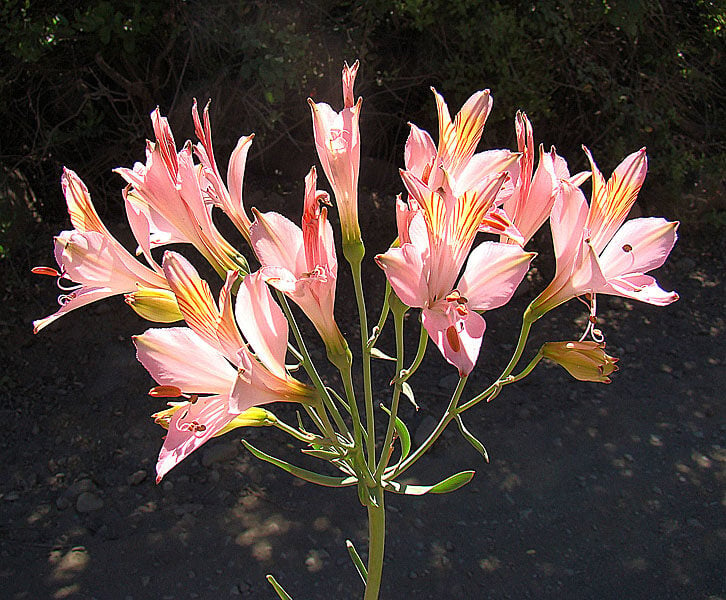
A herb. It has a tuberous root. It is a climber. It keeps growing from year to year. It climbs 1.8 m high and spreads 1.5 m wide. The stem is slender and twining. The leaves are sword shaped and have parallel veins. The flowers are tube shaped and yellow and green. They hang in groups.
Edible Uses
Edible Parts: Root Edible Uses: Tuber - cooked. Starchy.
Medicinal Uses
None known
Known Hazards
The fresh sap of this plant can cause skin rashes in some people. The plant contains small quantities (up to 0.2%) of the compound tuliposide A, which probably hydrolizes on the skin to form the allergenic lactone tulipalin A. People who are allergic to the sap of tulips are very likely to also be sensitive to the sap of this plant.
Distribution
It is a tropical plant. It is best in humus-rich, moist soils. It needs a partly shaded position. They are damaged by drought and frost.
Where It Grows
Australia, Bolivia, Central America, Mexico, North America, South America*, Venezuela,
Cultivation
Plants can be grown from seed. Seed germinate in 21 days. They can also be grown by root division.
Propagation
Seed - best sown as soon as it is ripe in a warm greenhouse, it will germinate in a few weeks. Stratify stored seed for 3 weeks at 20°c, then 3 weeks at 5°c. It usually germinates in 1 - 2 months at 20°c. Prick out the seedlings into individual pots when they are large enough to handle and grow them on in the greenhouse for at least their first winter. Plant them out into their permanent positions in early summer. Division in spring, with care since the roots are brittle. Each portion must have some roots and a growth bud. Pot up the divisions, grow them on in the greenhouse until they are well established and then plant them out into their permanent positions in the summer or late spring of the following year.
Other Uses
None known Special Uses
Notes
There are 100-200 Bomarea species. They are climbers in the Andes cloudforest in Central and South America. See Marinelli, J. (Ed), 2004, Plant. DK. p 208
References (4)
- Bircher, A. G. & Bircher, W. H., 2000, Encyclopedia of Fruit Trees and Edible Flowering Plants in Egypt and the Subtropics. AUC Press. p 61
- Bodkin, F., 1991, Encyclopedia Botanica. Cornstalk publishing, p 153
- Kermath, B. M., et al, 2014, Food Plants in the Americas: A survey of the domesticated, cultivated and wild plants used for Human food in North, Central and South America and the Caribbean. On line draft. p 136
- Plants for a Future database, The Field, Penpol, Lostwithiel, Cornwall, PL22 0NG, UK. http://www.scs.leeds.ac.uk/pfaf/