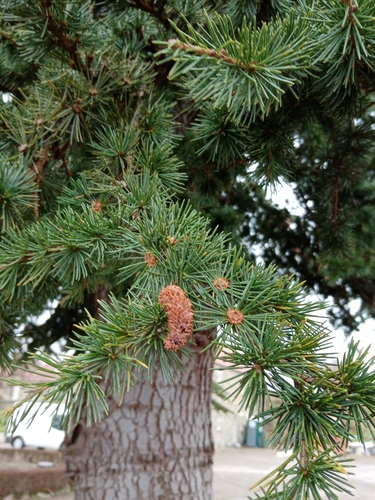
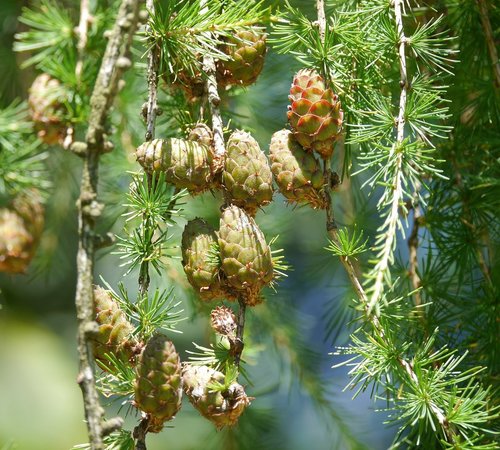
Abies alba
Mill.
Silver fir, European silver fir
iNaturalist· cc-by-sa
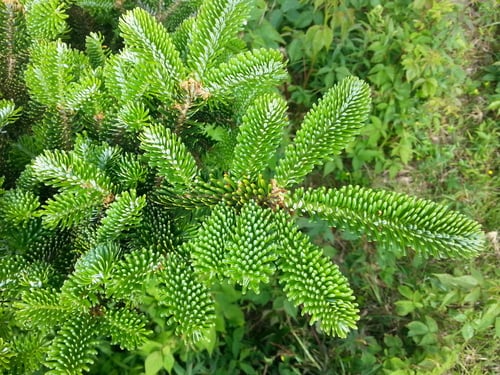
(c) böhringer friedrich, some rights reserved (CC BY-SA)
iNaturalist· cc-by-sa
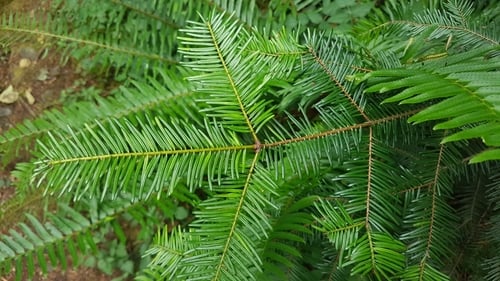
(c) Jerzy Opioła, some rights reserved (CC BY-SA)
iNaturalist· cc-by-nc
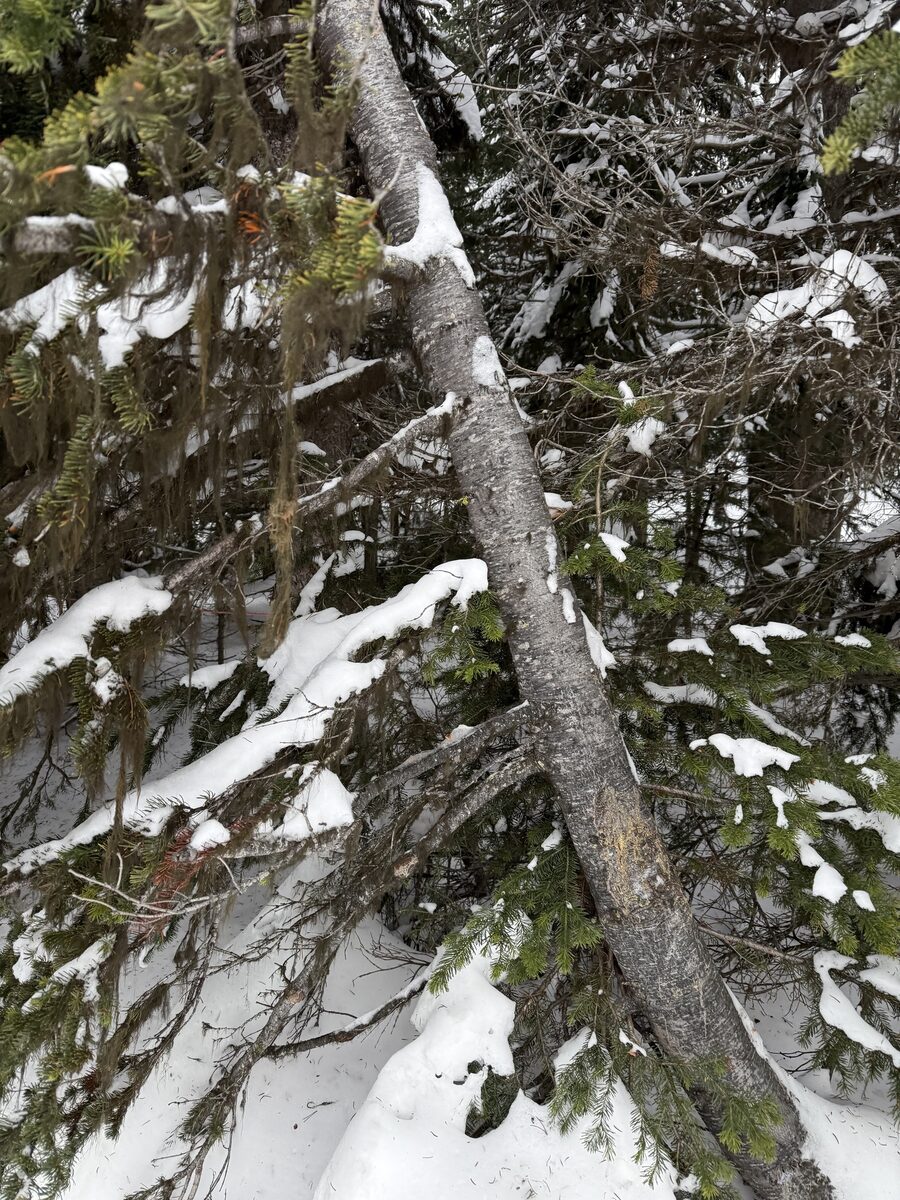
(c) sabine-g, some rights reserved (CC BY-NC)
Summary
Source: WikipediaAbies alba, the European silver fir or silver fir, is a fir native to the mountains of Europe, from the Pyrenees north to Normandy, east to the Alps and the Carpathians, Slovakia, Slovenia, Croatia, Bosnia and Herzegovina, Montenegro, Serbia, and south to Italy, Bulgaria, Kosovo, Albania and northern Greece.
Description
Evergreen tree reaching 45 m tall and 15 m wide, growing at fast rate, hardy to UK zone 4 and not frost tender. Year-round foliage; flowers April to May with seeds ripening September to October. Monoecious, wind-pollinated. Grows in light sandy, medium loamy, and heavy clay soils. Tolerates mildly acid to neutral pH. Grows in full shade, semi-shade, or full sun. Prefers moist soil. Cannot tolerate atmospheric pollution.
Edible Uses
The inner bark is edible when cooked. It is dried, ground into a powder, and used as a soup thickener or mixed with cereals when making bread.
Traditional Uses
It is the source of a honey-dew honey. This is regarded as a tonic. The inner bark was made into a cake like bread. The young shoots are covered with sugar and eaten as a children's snack. The buds and young cones were used to distill brandy and to make drinks.
Medicinal Uses
The buds are antibiotic, antiseptic, and balsamic. The bark is antiseptic and astringent and can be harvested as needed throughout the year. The leaves are expectorant and act as a bronchial sedative; they are best collected in spring and can be dried for later use. The resin is antiseptic, balsamic, diuretic, eupeptic, expectorant, vasoconstrictive, and vulnerary. Both leaves and resin are widely used in remedies for colds and coughs, taken internally or used as an inhalant. In folk medicine, the leaves and resin are used to treat bronchitis, cystitis, leucorrhoea, ulcers, and flatulent colic. The resin is also used externally in bath extracts and rubbing oils for rheumatic pain and neuralgia. Oil of Turpentine, obtained from the trunk, is occasionally substituted for the leaves or resin; it is also rubefacient and can be applied externally to treat neuralgia.
Where It Grows
Honeydew, Bark, Shoots, Buds, Cones, Flowers,
Cultivation
Prefers a good moist but not water-logged soil though it tolerates most soils except infertile sands and peats. Grows well in heavy clay soils. Prefers a slightly acid soil, with a pH down to about 5, and a north-facing slope. Plants are very shade tolerant and this species has often been used to underplant in forests, but growth is slower in dense shade. Intolerant of atmospheric pollution. Requires a generous rainfall and a sheltered position. Intolerant of windy sites. The silver fir is a very hardy plant when dormant but it comes into growth in April and is then susceptible to damage by late frosts and aphis. This species is particularly subject to aphis infestation in many parts of the country, and is also prone to dieback and rust caused by fungal infections. Trees are slow growing for the first few years but from the age of around 6 years growth accelerates and height increases of 1 metre a year are not uncommon. Grows best in moist valleys in Scotland and in S.W. England where it often self-sows. This species also thrives in E. Anglia. Another report says that this species is not happy in the hot, dry, Lower Thames Valley, and does not thrive in many low-lying and frosty parts of southern England. It has been planted as a timber tree in northern and western Europe. It is also commonly used as a 'Christmas tree'. This tree is notably resistant to honey fungus. Trees should be planted into their permanent positions when they are quite small, preferably between 30 and 90cm in height. Larger trees will check badly and hardly put on any growth for several years. This also badly affects root development and wind resistance. Unlike most species of conifers, this tree can be coppiced and will regenerate from the stump. Plants are strongly outbreeding, self-fertilized seed usually grows poorly. They hybridize freely with other members of this genus. The cultivar 'Pendula' used to be widely planted for ornament, shelter and timber but because it is now susceptible to damage by Adelges nordmannianae it is seldom planted. Research is going on (1975) to find provenances that are resistant.
Propagation
Sow seed in early February in a greenhouse or outdoors in March. Germination is often poor, typically taking 6–8 weeks. Stratification improves germination uniformity, so sowing in a cold frame as soon as seed ripens in autumn is recommended. Seed remains viable for up to 5 years if well stored. Prick seedlings into individual pots once large enough to handle and grow on through at least their first winter under cover. Plant out in late spring or early summer after the last expected frosts. Where sufficient seed is available, outdoor seedbed sowing is also an option. One account recommends growing seedlings on in shade at a density of about 550 plants per square metre; another recommends a sunny position.
Other Uses
An oleo-resin, known as Strasburg Turpentine, is collected from blister-like swellings in the bark during summer and used fresh, dried, or distilled for oil. It is used in perfumery, medicine, and for caulking ships. Oil of turpentine is an important solvent in the paint industry; the residue, known as rosin oil, is used in making varnishes, lacquers, and carbon black for pigments and ink. Resin for oil distillation is tapped from trees aged approximately 60–80 years in spring. An essential oil from the leaves is used as a disinfectant and in medicine and perfumery, and is a common ingredient in bath products for its pine scent. The bark yields tannin. The wood is light, soft, durable, and elastic — particularly valued for its lightness — and is used in construction, furniture, boxes, and pulp.
Production
It is fast growing.
Other Information
Pinaceae
Notes
A shrub or small tree. It grows 5 m tall. There are prickles along the stem. The leaves are twice divided and there are 8-18 pairs of pinnae. There are up to 50 pairs of pinnules on each pinnae. The flowers are yellow. They are in large clusters at the ends of branches. The pods are flattened.
Synonyms
Also Known As
Avet, Bela jelka, Feherfenyo, Jedlina, Jela, Jelika, Tanne, White fir
References (14)
- Bonet, M. A. & Valles, J., 2002, Use of non-crop food vascular plants in Montseny biosphere reserve (Catalonia, Iberian Peninsula). International Journal of Food Sciences and Nutrition (2002) 53, 225–248
- Brown, D., 2002, The Royal Horticultural Society encyclopedia of Herbs and their uses. DK Books. p 96
- Cerne, M., 1992, Wild Plants from Slovenia used as Vegetables. Acta Horticulturae 318.
- Denes, A., et al, 2012, Wild plants used for food by Hungarian ethnic groups living inthe Carpathian Basin. Acta Societatis Botanicorum Poloniae 81 (4): 381-396
- ecocrop.fao.org
Show all 14 references Hide references
- Facciola, S., 1998, Cornucopia 2: a Source Book of Edible Plants. Kampong Publications, p 169
- Luczaj, L., 2012, Ethnobotanical review of wild edible plants of Slovakia. Acta Societatis Botanicorum Poloniae 81(4):245-255
- Łukasz Łuczaj and Wojciech M Szymański, 2007, Wild vascular plants gathered for consumption in the Polish countryside: a review. J Ethnobiol Ethnomedicine. 3: 17
- Mill. Gard. dict. ed. 8: <I>Abies</I> no. 1. 1768
- Redzic, S. J., 2006, Wild Edible Plants and their Traditional Use in the Human Nutrition in Bosnia-Herzegovina. Ecology of Food and Nutrition, 45:189-232
- Schunko, C., et al, 2012, Intracultural variation of knowledge about wild plant uses in the Biosphere Reserve Grosses Walsertal (Austria). Journal or Ethnobiology and Ethnomedicine, 8:23
- Tanaka,
- Tardio, J., et al, 2006, Ethnobotanical review of wild edible plants in Spain. Botanical J. Linnean Soc. 152, 27-71
- Wiersema, J. H. & Leon, B., 2013, World Economic Plants. A Standard Reference CFC Press. 2nd Ed. p 1