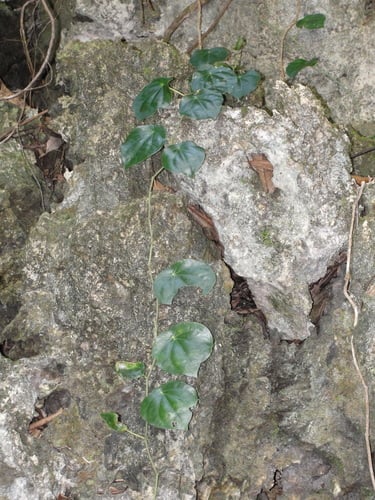
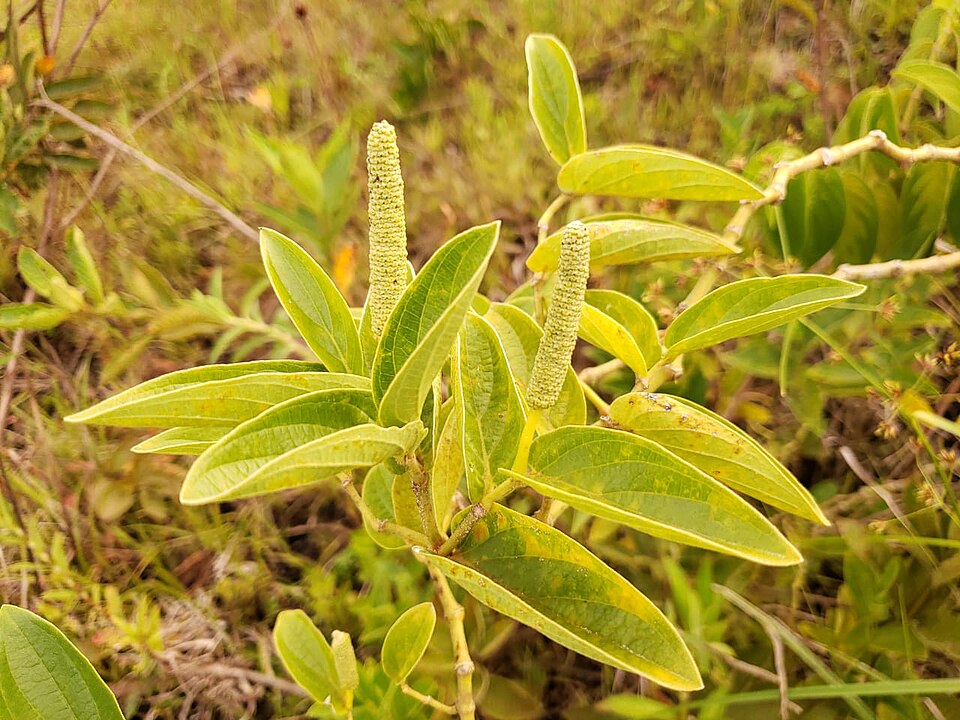
Peperomia maculosa
(L.) W. Hook.
Cilantro peperomia
iNaturalist· cc-by-nc
(c) Luis Alberto, some rights reserved (CC BY-NC), uploaded by Luis Alberto
iNaturalist· cc-by
(c) Skjold Søndergaard, some rights reserved (CC BY)
iNaturalist· cc-by
(c) Skjold Søndergaard, some rights reserved (CC BY)
Summary
Source: WikipediaPeperomia maculosa, commonly known as spotted-stalked peperomia and spotted peperomia, is a species of plant in the genus Peperomia. Its native range is from Mexico to northern South America.
Description
A leafy herb in the Piperaceae family native to tropical America, where it grows in local markets. Peperomia maculosa is one of approximately 1,000 species in the genus, most of which occur in tropical regions of the Americas.
Edible Uses
The leaves are used as a seasoning for beans and meat.
Traditional Uses
The leaves are used as seasoning for beans and meat.
This uses section is brief — help expand it
Medicinal Uses
The very thick leaves are bound on the head to relieve headache. The plant is one of the most celebrated medicinal plants of the Coban region, and is used in treating a variety of other ailments besides headache.
Distribution
It is a tropical plant. It grows in tropical America.
Where It Grows
Antilles, Central America*, Cuba*, Dominican Republic*, Haiti*, Jamaica*, Mexico, Peru, Puerto Rico, South America*, Venezuela, West Indies*,
Cultivation
Prefers a well-drained, humus-rich soil. Plants succeed in shady positions. Often found as an epiphyte in the wild.
Other Uses
Plants can be grown as a shade-tolerant ground cover.
Other Information
It is sold in local markets.
Notes
There are about 1,000 Peperomia species. The majority are in tropical America.
Synonyms
Also Known As
Cilantro macho, Najashuio macho, Oreja de leon, Xutsun pathum
References (6)
- Alcorn,
- Facciola, S., 1998, Cornucopia 2: a Source Book of Edible Plants. Kampong Publications, p 168
- Kermath, B. M., et al, 2014, Food Plants in the Americas: A survey of the domesticated, cultivated and wild plants used for Human food in North, Central and South America and the Caribbean. On line draft. p 628
- Manzanero-Medina, G. I., et al, 2020, Ethnobotany of food plants (quelites) sold in two traditional markets of Oaxaca, Mexico. South African Journal of Botany. 130 (2020) 215-223
- Piedra-Malagón, E. M., et al, 2022, Edible native plants of the Gulf of Mexico Province. Biodiversity Data Journal 10: e80565 p 27
Show all 6 references Hide references
- Plants of Haiti Smithsonian Institute http://botany.si.edu/antilles/West Indies