Piper novae-hollandiae
Miq.
Native pepper, Giant Pepper Vine
Wikipedia· cc-by-sa
Wikimedia Commons - Piper_novae-hollandiae_Foxground_Black_Apple_2004-March.jpg
iNaturalist· cc-by-nc
(c) connell_sarah, some rights reserved (CC BY-NC)
iNaturalist· cc-by-nc
(c) connell_sarah, some rights reserved (CC BY-NC)
Summary
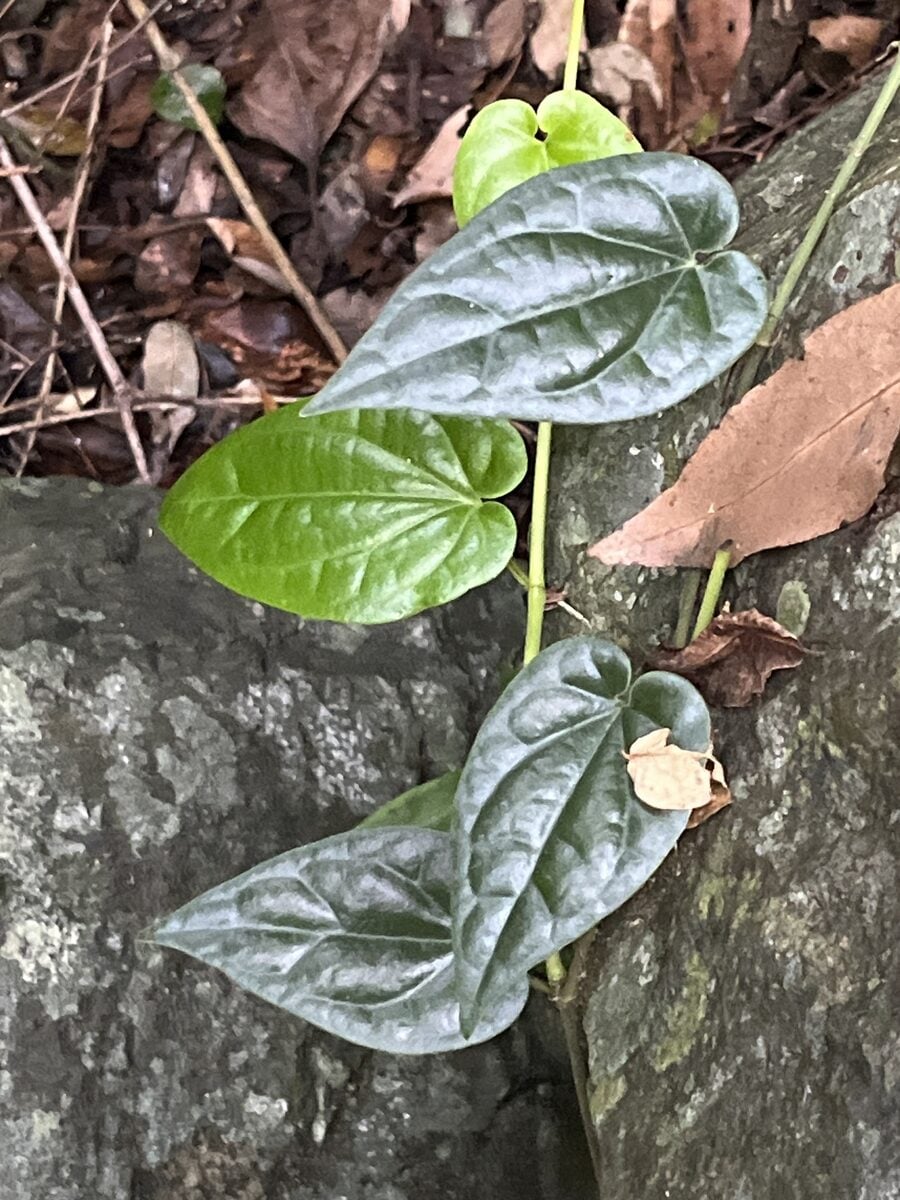
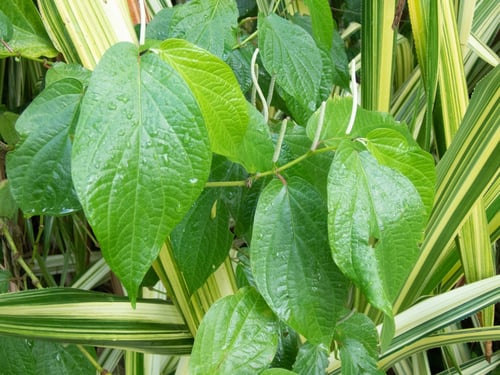
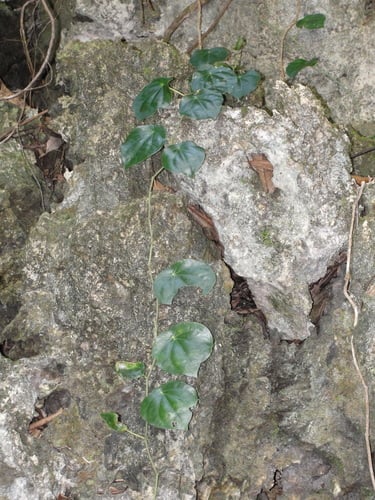
Source: WikipediaPiper novae-hollandiae, known as the giant pepper vine, is a common climber growing in rainforests of eastern Australia. It is related to the pepper plant. It grows north from Mount Dromedary in southern New South Wales to tropical Queensland. First described by Dutch botanist Friedrich Anton Wilhelm Miquel in 1866, its specific name pertains to its location in New Holland (Australia). The giant pepper vine is a vigorous and rapid-growing climbing plant with stems that become woody and covered in rough, grey bark. At its most advanced stage of development, the stem can be 40 cm (16 in) thick at the base, and may reach 30–40 meters in length, but the record is 230 feet (70 meters). Curtains of its leaves may sometimes be seen suspended from large rainforest trees. When in the juvenile stage, its leaves are thin and ovate, measuring roughly 8 cm by 8 cm). Also ovate, mature leaves – referred to as "sun leaves" — are thicker and larger. They are a deep green color with visible Veins, and measure approximately 12 cm by 8 cm. The small, cream-colored flowers of the giant pepper vine occur from April to August. Male flowers are arranged on a cylindrical spike, while the spike of females is more ovular. Both male and female flowers occur on a single given plant. Flowering is followed by a 0.5 cm, oval-shaped, red, fleshy drupe, which provides food to rainforest wildlife.
Description
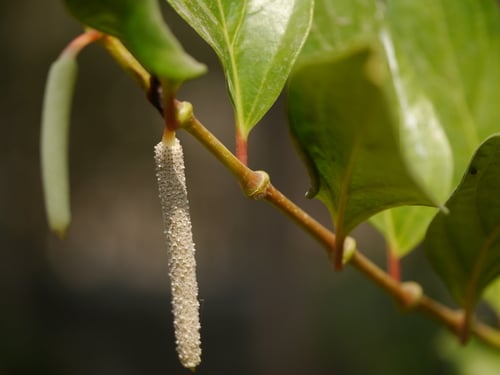
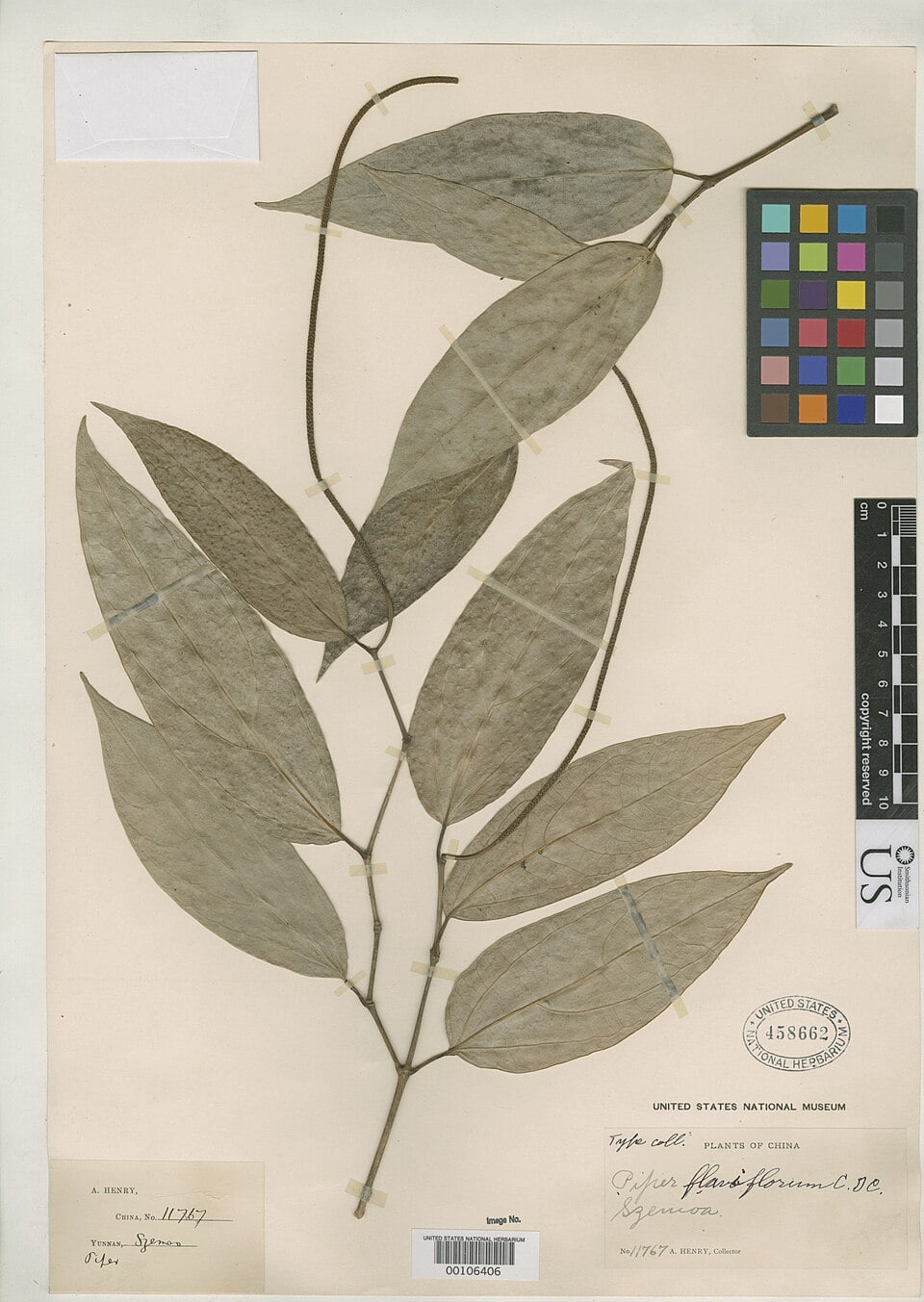
A tall climber. It has many branches. It forms close curtains over rainforest trees. The leaves are broadly oval and 10 cm long. The leaves on the fruiting branches are smaller. The flower spikes are on one sex. These are 1-2 cm long and are opposite the alternate leaves. The tiny male or female flowers are crowded on the spikes. The fruit are bright red oval berries. These are 5 mm long on stalks 1-2 cm long. Probably now Piper hederaceum.
Edible Uses
The bright red fruit can be eaten fresh, and the seeds can be ground and used as a pepper substitute.
Traditional Uses
The fruit can be eaten. The seeds can be ground and used like pepper.
This uses section is brief — help expand it
Distribution
A tropical plant. It grows in the rainforest in northern Australia. It grows between 100-1200 m altitude.
Where It Grows
Australia*,
Cultivation
Plants are grown from fresh seed. They can also be grown from cuttings of young shoots.
Notes
There are between 1000-2000 Piper species. They are mostly in the tropics. Possibly the same as or confused with Piper hederaceum.
References (15)
- Anon., 2003, Native Plants for the Fitzroy basin. Society for Growing Australian Plants Inc. (Rockhampton Branch) p 71
- Bodkin, F., 1991, Encyclopedia Botanica. Cornstalk publishing, p 804
- Cooper, W. and Cooper, W., 2004, Fruits of the Australian Tropical Rainforest. Nokomis Editions, Victoria, Australia. p 399
- Cribb, A.B. & J.W., 1976, Wild Food in Australia, Fontana. p 68
- Elliot, W.R., & Jones, D.L., 1997, Encyclopedia of Australian Plants suitable for cultivation. Vol 7. Lothian. p 331 (Drawing)
Show all 15 references Hide references
- Greig, D., 1996, Flowering Natives for Home Gardens. Angus & Robertson. p 287
- Haslam, S., 2004, Noosa's Native Plants. Noosa Integrated Catchment Assn. Inc. p 350
- Hemphill, I, 2002, Spice Notes. Macmillan. p 299
- Hibbert, M., 2002, The Aussie Plant Finder 2002, Florilegium. p 235
- Jackes, B.R., 2001, Plants of the Tropics. Rainforest to Heath. An Identification Guide. James Cook University. p 73
- Jones, D.L. & Gray, B., 1977, Australian Climbing Plants. Reed. p 235
- Leiper, G & Houser, J., Mutooroo. Plant Use by Australian Aboriginal People. Assembly press, Queensland.
- Low, T., 1992, Bush Tucker. Australia’s Wild Food Harvest. Angus & Robertson. p 183
- Nicholson, N & H., 1994, Australian Rainforest Plants 4, Terania Rainforest Publishing. NSW. p 52
- Ryan, M. (Ed.), 2003, Wild Plants of Greater Brisbane. Queensland Museum. p 232