Paeonia x suffruticosa
Andrews
Tree peony
iNaturalist· cc-by-nc
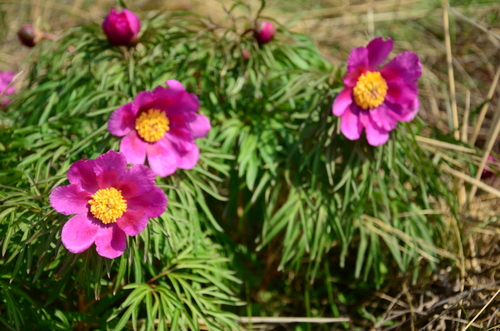
(c) liliagorodnycha, some rights reserved (CC BY-NC)
iNaturalist· cc-by-nc
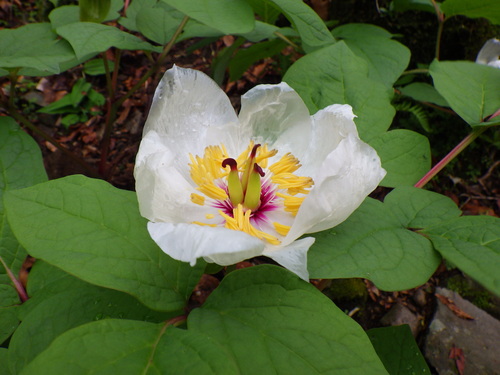
(c) 九二, some rights reserved (CC BY-NC)
iNaturalist· cc-by-nc
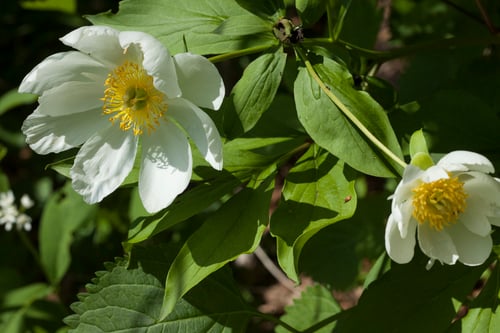
(c) Aleksandr_Levon, some rights reserved (CC BY-NC)
Description
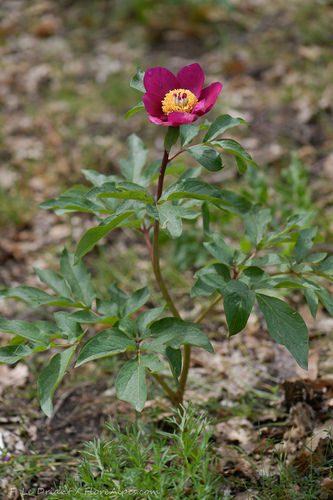
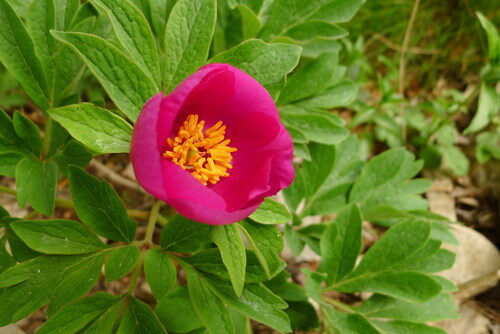
A shrub. It loses its leaves during the year. It grows 2 m tall and 3 m wide. The flowers are pink to white. It often has purple patches at the base of the petals. There are a large number of hybrids as well as the original.
Edible Uses
The fallen flower petals are parboiled and sweetened, then eaten on their own or cooked in various dishes.
Traditional Uses
The fallen flower petals are parboiled, sweetened and eaten. They are also cooked in various dishes.
This uses section is brief — help expand it
Medicinal Uses
The roots have anticancer properties and the flowers have anti-oxidant properties.
Distribution
It is a temperate plant. It can grow in a range of soils including very alkaline. It is best in moist soil. It can tolerate light shade. It suits hardiness zones 4-8. Arboretum Tasmania. In Yunnan.
Where It Grows
Asia, Britain, China, Europe, Himalayas, Korea, North America, SE Asia, Tasmania, USA, Vietnam,
Cultivation
Plants can be grown from seeds. It can be grown as a hedge.
Production
Plants grow slowly but last a long time.
Notes
The roots have anticancer properties. The flowers have anti-oxidant properties.
Synonyms
Also Known As
Botan, Moutan, Mu-tan
References (7)
- Bot. Repos. 6: t. 373. 1805
- Facciola, S., 1998, Cornucopia 2: a Source Book of Edible Plants. Kampong Publications, p 165
- Kintzios, S. E., 2006, Terrestrial Plant-Derived Anticancer Agents and Plant Species Used in Anticancer research Critical Reviews in Plant Sciences. 25: pp 79-113
- Liu, Yi-tao, & Long, Chun-Lin, 2002, Studies on Edible Flowers Consumed by Ethnic Groups in Yunnan. Acta Botanica Yunnanica. 24(1):41-56
- PFAF
Show all 7 references Hide references
- Tanaka,
- Zeng, Y., et al, 2014, Evaluation of antioxidant activities of extracts from 19 Chinese edible flowers. SpringerPlus 2014, 3:315