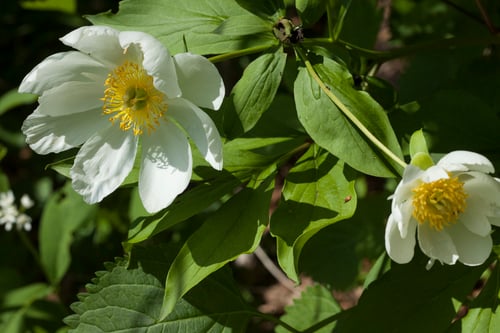
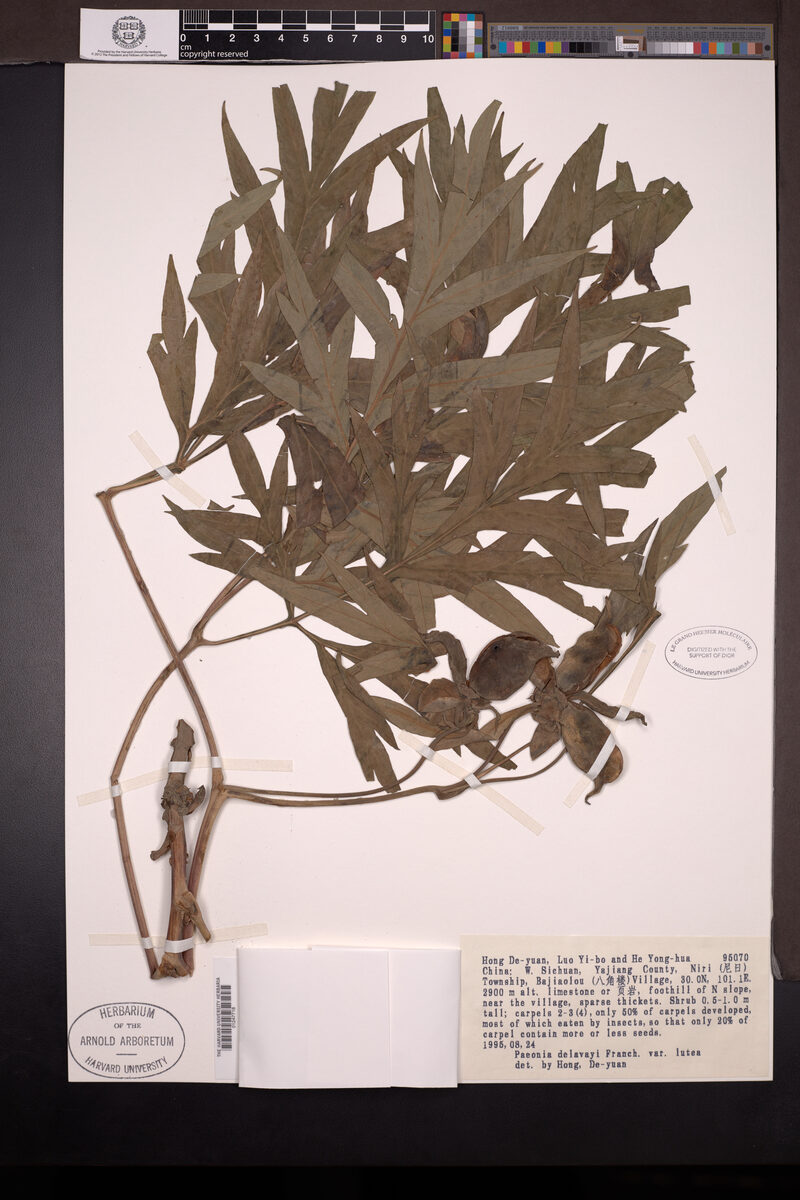
Paeonia japonica
(Makino) Miyabe. & Takeda
Yama-shakuyaku
iNaturalist· cc-by-nc
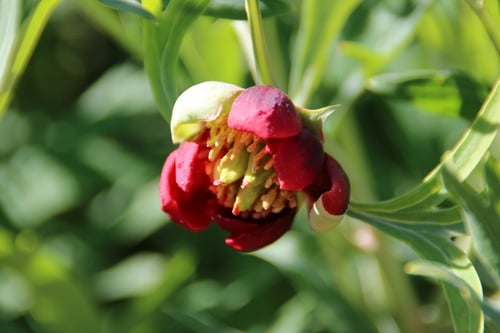
(c) Kaoru Ohta, some rights reserved (CC BY-NC)
iNaturalist· cc-by-nc
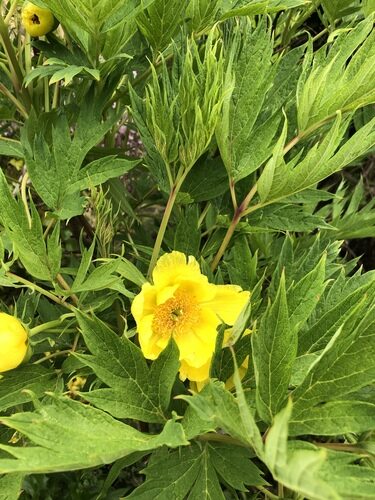
(c) 空猫 T. N, some rights reserved (CC BY-NC)
iNaturalist· cc-by-nc
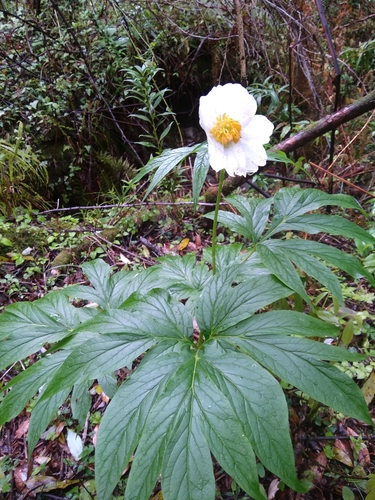
(c) 空猫 T. N, some rights reserved (CC BY-NC)
Summary
Source: WikipediaA self-fertile perennial reaching 0.5 m tall and wide with hermaphroditic flowers blooming June to July. Tolerates sandy, loamy, and clay soils ranging from mildly acid to basic pH. Grows in semi-shade or full light with preference for moist soil. Hardy to UK zone 7.
Description
A self-fertile perennial reaching 0.5 m tall and wide with hermaphroditic flowers blooming June to July. Tolerates sandy, loamy, and clay soils ranging from mildly acid to basic pH. Grows in semi-shade or full light with preference for moist soil. Hardy to UK zone 7.
Edible Uses
The flowers are edible, though no further details are given. Young leaves are eaten cooked. The root is chewed.
Traditional Uses
The leaves are eaten cooked. The roots are chewed. They are also used in brewing.
This uses section is brief — help expand it
Medicinal Uses
The root is analgesic, antibacterial, anti-inflammatory, antispasmodic, diuretic, febrifuge, and sedative. A tea made from the dried crushed petals of various peony species has been used as a cough remedy and as a treatment for haemorrhoids and varicose veins.
Distribution
It is a temperate plant. It grows naturally in open deciduous woods in mountains in central Japan. It requires a deep rich neutral of alkaline soil. The soil should not be waterlogged nor too dry.
Where It Grows
Asia, Japan, Korea,
Cultivation
Plants are grown from seed and fresh seed should be used, as stored seed takes a long time to germinate. Plants do not like root disturbance. Transplanting or division of the root should be done very carefully.
Propagation
Seed — best sown as soon as it is ripe in a cold frame. Fresh seed produces a root around 6 weeks after sowing, with shoots forming in spring. Stored seed is much slower and may take 18 months or more to germinate, so sow as soon as possible. Because roots are very sensitive to disturbance, many growers leave seedlings in their pots for 2 growing seasons before potting on, which allows a more robust root system to develop. If doing this, sow thinly and apply regular liquid feeds during the growing season. Alternatively, prick seedlings into individual pots as soon as they are large enough to handle and grow on in a cold frame for at least two growing seasons before planting out in spring. Divide with great care in spring or autumn, ensuring each portion has a leaf bud. Standing the lifted root in shade for several hours makes it less brittle and easier to divide. Divisions with several buds generally flower in the second year; those with only one or two buds will take considerably longer.
Other Uses
No other uses are known.
Production
Plants take 4-5 years to flower from seed. Plants can live for 50 years.
Notes
There are about 30 Paeonia species.
Also Known As
Baekjakyak
References (4)
- Gard. Chron. ser. 3, 48:366. 1910
- Lee, S., et al, 2016, Herbal preparation (HemoHIM) enhanced functional maturation of bone marrow-derived dendritic cells mediated toll-like receptor 4. Complementary and Alternative Medicine. 16:67
- Plants for a Future database, The Field, Penpol, Lostwithiel, Cornwall, PL22 0NG, UK. http://www.scs.leeds.ac.uk/pfaf/
- Song, M., et al, 2013, Traditional knowledge of wild edible plants in Jeju Island, Korea. Indian Journal of Traditional Knowledge. 12(2) pp 177-194