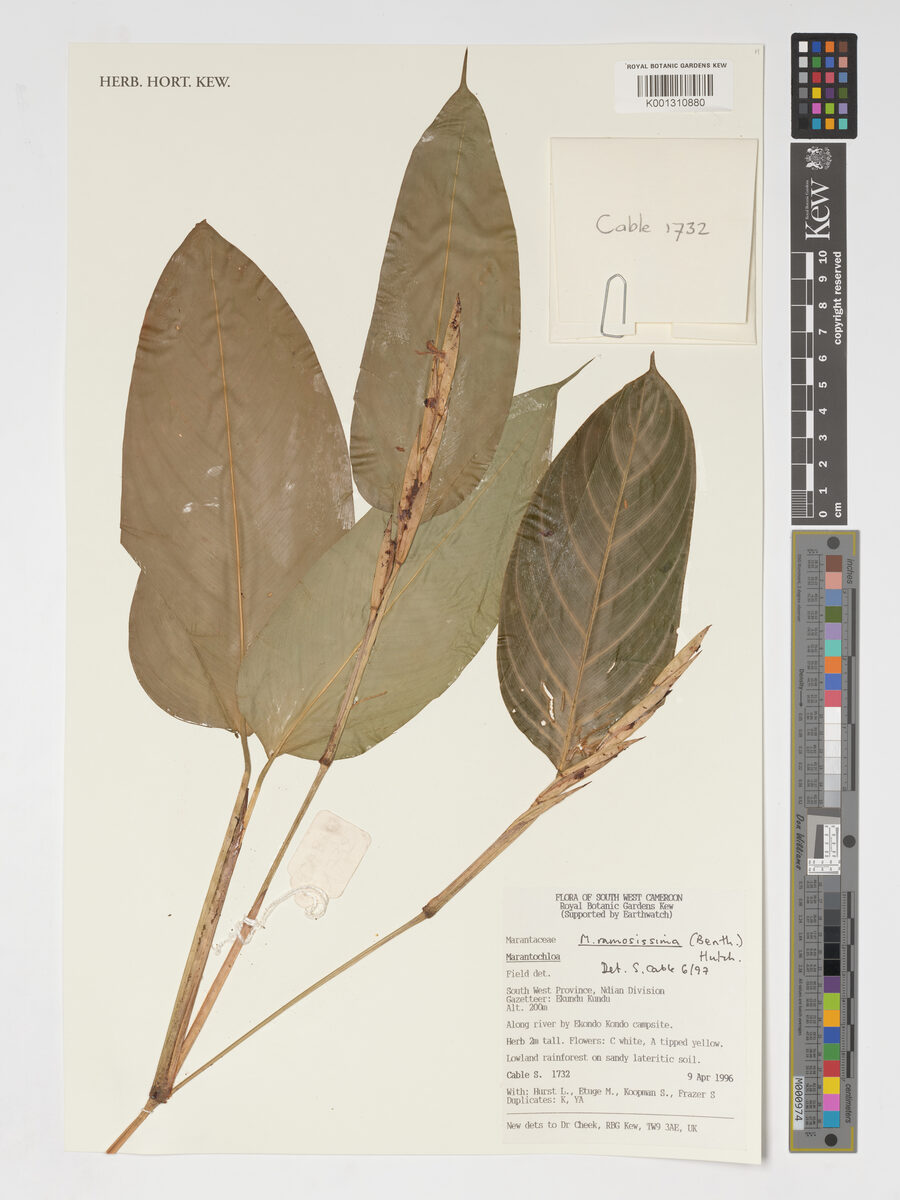
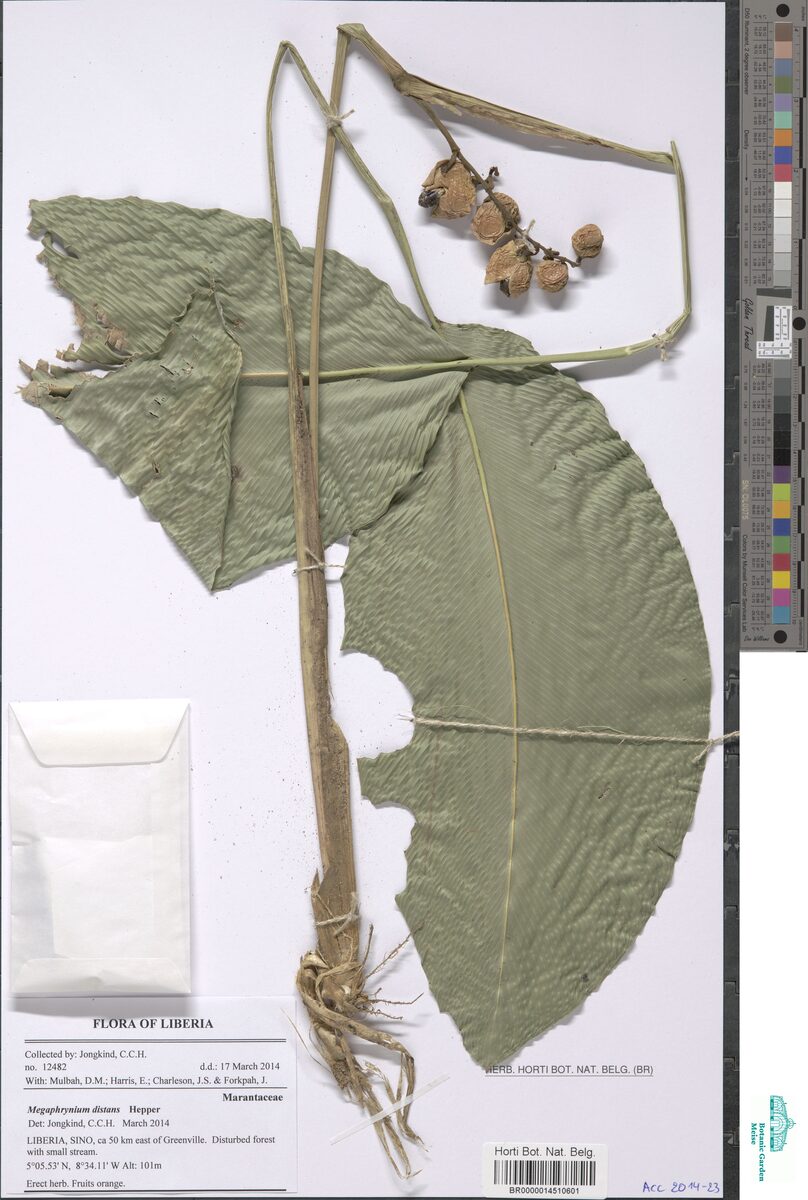
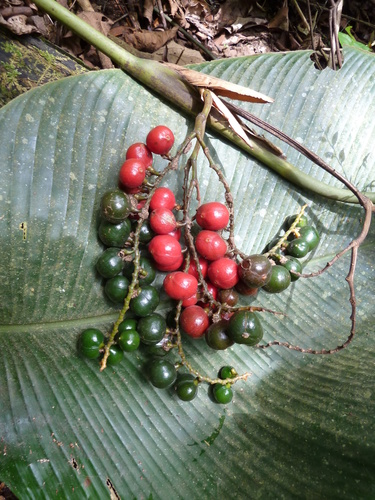
Thalia geniculata
L.
Alligator flag, Swamp lily
iNaturalist· cc-by-sa
(c) Dinesh Valke, some rights reserved (CC BY-SA)
iNaturalist· cc-by-nc
(c) Leonardo Adrián LEIVA, some rights reserved (CC BY-NC), uploaded by Leonardo Adrián LEIVA
iNaturalist· cc-by-nc
(c) Mark Kenderdine, some rights reserved (CC BY-NC), uploaded by Mark Kenderdine
Summary
Source: WikipediaThalia geniculata, the bent alligator-flag, arrowroot, or fire-flag, is a plant species widespread across tropical Africa and much of the Americas. Thalia geniculata is native to a large region in Africa, from Senegal in the west to Sudan in the east, south to Zimbabwe and Angola. It is also considered native to Mexico, Central America, the West Indies, most of South America, as well as the southeastern United States (Puerto Rico, Florida, Louisiana, Alabama and southern Georgia).
Description
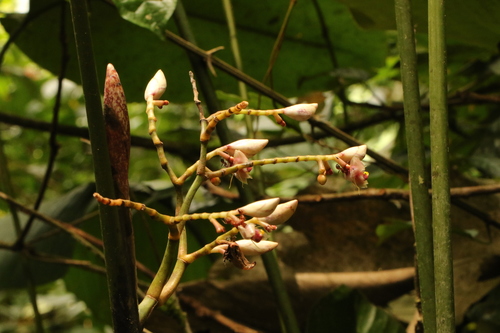
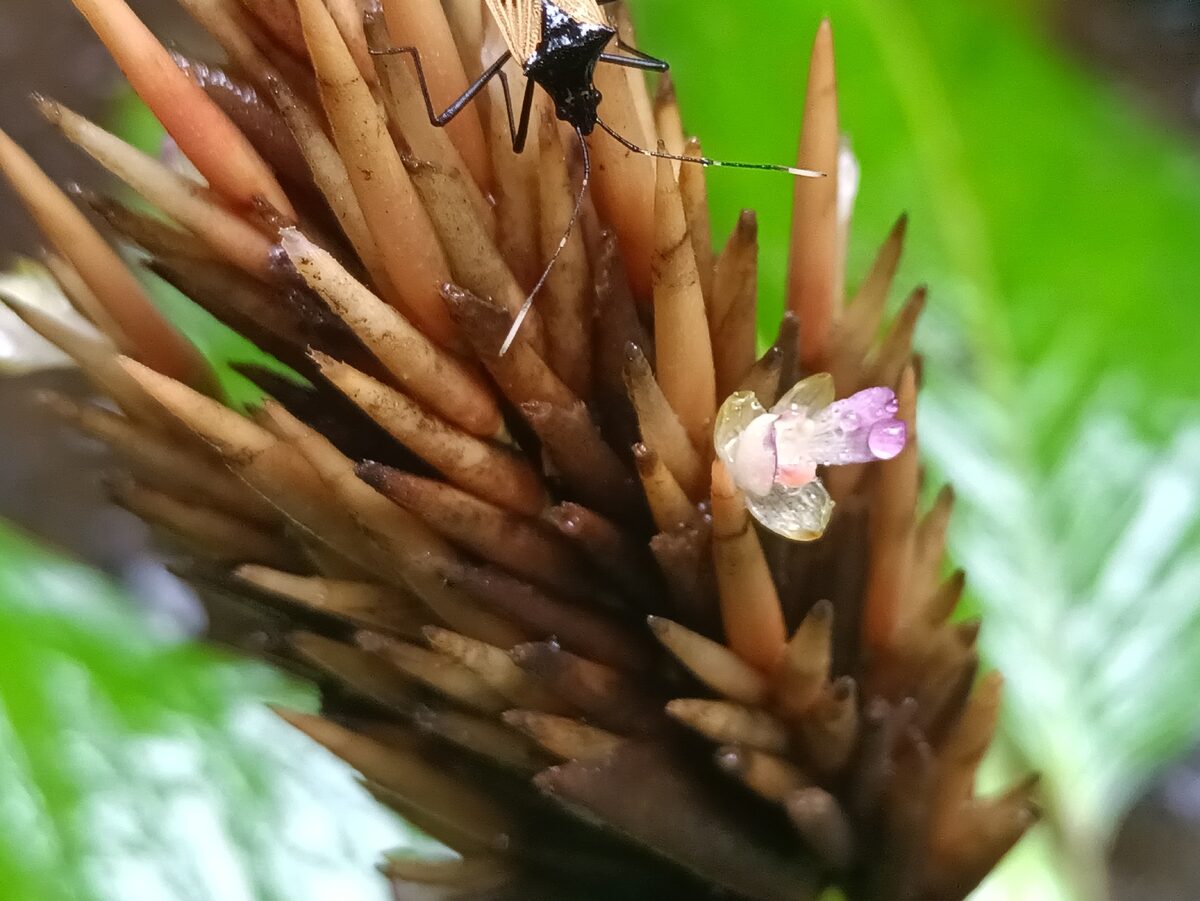
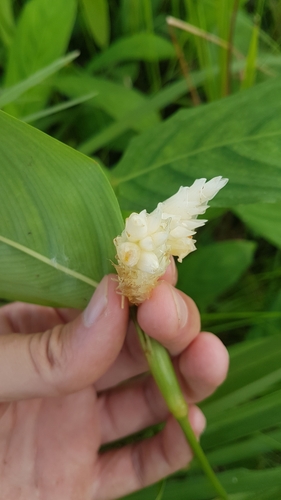
A plant that grows in water. It keeps growing from year to year. It grows 3 m high. It forms dense clumps. The leaves are arrow shaped and 1 m long by 20 cm wide. . They are on thin stems. The flowers are purple and white. They are on zig-zag stems.
Edible Uses
Young leaves are eaten, and rhizomes are baked and eaten or processed into a kind of arrowroot.
Traditional Uses
Young leaves are eaten. The rhizomes are baked and eaten or made into a kind of arrowroot.
This uses section is brief — help expand it
Known Hazards
It can become a weed blocking waterways.
Distribution
It is a tropical plant. It grows in water. They can survive light frosts. In Uni of Calicut BG.
Where It Grows
Africa, Angola, Argentina*, Asia, Australia, Bolivia, Brazil, Burkina Faso, Central Africa, Central African Republic, CAR, Congo DR, East Africa, Gabon, Greater Antilles, Guiana, Guianas, Guinea, Guinée, Guinea-Bissau, Guyana, India, Indonesia, Mexico, North America, Paraguay, SE Asia, Senegal, Sierra Leone, Singapore, South America, Sudan, Suriname, Uruguay,USA*, Venezuela, West Africa, Zambia,
Cultivation
Plants can be grown by division. They can also be grown by seeds.
Notes
Caution: It can become a weed blocking waterways.
Synonyms
Also Known As
Aguape-gigante, Agutiguepo-obi, Arumarana, Aurma-kina, Bocachica, Caete, Fafa, N'txenplale, Patat cai, Peguajo, Pehuajo, Platanillo, Popal, Sirane, Thalia
References (13)
- Bortolotto, I. M., et al, 2018, Lista preliminar das plantas alimenticias nativas de Mato Grosso do Sul, Brasil. Iheringia, Serie Botanica, Porto Alegre, 73 (supl.):101-116
- Facciola, S., 1998, Cornucopia 2: a Source Book of Edible Plants. Kampong Publications, p 149
- Kermath, B. M., et al, 2014, Food Plants in the Americas: A survey of the domesticated, cultivated and wild plants used for Human food in North, Central and South America and the Caribbean. On line draft. p 861
- Kinupp, V. F., 2007, Plantas alimenticias nao-convencionais da regiao metropolitana de Porto Alegre, RS, Brazil p 82
- Lim, T. K., 2015, Edible Medicinal and Non Medicinal Plants. Volume 9, Modified Stems, Roots, Bulbs. Springer p 81
Show all 13 references Hide references
- Malezas Comestibles del Cono Sur, INTA, 2009, Buernos Aires
- Moerman, D. F., 2010, Native American Ethnobotany. Timber Press. p 554
- Romanowski, N., 2007, Edible Water Gardens. Hyland House. p 69
- Scarpa, G. F., 2009, Wild food plants used by the indigenous peoples of South American Gran Chaco: A general synopsis and intercultural comparison. Journal of Applied Botany and Food Quality 83:90-101
- Sp. pl. 2:1193. 1753
- Sukarya, D. G., (Ed.) 2013, 3,500 Plant Species of the Botanic Gardens of Indonesia. LIPI p 1154
- Tanaka,
- World Checklist of Useful Plant Species 2020. Royal Botanic Gardens, Kew