Aloe arborescens
P. Miller
Candelabra aloe, Tree aloe, Mountain bush aloe
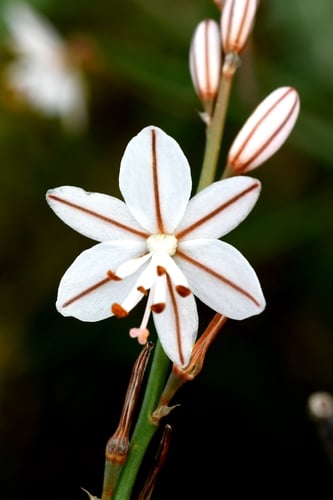
iNaturalist· cc-by-nc
(c) Lindokuhle Mgwaba, some rights reserved (CC BY-NC), uploaded by Lindokuhle Mgwaba
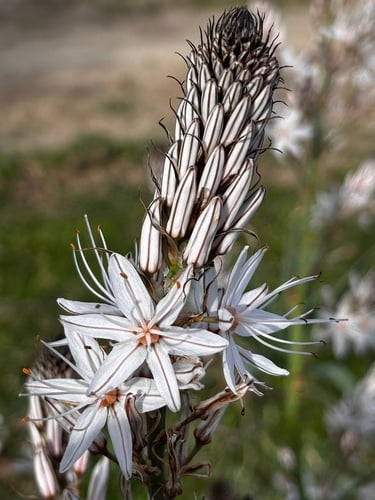
iNaturalist· cc-by-nc
(c) Xirilo, some rights reserved (CC BY-NC), uploaded by Xirilo
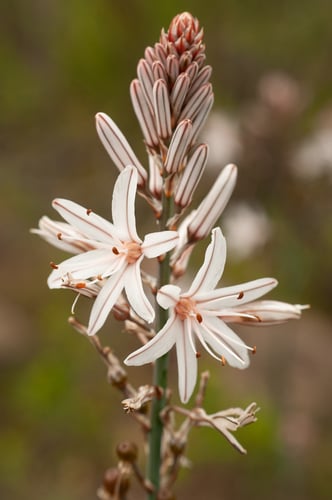
iNaturalist· cc-by-sa
(c) Ton Rulkens, some rights reserved (CC BY-SA)
Summary
Source: WikipediaAloe arborescens, commonly known as krantz aloe or the candelabra aloe, is a species of flowering succulent perennial plant that belongs to the genus Aloe, which it shares with the well known and studied Aloe vera. The specific epithet arborescens means "tree-like". Aloe arborescens is valued by gardeners for its succulent green leaves, large vibrantly-colored flowers, winter blooming, and attraction for birds, bees, and butterflies.
Description
A mounding shrub. It forms clumps. It can be 2-3 m tall. The stems are 2-3 m long. The leaves are in crowded rinds at the ends of stems. The leaves are spreading and sword shaped. They are 50-60 cm long by 5-7 cm wide. They are dull green with pale teeth along the edge. The leaves taper to a long tip. They curve downwards. The flowering arrangement is upright or horizontal and usually un-branched. The flowers hang down.
Edible Uses
The flowers are sucked for their sweet nectar. In Japan, the leaves are eaten as a vegetable and used as a health food, particularly for their reputed effect on constipation. Sections of stem with leaves attached are sold as a vegetable. The plant is a key ingredient in 'Kidachi aloe candies', a popular Japanese sweet known for its tangy yoghurt flavour.
Traditional Uses
The flowers are sucked for their sweet nectar. The leaf gel is used for drinks. The fruit are eaten as a snack.
This uses section is brief — help expand it
Medicinal Uses
This species is one of the main sources of aloe used medicinally, with preparations sold as over-the-counter drugs to stimulate gastric secretion, as a purgative, and for dermatological applications. In Ecuador, where it is cultivated, it is considered the first treatment for scratches, bites, and burns, and is used in hospitals as a primary treatment for burns up to the third degree. The gel of this species contains significantly higher concentrations of active compounds than most other aloes, making its action against skin conditions faster and more effective. The leaf exudate contains anthraquinone derivatives such as aloin and hydroxyaloins. Aloin itself is inactive as a laxative but is converted in the digestive tract by Eubacterium species to aloe-emodin anthrone, an effective laxative. In diarrhoea induced by aloin, increased water content may be more significant than stimulated peristalsis, but prolonged use causes a griping effect on the colon; aloin should therefore be used with an antispasmodic. Anthraquinone laxatives should not be used for more than 8–10 days, or by children under 12 years. Contra-indications include pregnancy, breastfeeding, intestinal inflammations, and haemorrhoids. Possible side effects include congestion and irritation of the pelvic organs. Anthraquinone laxatives have genotoxic and tumorigenic potential in rodents and may play a role in colorectal cancer development. Aloin is also claimed to have antihistamine and anti-inflammatory activity, and both aloin and aloeresin B have skin-whitening properties. The gel contains polysaccharides and glycoproteins including mannan, glucomannan, arboran A, and arboran B; the last two have hypoglycaemic effects. Immunomodulating effects of these polysaccharides are thought to contribute at least partly to the gel's biological activity. The leaf epidermis contains lectins — aloctin A and aloctin B — that inhibit fibrosarcoma growth in animals. Leaf powder has shown protective effects against human carcinogenesis. In 2002, the US Food and Drug Administration withdrew the 'generally recognized as safe and effective' status for over-the-counter drugs based on aloe exudates. Gel from this species acts as a synergist with neomycin sulphate in eye drops used for treating eye inflammation and infections. Freeze-dried leaves have shown 70% growth inhibition of Trichophyton mentagrophytes, a fungus responsible for athlete's foot. A leaf decoction is given to women to ease childbirth. The split or crushed fresh leaves are widely used to treat burns and wounds.
Known Hazards
The sap of Aloe species contains anthraquinones. These compounds have several beneficial medicinal actions, particularly as a laxative, and many species of Aloe are thus employed in traditional medicine. Whilst safe in small doses and for short periods of time, anthraquinones do have potential problems if used in excess. These include congestion and irritation of the pelvic organs. Long term use of anthraquinone laxatives may also play a role in development of colorectal cancer as they have genotoxic potential, and tumorigenic potential.
Distribution
It is a tropical plant. It is best with well-drained soil and a partly shaded position. In Zimbabwe it grows between 1,050-2,500 m above sea level.
Where It Grows
Africa, Algeria, Asia, Australia, Botswana, Canada, Canary Is., East Africa, Eswatini, France, Hawaii, India, Indonesia, Korea, Malawi, Mexico, Mozambique, New Zealand, North America, Pacific, Portugal, SE Asia, Slovenia, South Africa*, Southern Africa, Spain, Swaziland, Tunisia, USA, Zambia, Zimbabwe,
Cultivation
A plant of the semi-arid to moist tropics, where it is found at elevations up to 2,000 metres. It grows best in areas where annual daytime temperatures are within the range 18 - 26c, but can tolerate 9 - 38c. It can be killed by temperatures of -1c or lower. So long as the plant is not wet, it can tolerate occasional temperatures down to about -4c. It prefers a mean annual rainfall in the range 400 - 1,500mm, but tolerates 300 - 1,700mm. Succeeds in full sun or light shade, requiring a well-drained, light to medium soil. Prefers a pH in the range 5 - 6.5, tolerating 4.2 - 7. Established plants are drought tolerant. This species hybridizes freely with several other Aloe species. Aloe species follow the Crassulacean acid metabolism (CAM). CAM plants can fix carbon dioxide at night and photosynthesize with closed stomata during the day, thus minimizing water loss. This, plus their succulent leaves and stems, and the presence of a thick cuticle, makes them well adapted to dry conditions. Aloe species are not self-fertile and often require cross-pollination with other plants for successful seed production. Aloe leaves can be harvested year-round, but mature leaves are generally harvested in late spring to summer when the plant is most vigorous for specific products like aloe vera gel. Aloe species typically flower in late winter to early spring, depending on the species and local climate conditions. Growth rates can vary among species, but generally, aloe plants are considered moderate to slow growers, with many species taking several years to reach maturity.
Propagation
Sow seed in a sandy, well-drained potting mix in a warm, shady position in standard seed trays. Cover with a thin layer of sand (1–2mm), keep moist, and expect germination in about three weeks. Transplant seedlings into individual bags or containers as soon as they are large enough to handle. Stem cuttings 3–10cm long can also be taken; allow the cut end to dry for a day or so until sealed, then plant directly into well-drained soil or sand in a permanent position. Avoid overwatering, as this may cause the cutting to rot.
Other Uses
In drier tropical areas, the plant is frequently grown as a hedge and living fence, forming an excellent impenetrable barrier. Homesteads abandoned for over a century can still be identified by their surviving aloe fences. The flowers are rich in nectar and attract pollinators including bees and hummingbirds. The plant's dense foliage can provide shelter for small animals.
Notes
There are about 360 Aloe species. They grow in the dry areas of Africa. Also put in the family Aloaceae. Also put in the family Asphodelaceae.
Synonyms
Also Known As
Chitseyse, Drevesasta aloja, Iposo, Kranz aloe, Pohon aloe
References (15)
- Bodkin, F., 1991, Encyclopedia Botanica. Cornstalk publishing, p 68
- Facciola, S., 1998, Cornucopia 2: a Source Book of Edible Plants. Kampong Publications, p 142
- Fowler, D. G., 2007, Zambian Plants: Their Vernacular Names and Uses. Kew. p 65
- Gard. dict. ed. 8: Aloe no. 3. 1768
- Jeppe, B. 1969, South African Aloes. Purnell, Cape Town.
Show all 15 references Hide references
- Kew Plants of the World Online
- Kunkel,
- Ruiters-Welcome, A. K., 2019, Food plants of southern Africa. Ph.D. thesis. Univ. of Johannesburg p 30
- Staples, G.W. and Herbst, D.R., 2005, A tropical Garden Flora. Bishop Museum Press, Honolulu, Hawaii. p 592
- Sukarya, D. G., (Ed.) 2013, 3,500 Plant Species of the Botanic Gardens of Indonesia. LIPI p 1001
- Swaziland's Flora Database http://www.sntc.org.sz/flora
- van Wyk, B-E., 2011, The potential of South African plants in the development of new food and beverage products. South African Journal of Botany 77 (2011) 857–868
- Welcome, A. K. & Van Wyk, B.-E., 2019, An inventory and analysis of the food plants of southern Africa. South African Journal of Botany 122 (2019) 136–179
- White, F., Dowsett-Lemaire, F. and Chapman, J. D., 2001, Evergreen Forest Flora of Malawi. Kew. p 91
- World Checklist of Useful Plant Species 2020. Royal Botanic Gardens, Kew