Mentha arvensis var. piperascens
Malinv. ex Holmes
Japanese mint
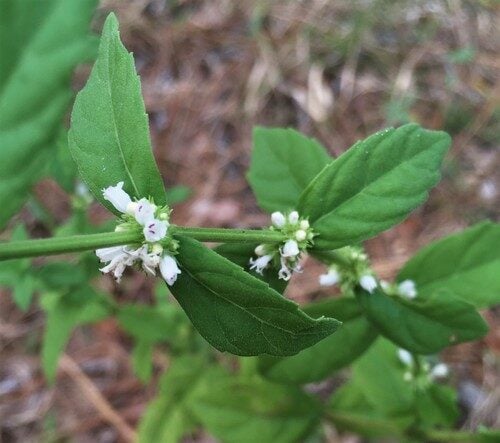
iNaturalist· cc-by-nc
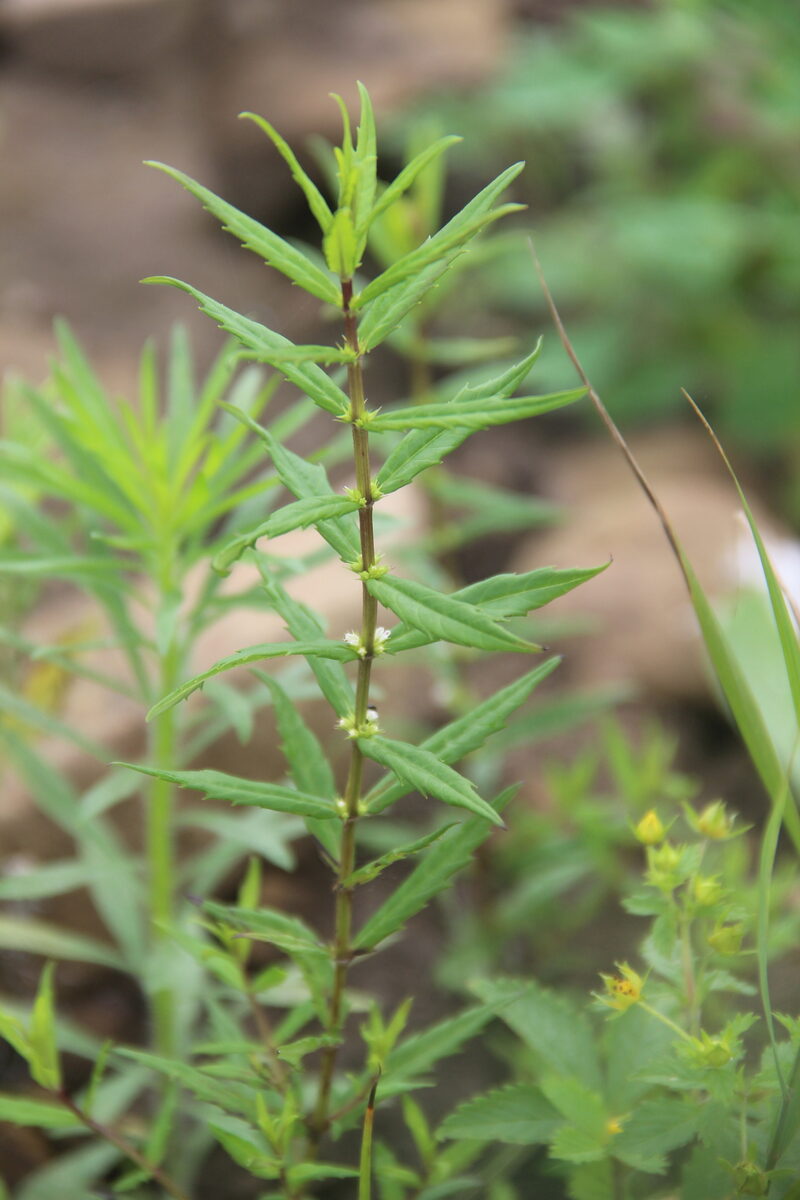
(c) eugenezakharov, some rights reserved (CC BY-NC), uploaded by eugenezakharov
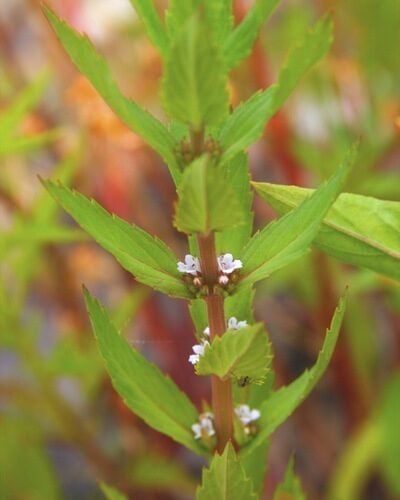
iNaturalist· cc-by-nc
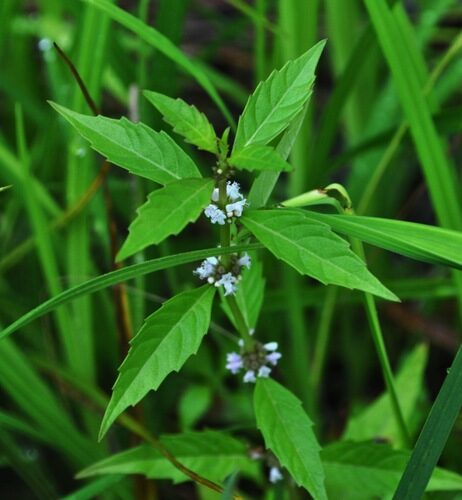
(c) Gennadiy Okatov, some rights reserved (CC BY-NC), uploaded by Gennadiy Okatov
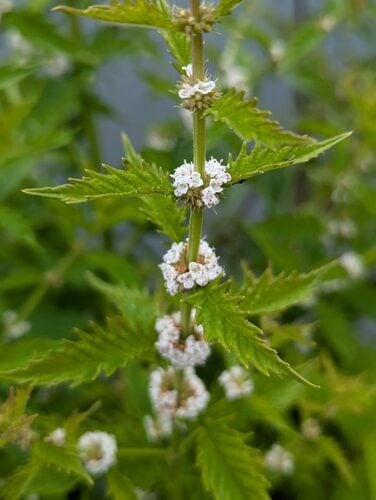
iNaturalist· cc-by-nc
(c) Magazova Lubov, some rights reserved (CC BY-NC), uploaded by Magazova Lubov
Summary
Source: WikipediaMentha arvensis, the corn mint, field mint, or wild mint, is a species of flowering plant in the mint family Lamiaceae. It has a circumboreal distribution, being native to the temperate regions of Europe and western and central Asia, east to the Himalaya and eastern Siberia, and North America. Mentha canadensis, the related species, is also included in Mentha arvensis by some authors as two varieties, M. arvensis var. glabrata Fernald (North American plants such as American Wild Mint) and M. arvensis var. piperascens Malinv. ex L. H. Bailey (eastern Asian plants such as Japanese mint). It grows in moist places, especially along streams.
Description
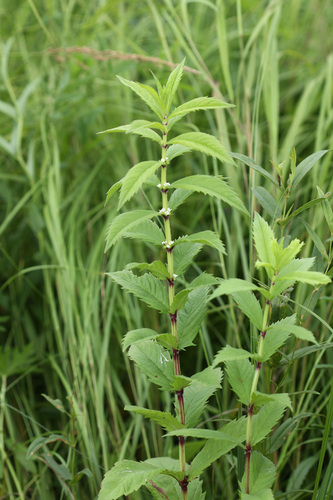
A herb. It keeps growing from year to year and has an aroma. It grows 60-80 cm high. The leaves are broadly sword shaped and 2-4 cm long by 1-2 cm wide. There are teeth along the edge. The flowers are lilac or pink.
Edible Uses
The leaves and shoots are eaten cooked and can be preserved. The flowers are used to scent tea, and the flowers yield Japanese mint oil used to flavor cakes and drinks. Leaves are used as flavoring.
Traditional Uses
The flowers are used to scent tea. The flowers yield Japanese mint oil used to flavour cakes and drinks. The leaves and shoots are eaten cooked. They can be preserved.
Medicinal Uses
The leaves have been made into tea to treat colds or aid digestion. They can also be eaten raw. Chemical substances that can be extracted from wild mint include menthol, menthone, isomenthone, neomenthol, limonene, methyl acetate, piperitone, beta-caryophyllene, alpha-pinene, beta-pinene, tannins and flavonoids. Mint extracts and menthol-related chemicals are used in food, drinks, cough medicines, creams and cigarettes. Menthol is widely used in dental care, as a mouthwash potentially inhibiting streptococci and lactobacilli bacteria.
Distribution
It is a temperate plant.
Where It Grows
Asia, Brazil, Canada, China, Indochina, Japan, Korea, Laos, Myanmar, North America, SE Asia,
Other Information
It is a cultivated food plant.
Also Known As
Bakha
References (5)
- Facciola, S., 1998, Cornucopia 2: a Source Book of Edible Plants. Kampong Publications, p 128
- Hu, Shiu-ying, 2005, Food Plants of China. The Chinese University Press. p 648
- Kim, H. & Song, M., 2013, Ethnobotanical analysis for traditional knowledge of wild edible plants in North Jeolla Province (Korea). Genetic. Resour. Crop Evol. (2013) 60:1571-1585 (As Mentha piperascens)
- Pharm. J. Trans. ser. 3, 13:382. 1882
- Zeven, A. C. & de West, J. M. J., 1982, Dictionary of cultivated plants and their regions of diversity. Wageningen. p 39