ZZZ Erythrophleum chlorostachys
(F.Muell.) Baillon
Marukgal, Mulyurruny, Ironwood, Camel poison, Cooktown Ironwood, Northern Ironwood
No photos yet for ZZZ Erythrophleum chlorostachys
Sign in to contribute a photoDescription
A medium sized spreading tree. It grows 8-15 m high and spreads 3-8 m wide. The bark is dark grey and with a chequered pattern. The leaves are large and twice divided. They are 15-30 cm long with 2-3 opposite pairs of segments. Each of these have 5-8 leaflets. The leaflets are oval and 3.5-6.5 cm long by 2.5-6 cm wide. The flowering stalks are 2.5-7.5 cm long and at the ends of branches. The flowers are 0.6 cm long. They are green or pale yellow. They are crowded on the stalks. The fruit are pods 10-15 cm long by 2.5-4 cm wide. They are dark brown to black. They are brittle. The seeds are dark brown. There are 3-6 seeds per pod.
Traditional Uses
Poisonous. The gum is sometimes mixed with food as a poison. It should not be eaten.
This uses section is brief — help expand it
Known Hazards
The tree is poisonous and should not be eaten. The gum is sometimes mixed with food as a poison.
Distribution
It is a tropical plant. It grows in open country. It is usually on sandy soils. Trees shed their leaves during dry periods. Plants can tolerate coastal exposure. They need a sunny position and well drained soil. It suits hardiness zones 10-12.
Where It Grows
Australia*,
Cultivation
Plants can be grown from seed. The seed need treatment before they will grow. Suckers and root cuttings can also be used.
Notes
There are about 17 Erythrophleum species. Also as Caesalpinaceae.
Synonyms
References (21)
- Bodkin, F., 1991, Encyclopedia Botanica. Cornstalk publishing, p 403
- Cooper, W. and Cooper, W., 2004, Fruits of the Australian Tropical Rainforest. Nokomis Editions, Victoria, Australia. p 102
- Cundall, P., (ed.), 2004, Gardening Australia: flora: the gardener's bible. ABC Books. p 565
- Dunlop, C.R., Leach, G.J. & Cowie, I.D., 1995, Flora of the Darwin Region. Vol 2. Northern Territory Botanical Bulletin No 20. p 32
- Elliot, W.R., & Jones, D.L., 1984, Encyclopedia of Australian Plants suitable for cultivation. Vol 3. Lothian. p 489 (Photo)
Show all 21 references Hide references
- Etherington, K., & Imwold, D., (Eds), 2001, Botanica's Trees & Shrubs. The illustrated A-Z of over 8500 trees and shrubs. Random House, Australia. p 292
- Flora of Australia Volume 12, Mimosaceae (excl. Acacia) Caesalpiniaceae. Melbourne: CSIRO Australia (1998) p 70, 71
- Hall, N. et al, 1972, The Use of Trees and Shrubs in the Dry Country of Australia, AGPS, Canberra. p 345
- Hearne, D.A., & Rance, S.J., 1975, Trees for Darwin and Northern Australia. AGPS, Canberra p 56, Pl 14
- Hibbert, M., 2002, The Aussie Plant Finder 2002, Florilegium. p 95
- Hist. pl. 2:150. 1870
- Kenneally, K.E., Edinger, D. C., and Willing T., 1996, Broome and Beyond, Plants and People of the Dampier Peninsula, Kimberley, Western Australia. Department of Conservation and Land Management. p 76
- Lazarides, M. & Hince, B., 1993, Handbook of Economic Plants of Australia, CSIRO. p 96
- Levitt, D., 1981, Plants and people. Aboriginal uses of plants on Groote Eylandt, Australian Institute of Aboriginal Studies, Canberra. p 86
- Milson. J., 2000, Trees and Shrubs of north-west Queensland. DPI p 18
- Paczkowska, G. & Chapman, A.R., 2000, The Western Australian Flora. A Descriptive Catalogue. Western Australian Herbarium. p 190
- Petheram, R. J. and Kok, B., 2003, Plants of the Kimberley Region of Western Australia. UWA Press p 427
- Townsend, K., 1994, Across the Top. Gardening with Australian Plants in the tropics. Society for Growing Australian Plants, Townsville Branch Inc. p 183
- Townsend, K., 1999, Field Guide to Plants of the Dry Tropics. Society for Growing Australian Plants, Townsville Branch Inc. p 46
- Wheeler, J.R.(ed.), 1992, Flora of the Kimberley Region. CALM, Western Australian Herbarium, p 347
- Wightman, G. & Brown, J., 1994, Jawoyn Plant Identikit, Common Useful Plants in the Katherine Area of Northern Australia. Concervation Commission Northern Territory. p 20
More from Fabaceae
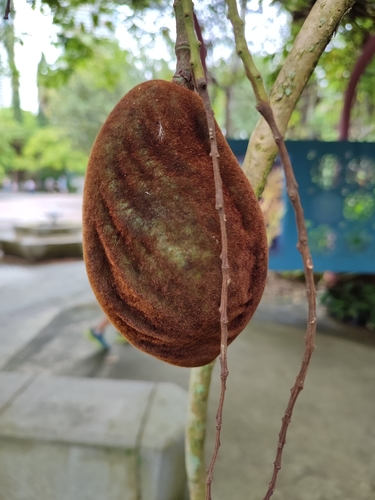
Padbruggea dasyphylla
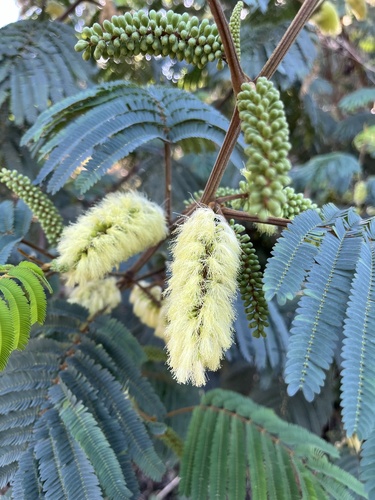
Paraserianthes lophantha
Cape Leeuwin wattle, Caped Wattle, Crested Wattle, Swamp Wattle, Brush wattle
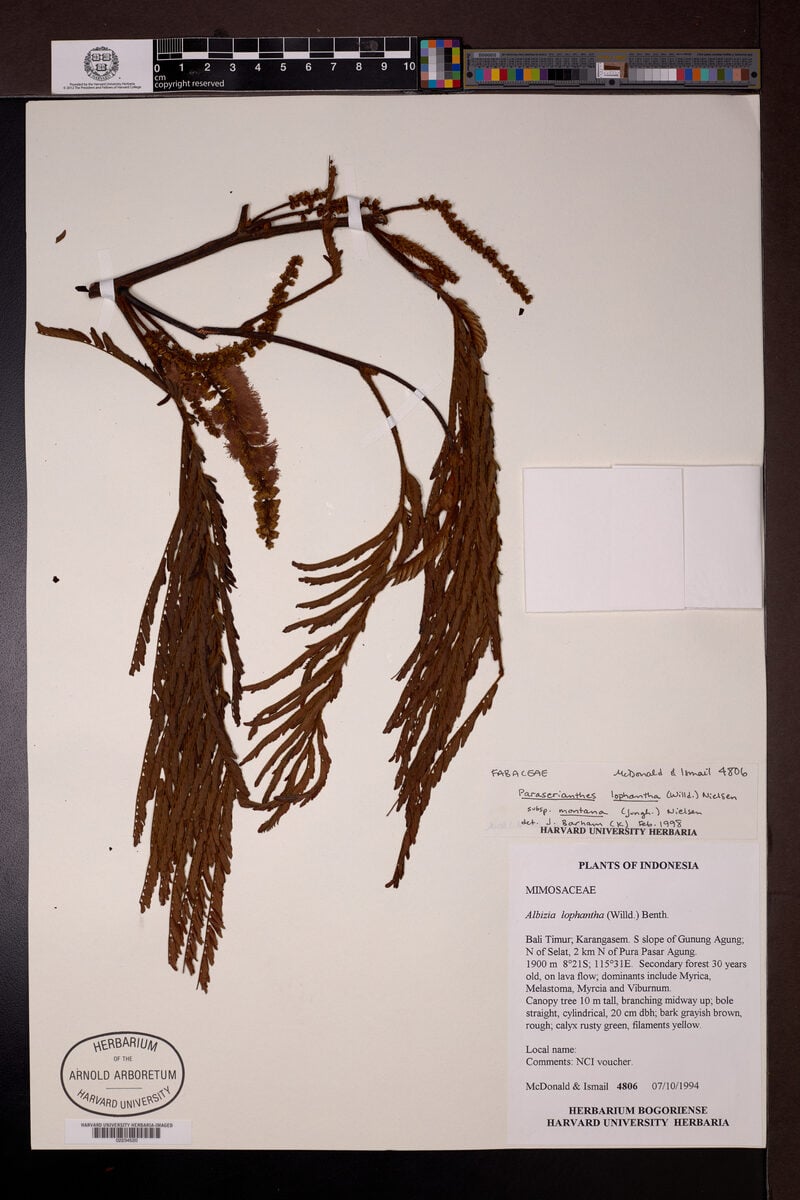
Paraserianthes lophantha subsp. montana
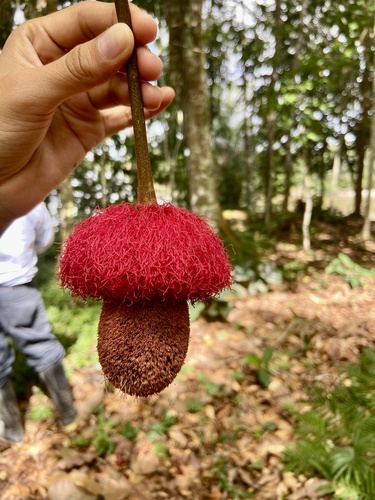
Parkia balslevii
Balslev nitta tree
Parkia bicolor
African locust bean
Parkia biglandulosa
Badminton ball tree, Shuttlecock tree, African locust tree