Erythrina americana
Mill.
American coralbean, Flor de colorin
iNaturalist· cc-by-nc
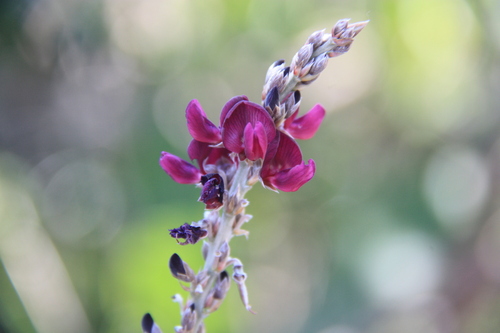
(c) Alfonso Gutiérrez Aldana, some rights reserved (CC BY-NC), uploaded by Alfonso Gutiérrez Aldana
iNaturalist· cc-by-nc
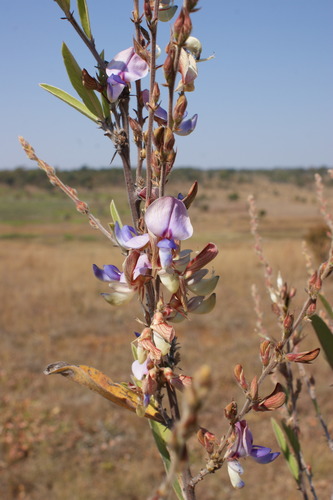
(c) glokplopit, some rights reserved (CC BY-NC), uploaded by glokplopit
iNaturalist· cc-by-nc
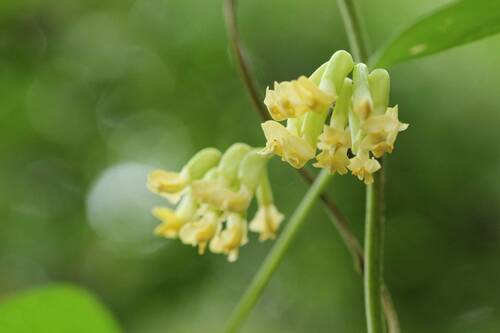
(c) diegogo, some rights reserved (CC BY-NC)
Summary
Source: WikipediaErythrina americana (coral tree, colorines, colorín, or pemoches), is a flowering plant of the genus Erythrina which is native to Mexico. Colorín (plural colorines) is the name of a type of tree, Erythrina americana also called Tzompāmitl. The word colorín means color chillón—a “gaudy” or “loud” color (Williams 1959). Colorines plant also called, cuchillitos (little knives) or machetitos (little machetes), zompantle, or coral is a nice flower, red in color and every individual flower resembles a little machete, the flower is edible and is boiled (only the red part of the flower) and cooked with scrambled eggs or tuna in many parts of south Mexico. This variety flowers during the dry season (April) in many parts, and the plant is very popular with hummingbirds because of the bright red color, the plant ranges from a few feet off the ground to trees five meters tall. The earliest depiction of this tree in America is in the Florentine Codex. In the 17th century, Francisco Hernández commented: "The juice from the flowers of this tree, given to children induces drowsiness and sleepless". Other sites explain that although the flower is edible, the seeds and everything else in the tree is highly toxic, in Mexico, the pulverized seeds are used as rat poison and the bark is used as fish poison.
Description
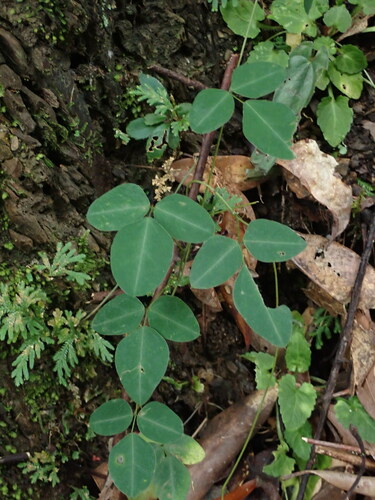
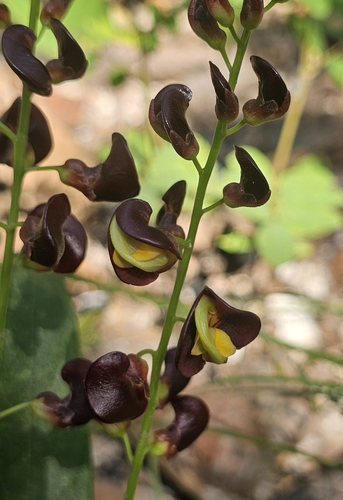
A tree. It grows 5 m tall. The branches spread out wide. There are spines along the trunk. The leaves have 3 leaflets. These are oval and 7-22 cm long. The leaves fall off during dry winter seasons. The flower petals are red. The fruit are pods 12 cm long. These are squeezed in between the seeds. The pod has a long narrow beak at the tip. The seeds are about 1 cm long and are red.
Edible Uses
The petals and young flowers are fried and eaten, added to eggs for omelets, or added to salads and soups. The tender leaves are cooked and eaten as greens.
Traditional Uses
The petals and young flowers are fried and eaten. They are added to eggs to make an omelet. They are also added to salads and soups. The tender leaves are used as greens. Caution: The seeds are poisonous.
Medicinal Uses
The flowers are sedative. The seeds are considered laxative, diuretic, expectorant, anti-asthmatic and antimalarial. They should be used with caution due to the presence of alkaloids. The seeds contain isoquinoline alkaloids; of these, β-erythroidine and its more potent derivate dihydro-β-erythroidine were shown to possess curariform activity. Several Mexican species are used medicinally - their roots are considered sudorific; their leaves are considered emmenagogue; a decoction of the flowers is used in treating chest affections; and the juice of the stems is applied to scorpion stings.
Known Hazards
The flower is edible, This tree is very popular with kids who use the flowers as a little knives to stab each other. The ground seeds and bark are used as poison, The tree is also used to make traditional crafts in many Mexican states, specially traditional dance masks and is also used as fence post in many parts of Veracruz Mexico, it is a beautiful and hardy tree, some varieties even tolerate frost. The tall varieties of this plant are rarely used as a garden plant, but the dwarf varieties are used as garden plants because they tolerate frost, they tolerate heat and come from dry places, and they flower early and attract hummingbirds.
Distribution
It is a tropical plant.
Where It Grows
America, Central America, Mexico, North America, Peru, South America,
Cultivation
Erythrina species are tolerant of a range of soils, often tolerating poor fertility, but generally grow best in a sunny position in a moderately fertile, well-drained soil. All species in this genus are believed to be self-compatible. Their flowers are adapted to pollination by birds, though various insects can also cause fertilization. The various species of Erythrina can all, as far as is known, be intercrossed to produce fertile hybrids. Those species most closely related to each other cross fairly readily, but even species that are quite distant can hybridize. This species has a symbiotic relationship with certain soil bacteria, these bacteria form nodules on the roots and fix atmospheric nitrogen. Some of this nitrogen is utilized by the growing plant but some can also be used by other plants growing nearby.
Propagation
Like many species within the family Fabaceae, once they have been dried for storage the seeds of this species may benefit from scarification before sowing in order to speed up and improve germination. This can usually be done by pouring a small amount of nearly boiling water on the seeds (being careful not to cook them!) and then soaking them for 12 - 24 hours in warm water. By this time they should have imbibed moisture and swollen - if they have not, then carefully make a nick in the seedcoat (being careful not to damage the embryo) and soak for a further 12 hours before sowing. Cuttings - even quite large branches root easily in the open ground.
Other Uses
The bark of many species in this genus yields a yellow dye. The handsome seeds of many species in this genus, usually of various shades of red, are strung as necklaces, and also used by children in games. The wood is very soft and light and is used for corks, for carving small figures and images, and for various other purposes. The wood of Erythrina species is generally greyish-white in colour, light in weight but strong, with a spongy texture and not very durable. The tree is grown to provide shade for cocoa and coffee trees. It is also used as a support tree. Even fairly large branches will root when placed in the ground - coupled with the plants spiny nature and tolerance of trimming, this makes it very useful as a live fence. Most Erythrina species are very easy to grow from cuttings, with even quite large branches striking well. In addition, they generally fix atmospheric nitrogen, have nutrient-rich leaves that make an excellent soil-enriching mulch, often have open crowns that do not overly restrict light, and are also often quite thorny and can provide impenetrable barriers to protect from unwelcome intrusions. Many species are therefore used as living fences to provide boundaries and livestock-proof hedges. The plant is cropped to provide material for green manure.
Nutrition
| Part | Moisture | kJ | kcal | Protein | Vit A | Vit C | Iron | Zinc |
|---|---|---|---|---|---|---|---|---|
| Leaves - dry | 4.6 | — | — | 34.8 | — | — | — | — |
Synonyms
Also Known As
Alcaparra, Chontal, Colorin, Equimexochitl, Equimite, Gasparito, Ihalhni, Madre, Mote, Pichoco, Pito, Quelite dormilon, Tzompantle
References (12)
- Facciola, S., 1998, Cornucopia 2: a Source Book of Edible Plants. Kampong Publications, p 104
- Gard. dict. ed. 8: Erythrina no. 5. 1768
- Grandtner, M. M., 2008, World Dictionary of Trees. Wood and Forest Science Department. Laval University, Quebec, Qc Canada. (Internet database http://www.WDT.QC.ca)
- http://www.ntbg.org/plants/plant details.php
- Kermath, B. M., et al, 2014, Food Plants in the Americas: A survey of the domesticated, cultivated and wild plants used for Human food in North, Central and South America and the Caribbean. On line draft. p 342
Show all 12 references Hide references
- Mapes, C. & Basurto, F., 2016, Biodiversity and Edible Plants of Mexico. Chapter 5 in R. Lira, et al. (eds.), Ethnobotany of Mexico, Ethnobiology, Springer. p 112
- Pascual-Mendoza, S. et al, 2021, Traditional knowledge of edible plants in an indigenous community in the Sierra Norte of Oaxaca, Mexico. Plant Biosystems - An International Journal Dealing with all Aspects of Plant Biology
- Pena, F. B., et al, 1998, Los quelites de la Sierra Norte de Puebla, Mexico: Inventory Y Formas de Preparacion. Bol. Soc. Bot. Mexico 62:49-62
- Piedra-Malagón, E. M., et al, 2022, Edible native plants of the Gulf of Mexico Province. Biodiversity Data Journal 10: e80565 p 21
- Segura, S., et al, 2018, The edible fruit species in Mexico. Genet Resour Crop Evol (2018) 65:1767–1793
- Sotelo, A., et al, 2007, Content of Nutrient and Antinutrient in Edible Flowers of Wild Plants in Mexico. Plant Foods for Human Nutrition 62: 133-138
- World Checklist of Useful Plant Species 2020. Royal Botanic Gardens, Kew