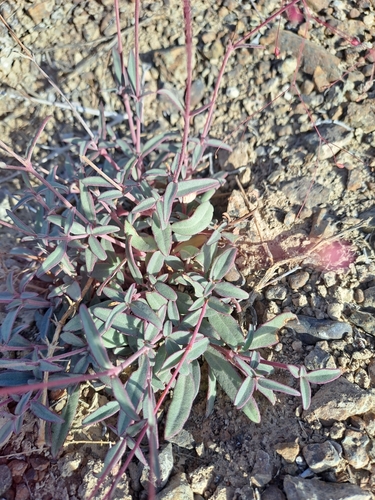
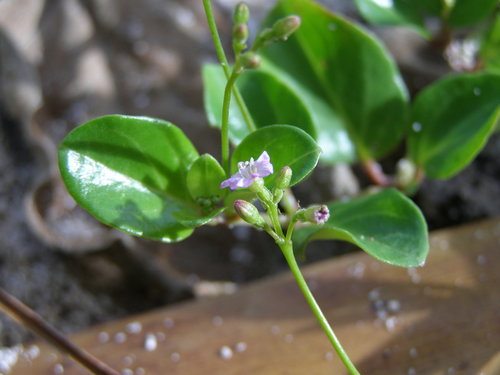
Boerhavia coccinea
Miller
Tarvine
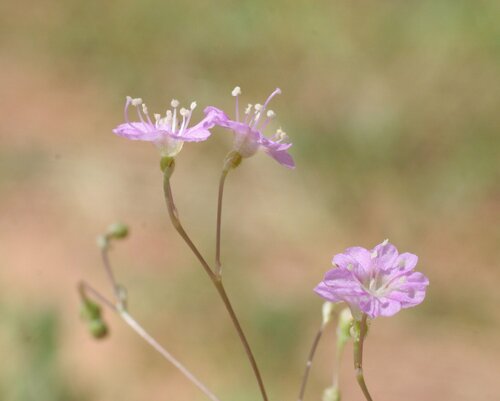
iNaturalist· cc-by
(c) saltyhiker, some rights reserved (CC BY)
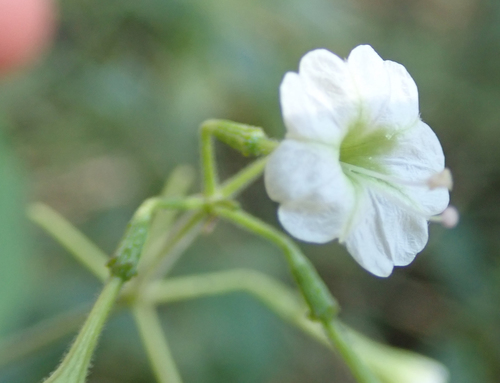
iNaturalist· cc-by-nc
(c) BJ Stacey, some rights reserved (CC BY-NC), uploaded by BJ Stacey
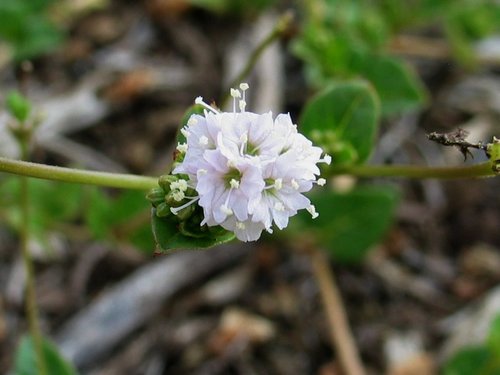
iNaturalist· cc-by-nc
(c) jcdelgado, some rights reserved (CC BY-NC)
Summary
Source: WikipediaBoerhavia coccinea is a species of flowering plant in the four o'clock family which is known by many common names, including tar vine scarlet spiderling and red boerhavia.
Description
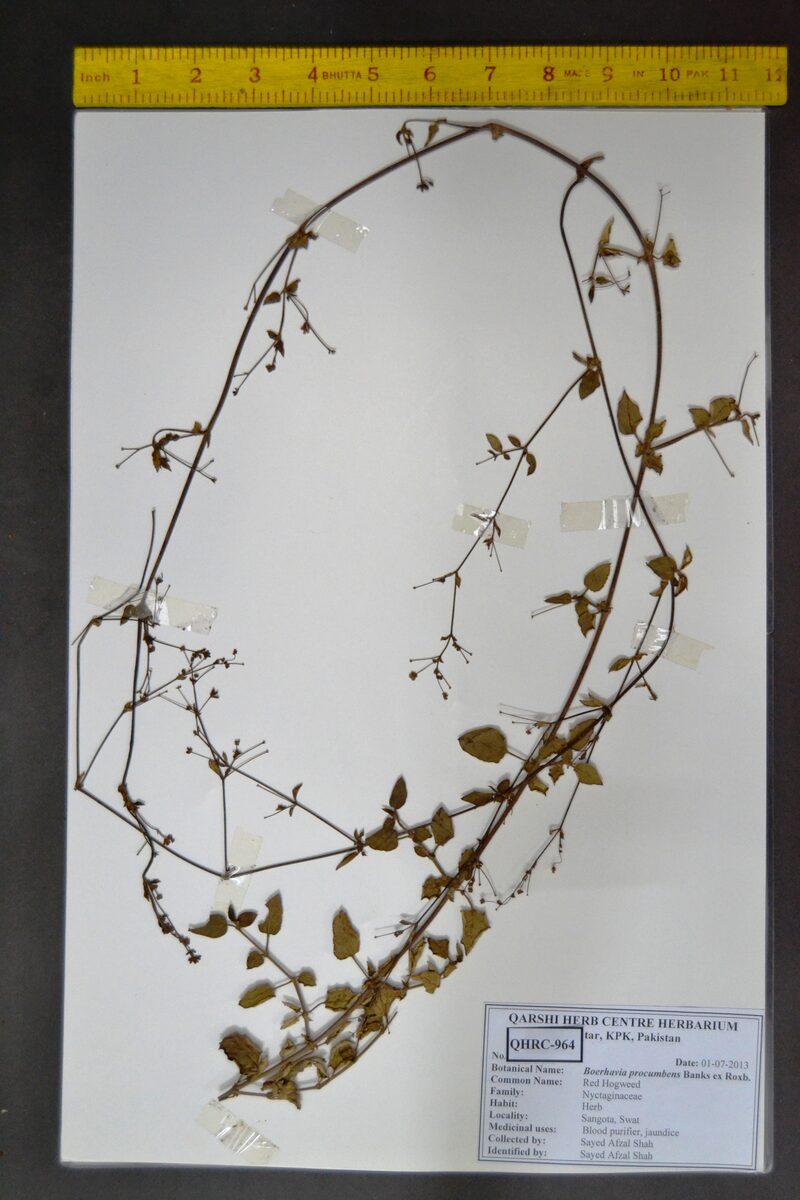
A herb. It can lie along the ground and be spreading. It can grow for one year or keep growing from year to year. It grows 0.1-1 m high. It can spread 2 m wide. The leaves are opposite and broadly triangle shaped. They are pale green. The flowers are pink. They are on long stalks.
Edible Uses
The seeds are cooked in soups. The roots and leaves can also be eaten as vegetables.
Traditional Uses
The seeds are cooked in soups.
This uses section is brief — help expand it
Medicinal Uses
The plant has historically been used for its medicinal properties. The leaves and roots of B. coccinea are used medicinally in countries including Cameroon, Ethiopia, Namibia, Nigeria, Tanzania, Mexico, Brazil, Argentina, and Paraguay. In traditional Mexican Medicine, B. coccinea has been used to treat conditions such as diarrhea and dysentery. The plant is usually used medicinally to treat pain and inflammation because of its anti-inflammatory and antinociceptive properties. The chemical explanation for these properties is an active topic of research. It is also eaten by humans and used as animal feed. A flour can be made from its seeds.
Distribution
A tropical plant. It can grow from tropical to warm temperate places. It grows on sandy soils, clay and alluvium. It can grow in arid places. It also grows along rivers in forests.
Where It Grows
Africa, Asia, Australia, Botswana, Brazil, Burkina Faso, Central America, China, Cuba*, Dominican Republic, East Africa, Eswatini, Ghana, Guinea, Guinée, Guinea-Bissau, Haiti, Jamaica, Lesser Antilles*, Mexico, Middle East, Nigeria, North America, Puerto Rico, Saudi Arabia, Senegal, Sierra Leone, Socotra, South Africa, South America, Southern Africa, Swaziland, Venezuela, West Africa, West Indies*, Yemen, Zambia, Zimbabwe,
Notes
There are about 40 Boerhavia species. They are mostly in the tropics and subtropics. The roots are used in medicine.
Synonyms
Also Known As
Cumara-sabi, Ennende, Fendala, Kofel guelodi, Lamata, Puunpa
References (26)
- Bindon, P., 1996, Useful Bush Plants. Western Australian Museum. p 55
- Burkill, H. M., 1985, The useful plants of west tropical Africa, Vol. 4. Kew.
- Cancilla, D., 2018, Ethnobotanical and Ethnozoological Values Desktop Assessment - Eliwana Project. p 10
- Flora of Australia, Volume 4, Phytolaccaceae to Chenopodiaceae, Australian Government Publishing Service, Canberra (1984) p 10, 318
- Flora of China @ efloras.org Volume 5
Show all 26 references Hide references
- Fowler, D. G., 2007, Zambian Plants: Their Vernacular Names and Uses. Kew. p 50
- Gard. dict. ed. 8: Boerhavia no. 4. 1768
- Grubben, G. J. H. and Denton, O. A. (eds), 2004, Plant Resources of Tropical Africa 2. Vegetables. PROTA, Wageningen, Netherlands. p 560
- Hunter, J., 2015, Vegetation and flora of Naree and Yantabulla. A Draft Report to the Bush Heritage Australia
- Hunter, J.T., 2017, Is there a relationship between contemporary high Aboriginal plant resource locations and mapped vegetation communities? Cunninghamia 17:27-34. The Royal Botanic Garden Sydney. ISSN 2200 - 405X
- Hussey, B.M.J., Keighery, G.J., Cousens, R.D., Dodd, J., Lloyd, S.G., 1997, Western Weeds. A guide to the weeds of Western Australia. Plant Protection Society of Western Australia. p 184
- Kenneally, K.E., Edinger, D. C., and Willing T., 1996, Broome and Beyond, Plants and People of the Dampier Peninsula, Kimberley, Western Australia. Department of Conservation and Land Management. p 149
- Lazarides, M. & Hince, B., 1993, Handbook of Economic Plants of Australia, CSIRO. p 33
- Lim, T. K., 2015, Edible Medicinal and Non Medicinal Plants. Volume 9, Modified Stems, Roots, Bulbs. Springer p 16
- Low, T., 1992, Bush Tucker. Australia’s Wild Food Harvest. Angus & Robertson. p 14
- Paczkowska, G . & Chapman, A.R., 2000, The Western Australian Flora. A Descriptive Catalogue. Western Australian Herbarium. p 412
- Pickering, H., & Roe, E., 2009, Wild Flowers of the Victoria Falls Area. Helen Pickering, London. p 84
- Plants of Haiti Smithsonian Institute http://botany.si.edu/antilles/West Indies
- RIRDC, 2010, New Root Vegetables fo the Native Food Industry, Australian Government RIRDC Publication 9/161
- Royal Botanic Gardens, Kew (1999). Survey of Economic Plants for Arid and Semi-Arid Lands (SEPASAL) database. Published on the Internet; http://www.rbgkew.org.uk/ceb/sepasal/internet [Accessed 4th May 2011]
- Smith, N. M., 1991, Ethnobotanical Field Notes from the Northern Territory, Australia, J. Adelaide Bot. Gard. 14(1): 1-65
- Steenbeeke, Greg as part of the Plants Directory project. List of plant species from northern NSW that may be used as food plants p 11
- Urban, A., 1990, Wildflowers of Inland Australia. Portside editions. p 37
- Swaziland's Flora Database http://www.sntc.org.sz/flora
- Wheeler, J.R.(ed.), 1992, Flora of the Kimberley Region. CALM, Western Australian Herbarium, p 88
- World Checklist of Useful Plant Species 2020. Royal Botanic Gardens, Kew