Boerhavia repens
L.
Spreading hogweed
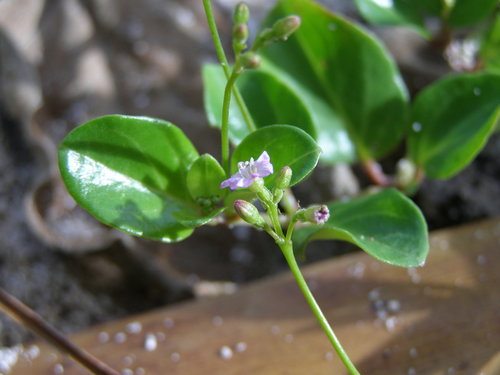
iNaturalist· cc-by
(c) David Eickhoff, some rights reserved (CC BY)
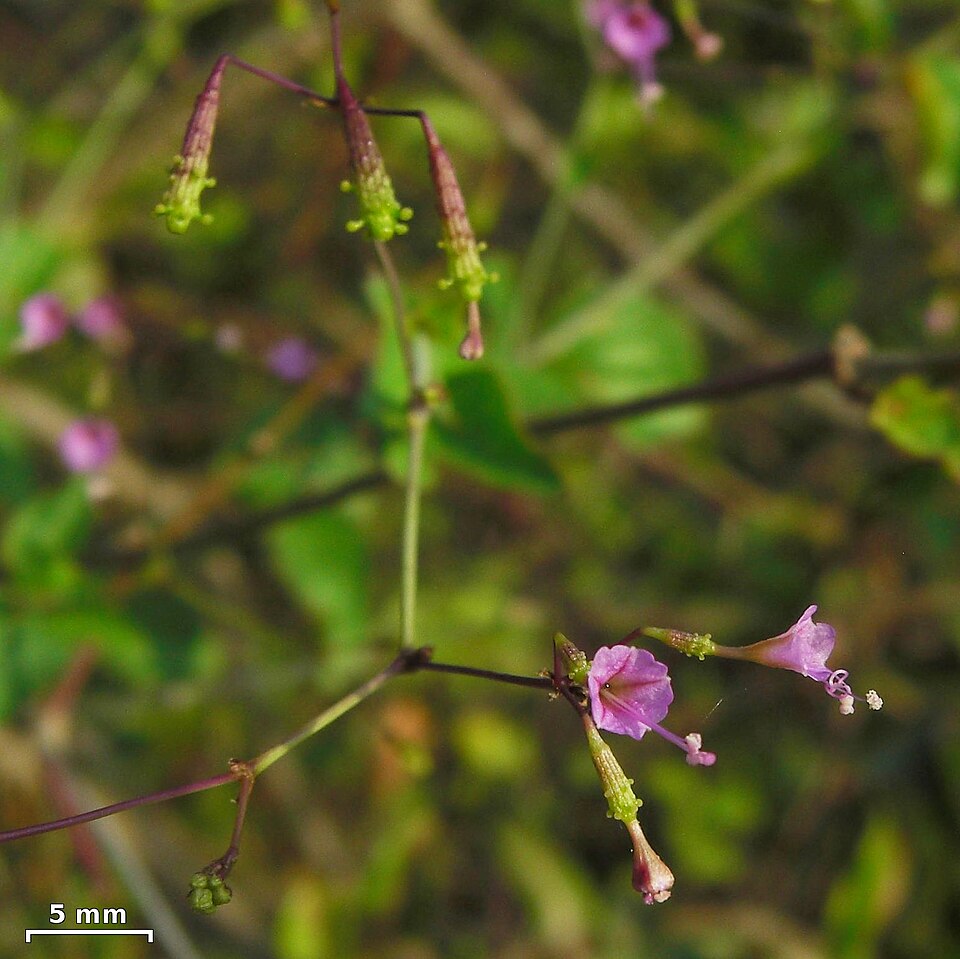
iNaturalist· cc-by
(c) Forest and Kim Starr, some rights reserved (CC BY)
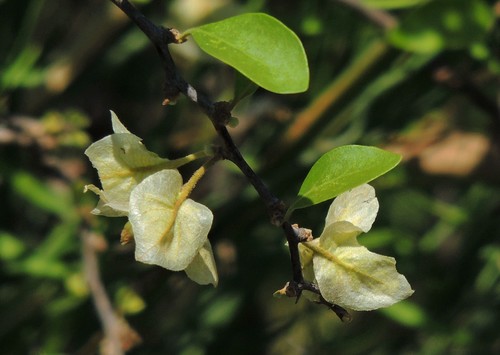
iNaturalist· cc-by
(c) Forest and Kim Starr, some rights reserved (CC BY)
Description
A herb. It has many branches. The branches appear each year from a thickened rhizome or underground stem. The stems are slender. They are thickened at the nodes. The leaves are in unequal pairs at each node. The leaves are 2 cm long and have glands. The flowers are in clusters or 2-6. They can be white or pink. The fruit are 3-4 mm long.
Edible Uses
The young leaves are eaten and made into curries, while the seeds are eaten as a chilled porridge. The roots are also edible.
Traditional Uses
The young leaves are eaten and are also made into curries. The seeds are eaten as a chilled porridge.
This uses section is brief — help expand it
Medicinal Uses
Boerhavia repens is considered to have similar properties to Boerhavia diffusa, a herb that is widely used medicinally, especially in India. In Nigeria Boerhavia repens is preferred over Boerhavia diffusa and Boerhavia erecta because it is considered the most effective. All plant parts contain flavonoid glycosides and the alkaloid punarnavine. A methanol extract of the entire plant inhibited bone resorption induced by parathyroid hormone in mouse bone tissue culture; some flavonoid glycosides were isolated as active compounds. The root is applied in India especially as a diuretic, but also as a stomachic, cardiotonic, hepato-protective, laxative, anthelmintic, febrifuge, expectorant and, in higher doses, as an emetic and purgative. The roots are boiled and applied as a poultice to cure ulcers, including those resulting from Guinea worm infections, while ground roots are applied to yaws. The ground roots mixed with ground seeds of Blighia sapida are applied to the body to cure chicken pox. Decoctions of the roots and leaves are taken in moderate doses to cure asthma, and in larger doses as an emetic, diuretic and laxative and to cure leprosy and syphilis. A root decoction is taken as an aphrodisiac or to cure stomach-ache. The root sap is used as eye drops to treat filaria infection. An infusion of the whole plant is taken to cure convulsions and amenorrhoea. The Yoruba people of Nigeria give an infusion as a mild laxative and febrifuge to children. The pounded plant is applied externally against dropsy. The whole plant is pulped for poulticing sprains. An infusion of the leaves is taken as an abortifacient, oxytocic and to cure jaundice.
Distribution
A tropical plant. It grows throughout the tropics. It can grow in shade of fully exposed in waste lands. It grows in the Sahel in West Africa. It can grow in arid places.
Where It Grows
Africa, American Samoa, Angola, Asia, Botswana, British Indian Ocean Terr., BIOT, Burkina Faso, Central Africa, China, East Africa, Himalayas, India, Kiribati, Madagascar, Marquesas, Mauritania, Mediterranean, Morocco, Mozambique, Nepal, Nigeria, Northeastern India, North Africa, Pacific, Pakistan, Sahel, Samoa, Senegal, Southern Africa, Tuvalu, West Africa, Zimbabwe,
Cultivation
Found throughout the tropics and into the subtropics, the plant is found at elevations up to 1,900 metres and is most common in areas with a distinct dry season. Grows best in a sunny position. Prefers a sandy to rocky soil in the wild. The plant can be found flowering and fruiting throughout the year, when sufficient water is available.
Other Uses
The plant forms a dense mat of growth and can spread freely. It can be used to protect the soil and form a ground cover even in the light shade of trees.
Notes
There are about 40 Boerhavia species. They are mostly in the tropics and subtropics.
Nutrition
| Part | Moisture | kJ | kcal | Protein | Vit A | Vit C | Iron | Zinc |
|---|---|---|---|---|---|---|---|---|
| Leaves | 82 | 280 | 68 | 3.6 | — | — | — | — |
| Root | — | — | — | — | — | — | — | — |
| Seeds | — | — | — | — | — | — | — | — |
Synonyms
Also Known As
Altig, Am vasar, Anena, Babba juji, Bakhro, Beha, Behakototo, Chedul, Ghetivali, Looni booti, Lorank, Lornki, Ufi, Ufi'atuli
References (21)
- Bircher, A. G. & Bircher, W. H., 2000, Encyclopedia of Fruit Trees and Edible Flowering Plants in Egypt and the Subtropics. AUC Press. p 60
- Burkill, H. M., 1985, The useful plants of west tropical Africa, Vol. 4. Kew.
- Dalziel, J. M., 1937, The Useful plants of west tropical Africa. Crown Agents for the Colonies London.
- Flora of China @ efloras.org Volume 5
- GAMMIE,
Show all 21 references Hide references
- Guil-Guerrero, J. L., et al, 2001, Edible Wild Plants. in Recent Progress in Medicinal Plants Vol. 8 Sci. Tech publishing, Texas
- Hedrick, U.P., 1919, (Ed.), Sturtevant's edible plants of the world. p 108
- Jardin, C., 1970, List of Foods Used In Africa, FAO Nutrition Information Document Series No 2.p 39, 59
- Liefting, A., et al, Samoan plant names. http://en.wikipedia.org
- Majeed, M., et al, 2021, Gathered Wild Food Plants among Diverse Religious Groups in Jhelum District, Punjab, Pakistan. Foods 2021, 10, 594.
- Martin, F.W. & Ruberte, R.M., 1979, Edible Leaves of the Tropics. Antillian College Press, Mayaguez, Puerto Rico. p 208
- MORTIMORE
- Peters, C. R., O'Brien, E. M., and Drummond, R.B., 1992, Edible Wild plants of Sub-saharan Africa. Kew. p 155
- Sp. pl. 1:3. 1753
- Terra, G.J.A., 1973, Tropical Vegetables. Communication 54e Royal Tropical Institute, Amsterdam, p 29
- Thaman, R. R, 2016, The flora of Tuvalu. Atoll Research Bulletin No. 611. Smithsonian Institute p 102
- Thaman, R. R., 1992, Batiri Kei Baravi: The Ethnobotany of Pacific Island Coastal Plants. Atoll Research Bulletin. No. 361.
- Thislenton-Dywer, W.T., (Ed.), 1913, Flora of Tropical Africa. Vol VI-section 1. Reeve, p 4
- Topp, J. M. W., 1988, An Annotated Check List of the Flora of Diego Garcia, British Ocean Territory. Atoll Research Bulletin No. 313
- Whistler, A. S., Edible vascular plants of the Line Islands. Pacific Health Dialog. Vol. 3 No. 2
- World Checklist of Useful Plant Species 2020. Royal Botanic Gardens, Kew