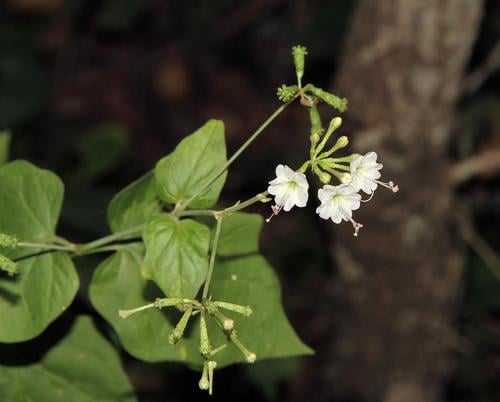
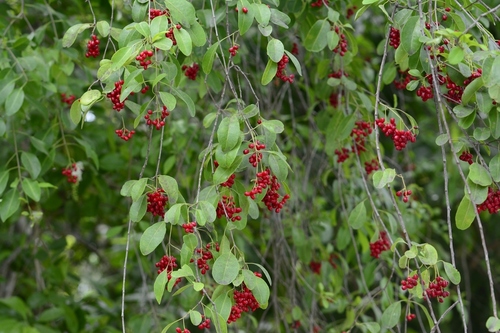
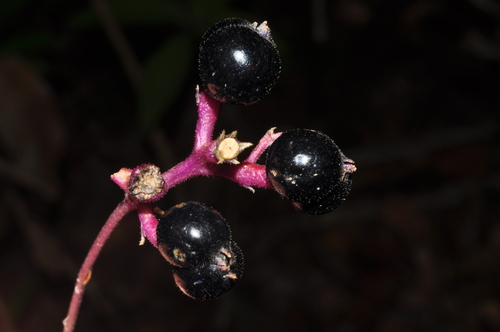
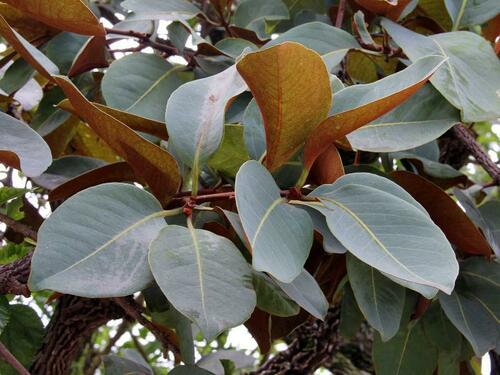
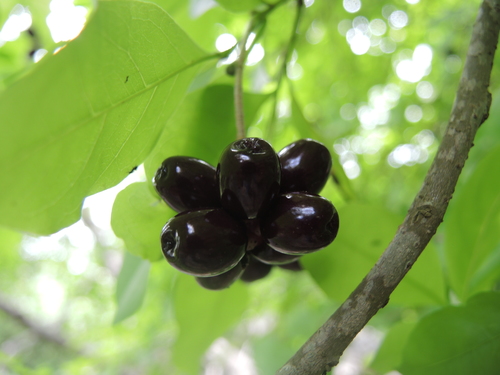
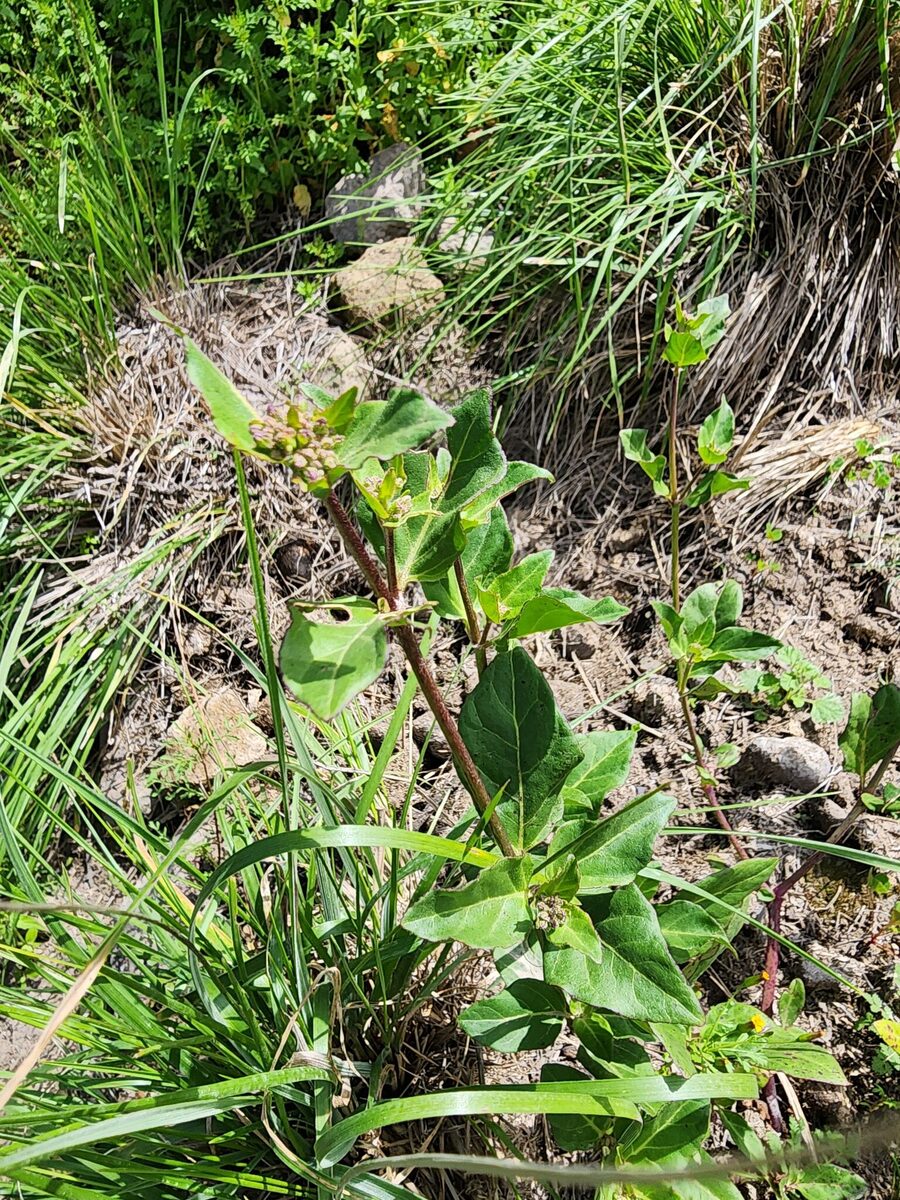
Boerhavia gardneri
Hewson
Tarvine
iNaturalist· cc-by-nc
(c) geoffbyrne, some rights reserved (CC BY-NC)
iNaturalist· cc-by-nc
(c) geoffbyrne, some rights reserved (CC BY-NC)
Description
A herb. It lies along the ground and is spreading. It keeps growing from year to year. It grows 10-40 cm high. It spreads 2 m wide. The flowers are pink, purple, blue or mauve.
Edible Uses
The roots and tubers are edible and can be eaten.
Distribution
A tropical plant. It grows in tropical places in Australia. It grows in sand, clay or stony soil. It can be on coastal sand dunes.
Where It Grows
Australia*,
Notes
There are about 40 Boerhavia species. They are mostly in the tropics and subtropics.
Also Known As
Ngoandj
References (5)
- Flora of Australia, Volume 4, Phytolaccaceae to Chenopodiaceae, Australian Government Publishing Service, Canberra (1984) p 12, 318
- Kenneally, K.E., Edinger, D. C., and Willing T., 1996, Broome and Beyond, Plants and People of the Dampier Peninsula, Kimberley, Western Australia. Department of Conservation and Land Management. p 149
- Paczkowska, G . & Chapman, A.R., 2000, The Western Australian Flora. A Descriptive Catalogue. Western Australian Herbarium. p 412
- Smith, M & Kalotas, A. C., 1985, Bardi Plants: An Annotated List of Plants and Their Use by the Bardi Aborigines of Dampierland, in North-western Australia. Rec. West Aust. Mus. 1985, 12(3): 317-359
- Wheeler, J.R.(ed.), 1992, Flora of the Kimberley Region. CALM, Western Australian Herbarium, p 88