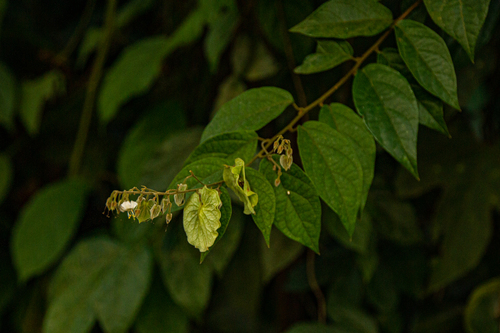
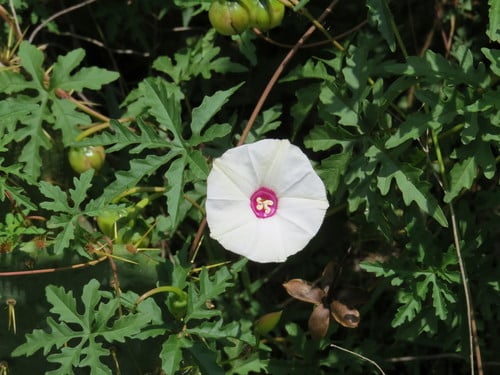
Rivea corymbosa
(L.) Hallier f.
Ololiuqui, Aguinaldo blanco
iNaturalist· cc-by-nc
(c) Roqui Bello, some rights reserved (CC BY-NC)
iNaturalist· cc-by-nc
(c) Roqui Bello, some rights reserved (CC BY-NC)
iNaturalist· cc-by-nc
(c) Roqui Bello, some rights reserved (CC BY-NC)
Description
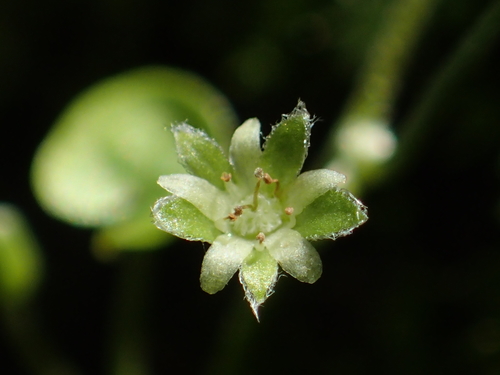
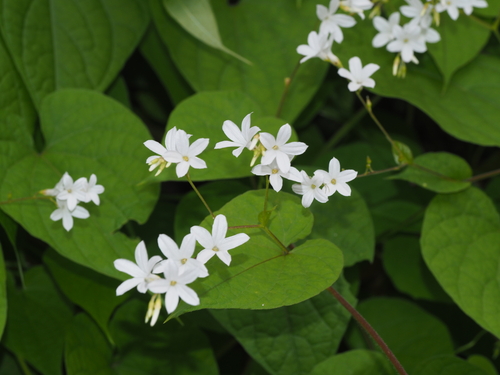
A climbing vine that keeps growing from year to year. The flowers are white. The flowers are attractive to bees for honey. It is one of the main honey plants in Cuba. The seeds are small, brown and oval. They contain ergine, an alkaloid.
Edible Uses
The flowers produce a light honey.
Traditional Uses
It is the source of a light honey. The seeds are hallucinogenic and dangerous.
This uses section is brief — help expand it
Known Hazards
The seeds are hallucinogenic and dangerous. Caution is advised with flowers used for honey.
Distribution
It is a tropical plant.
Where It Grows
Australia, Cuba, Mexico, North America, Peru, South America, USA, West Indies,
Synonyms
References (2)
- Bot. Jahrb. Syst. 18:157. 1894
- Facciola, S., 1998, Cornucopia 2: a Source Book of Edible Plants. Kampong Publications, p 81