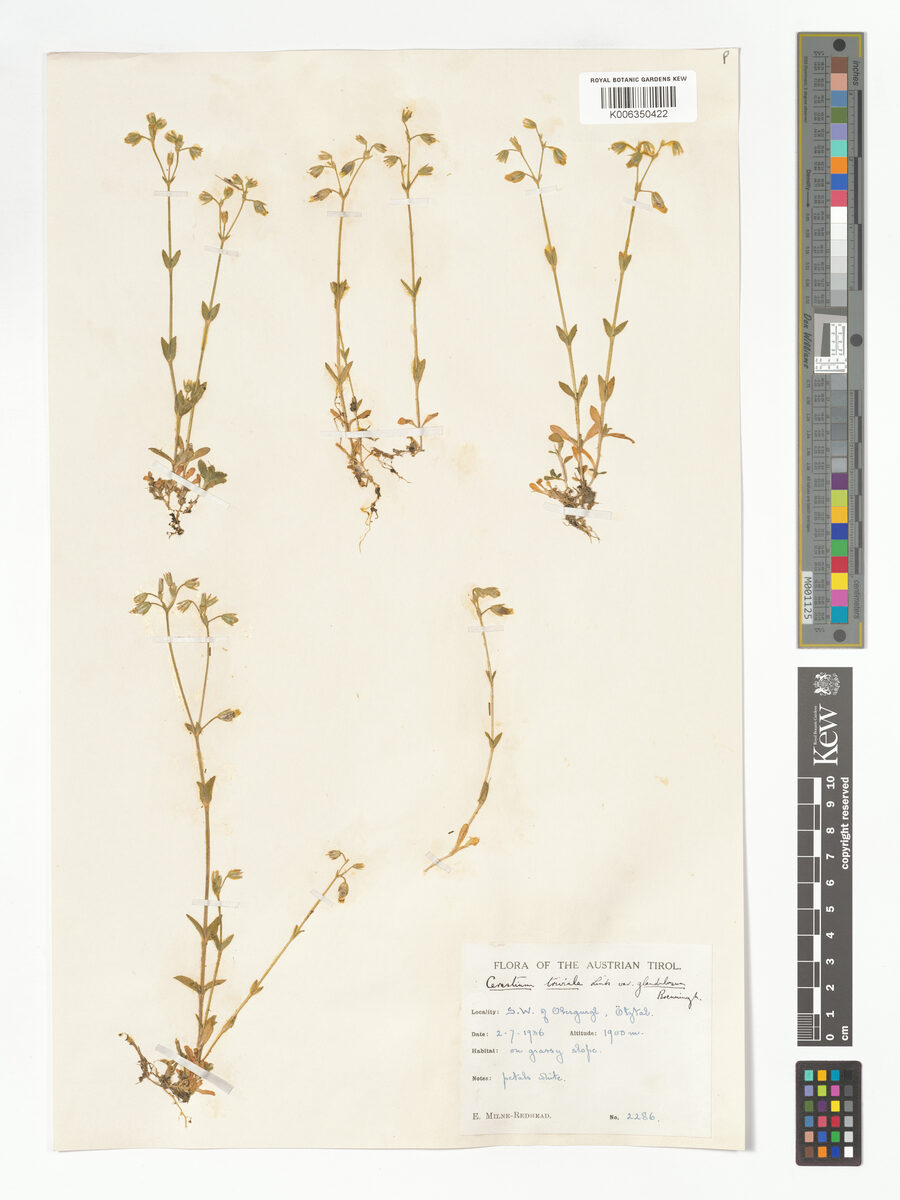
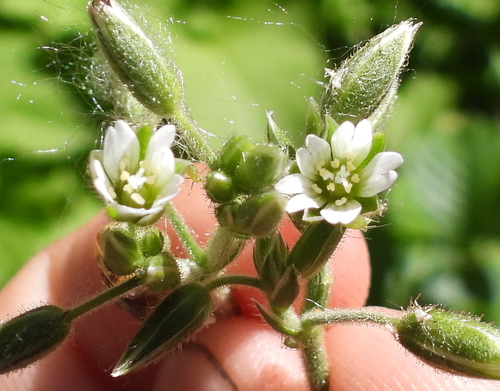
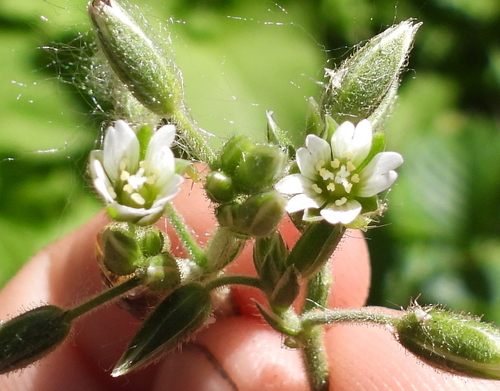
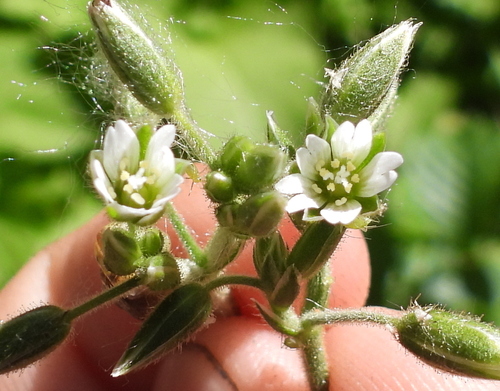
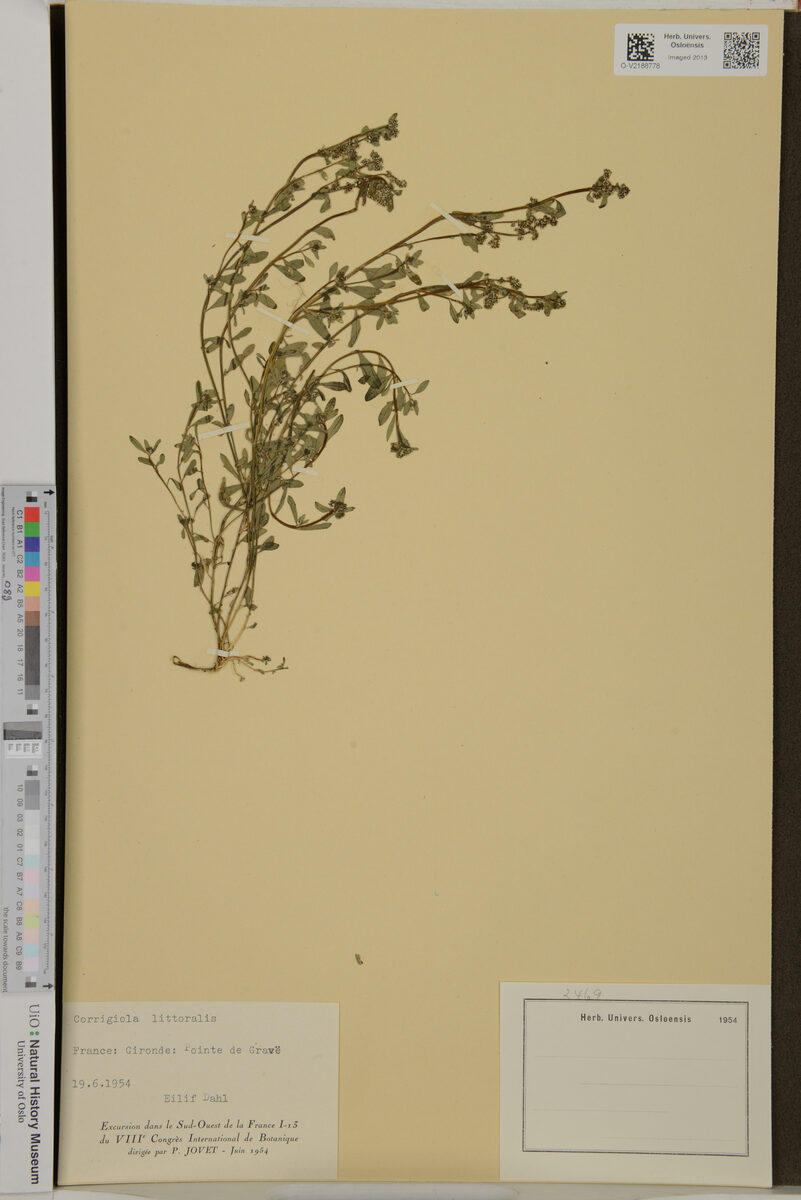
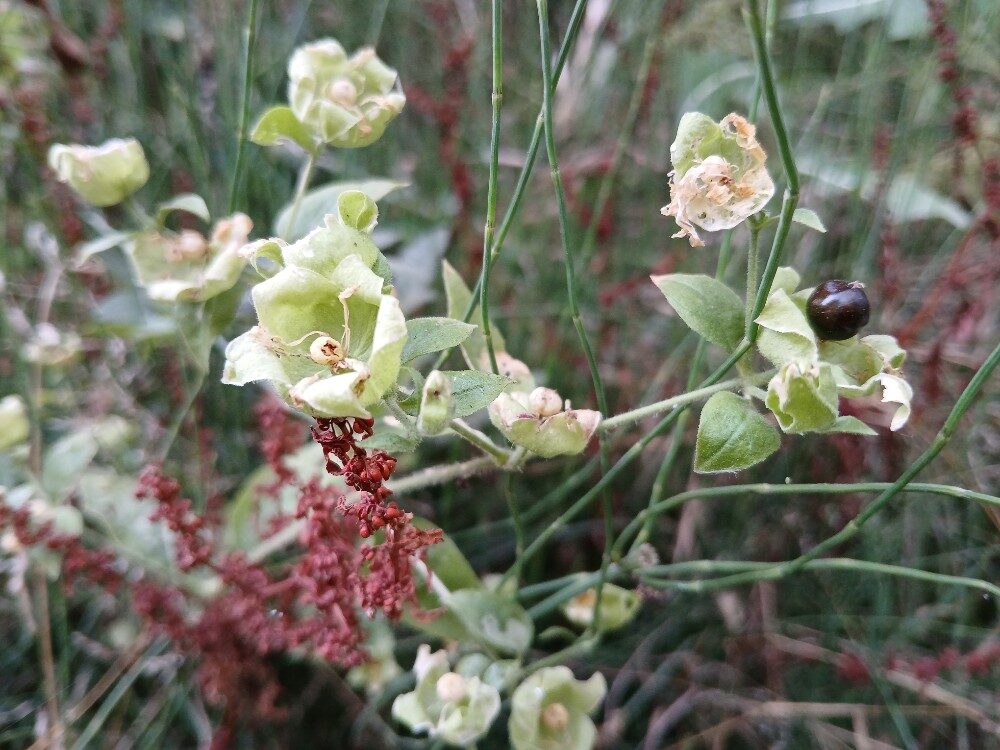
Saponaria officinalis
L.
Bouncing bet, Soapwort
iNaturalist· cc-by-nc-sa
(c) Jerry Oldenettel, some rights reserved (CC BY-NC-SA)
iNaturalist· cc-by-nc
(c) Nancy, some rights reserved (CC BY-NC), uploaded by Nancy
iNaturalist· cc-by-nc
(c) ingakom, some rights reserved (CC BY-NC)
Summary
Source: WikipediaSaponaria officinalis is a common perennial plant from the family Caryophyllaceae. This plant has many common names, including common soapwort, bouncing-bet, crow soap, and soapweed. There are about 20 species of soapworts altogether. The scientific name Saponaria is derived from the Latin sapo (stem sapon-) meaning "soap", which, like its common name, refers to its utility in cleaning. From this same Latin word is derived the name of the toxic substance saponin, contained in the roots at levels up to 20 percent when the plant is flowering (Indian soapnuts contain only 15 percent). It produces a lather when in contact with water. The epithet officinalis indicates its medicinal functions. It is a common host plant for some moth species, including the white-lined sphinx. Saponaria officinalis' native range extends throughout Europe, and in Asia to western Siberia. It grows in cool places at low or moderate elevations under hedgerows and along the shoulders of roadways. It can be found as a horticultural escape and noxious invasive in much of North America.
Description
A small plant. It grows 30-60 cm high and spreads 50-100 cm wide. They form mounds of wiry stems. The leaves are grey-green and oval. They are pointed and 12 mm long. The flowers are pink, red or white and 25 mm wide. They are in heads of 5 or more flowers.
Edible Uses
None known
Traditional Uses
The root is used as an emulsifying agent in the making of confection. It gives a fluffy texture. It is also added to sunflower seed halava. The flowers are occasionally added to salads. Caution: It can be toxic.
Medicinal Uses
Soapwort's primary medicinal use is as an expectorant. Its strongly irritant action in the gut is thought to stimulate the cough reflex and increase production of a more fluid mucus in the respiratory passages. The whole plant, and especially the root, is alterative, antiscrophulatic, cholagogue, depurative, diaphoretic, mildly diuretic, expectorant, purgative, sternutatory, and tonic. A decoction of the whole plant can be applied externally to treat itchy skin. The plant has proved useful in treating jaundice and other visceral obstructions, but is rarely used internally in modern herbalism due to its irritant effect on the digestive system. When taken in excess, it destroys red blood cells and causes paralysis of the vasomotor centre. The root is harvested in spring and can be dried for later use. One of the saponins in this plant is of interest in cancer treatment, being cytotoxic to Walker Carcinoma in vitro. The German Commission E Monographs approve Saponaria officinalis for coughs and bronchitis.
Known Hazards
The plant contains saponins. Although toxic, these substances are very poorly absorbed by the body and so tend to pass through without causing harm. They are also broken down by thorough cooking. Saponins are found in many plants, including several that are often used for food, such as certain beans. It is advisable not to eat large quantities of food that contain saponins. Saponins are much more toxic to some creatures, such as fish, and hunting tribes have traditionally put large quantities of them in streams, lakes etc in order to stupefy or kill the fish. Do not use for more than 2 weeks. Avoid during pregnancy.
Distribution
It is a temperate plant. It will grow in moist soils. It is best in an open sunny position. It is resistant to frost but sensitive to drought. In Argentina it grows from sea level to 1,000 m above sea level. It suits hardiness zones 4-10. Tasmania Herbarium.
Where It Grows
Andorra, Argentina, Australia, Balkans, Britain, Canada, Chile, China, Europe*, India, Luxembourg, Macedonia, Mediterranean, North America, Scandinavia, Slovenia, South America, Spain, Switzerland, Tasmania, Uruguay,
Cultivation
Succeeds in any moderately fertile well-drained soil in sun or semi-shade. Prefers a neutral to alkaline soil. Hardy to about -20°c. A very ornamental plant, soapwort is often grown in the herb garden and is sometimes cultivated for the soap that can be obtained from the roots. There are some named forms, usually with double flowers, that have been selected for their ornamental value. Plants can be very invasive when grown in good conditions. Soapwort should not be grown next to a pond with amphibians or fish in it since if the plant trails into the water it can cause poisoning. The flowers are slightly scented with a sweet aroma that has an undertone of clove. Hybridizes with other members of this genus. A good moth plant.
Propagation
Seed benefits from a short cold stratification. Sow in autumn or late winter in a cold frame; germination usually occurs within 4 weeks. Prick out seedlings into individual pots when large enough to handle and plant out in early summer. Division can be carried out in spring or autumn and is very easy — it can be done successfully at any time during the growing season provided plants are kept moist until re-established. Larger divisions can go directly into permanent positions. Smaller divisions are best potted up and grown on in a lightly shaded cold frame, then planted out once well established in summer.
Other Uses
A soap can be obtained by boiling the whole plant — particularly the root — in water. It is a gentle, effective cleaner especially suited to delicate fabrics that could be harmed by modern synthetic soaps; it has been used to clean the Bayeux tapestry and produces a lustre in fabric. The best soap is obtained by infusing the plant in warm water. Roots can be dried and stored for later use. The plant is sometimes recommended as a hair shampoo, though it can cause eye irritations. The plant spreads vigorously and can be used as ground cover when planted about 1 metre apart in each direction.
Notes
It is used in medicine. There are about 20 Saponaria species.
Synonyms
Also Known As
Fei zao cao, Navadna milnica
References (18)
- Abbet, C., et al, 2014, Ethnobotanical survey on wild alpine food plants in Lower and Central Valais (Switzerland). Journal of Ethnopharmacology 151 (2014) 624–634
- Ambasta S.P. (Ed.), 2000, The Useful Plants of India. CSIR India. p 549
- Bodkin, F., 1991, Encyclopedia Botanica. Cornstalk publishing, p 909
- Bremness, L., 1994, Herbs. Collins Eyewitness Handbooks. Harper Collins. p 215
- Brickell, C. (Ed.), 1999, The Royal Horticultural Society A-Z Encyclopedia of Garden Plants. Convent Garden Books. p 933
Show all 18 references Hide references
- Cheifetz, A., (ed), 1999, 500 popular vegetables, herbs, fruits and nuts for Australian Gardeners. Random House p 157
- Cundall, P., (ed.), 2004, Gardening Australia: flora: the gardener's bible. ABC Books. p 1311
- Facciola, S., 1998, Cornucopia 2: a Source Book of Edible Plants. Kampong Publications, p 74
- Flora of China @ efloras.org Volume 6
- Hibbert, M., 2002, The Aussie Plant Finder 2002, Florilegium. p 286
- http://www.botanic-gardens-ljubljana.com/en/plants
- Lazarides, M. & Hince, B., 1993, Handbook of Economic Plants of Australia, CSIRO. p 211
- Lu Dequan, Wu Zhengyi, Zhou Lihua, Chen Shilong; Michael G. Gilbert, Magnus Lidén, John McNeill, John K. Morton, Bengt Oxelman, Richard K. Rabeler, Mats Thulin, Nicholas J. Turland, Warren L. Wagner, CARYOPHYLLACEAE, Flora of China.
- MacKinnon, A., et al, 2009, Edible & Medicinal Plants of Canada. Lone Pine. p 206
- Michael, P., 2007, Edible Wild Plants and Herbs. Grub Street. London. p 217
- Sp. pl. 1:408. 1753
- Tasmanian Herbarium Vascular Plants list p 18
- www.efloras.org Flora of China Vol 6