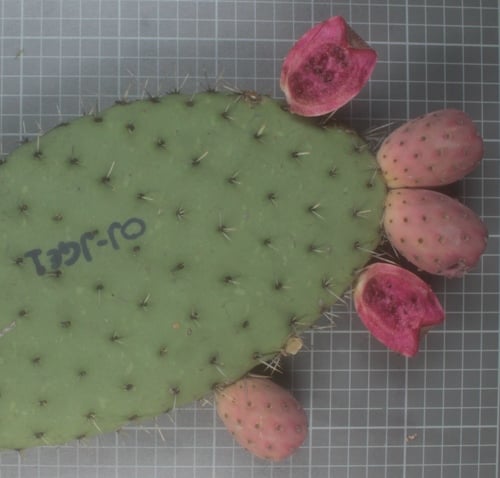
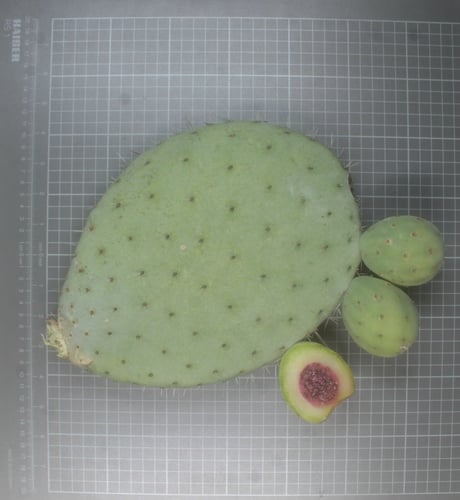
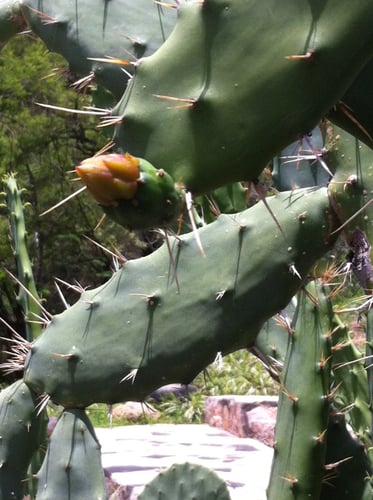
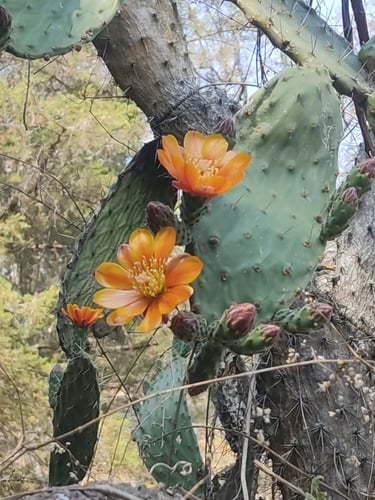
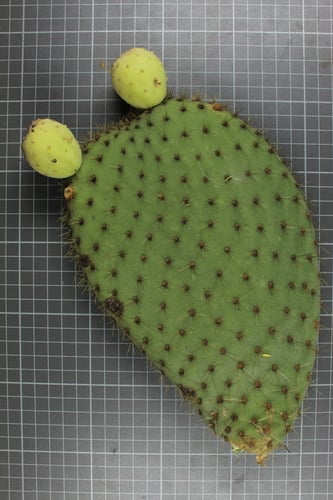
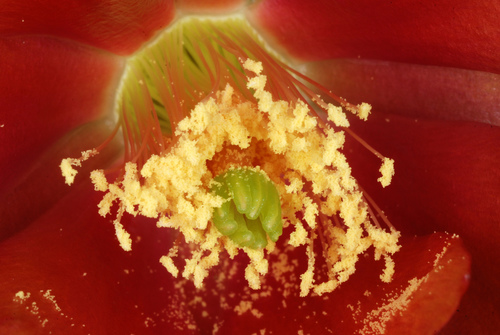
Rhipsalis baccifera
(J. Mill.) Stearn
Hairy mistletoe cactus
iNaturalist· cc0
no rights reserved, uploaded by 葉子
iNaturalist· cc-by-nc-sa
(c) R.E.Llanos, some rights reserved (CC BY-NC-SA), uploaded by R.E.Llanos
iNaturalist· cc-by-nc
(c) 桃子, some rights reserved (CC BY-NC), uploaded by 桃子
Summary
Source: WikipediaRhipsalis baccifera, commonly known as the mistletoe cactus, is an epiphytic cactus which originates in Central and South America, the Caribbean, and Florida. It is also found throughout the tropics of Africa and into Sri Lanka where it is known in Sinhala as nawahandi (නවහන්දි). This is the only cactus species naturally occurring outside the Americas. One hypothesis is that it was introduced to the Old World by migratory birds, long enough ago for the Old World populations to be regarded as distinct subspecies. An alternative hypothesis holds that the species initially crossed the Atlantic Ocean on European ships trading between South America and Africa, after which birds may have spread it more widely.
Description
A cactus. It has many branches and grows attached to other plants and hangs down. It is 1-3 m long. The stems are slender and succulent. They are pale green. It does not have leaves but can have small scale leaves. The flowers are small and white or pale yellow. The fruit are small berries. They can be white, pink or red. They have several small black seeds. The fruit are produced in great numbers. They are edible.
Edible Uses
The edible fruit are eaten as a snack. Both fruit and stems are edible portions.
Traditional Uses
The fruit are eaten as a snack.
This uses section is brief — help expand it
Medicinal Uses
No medicinal uses mentioned in data.
Known Hazards
No hazards mentioned in data.
Distribution
A tropical plant. It can grow in shade. It needs well-drained soil. In Malawi it grows in lowland and mid-altitude rainforest. It suits humid locations. It has been recorded from 850-1,450 m altitude. In Argentina it grows from sea level to 1,000 m above sea level.
Where It Grows
Africa, Amazon, America, Angola, Argentina, Asia, Brazil, Caribbean*, Central Africa, Central America*, Colombia, Congo, Côte d'Ivoire, East Africa, Ethiopia, Guiana, Guianas, Guyana, Indonesia, Ivory Coast, Kenya, Madagascar, Malawi, Mexico, Mozambique, Myanmar, Nigeria, North America, Paraguay, Peru, Sao Tome and Principe, SE Asia, Seychelles, Sierra Leone, South Africa, Southern Africa, South America*, Sri Lanka, Suriname, Uruguay, USA, Venezuela, West Africa, Zimbabwe,
Cultivation
Plants can be grown from seeds and cuttings.
Propagation
Seed - Cuttings root in 2 to 6 weeks depending on the season.
Other Information
It is a cultivated food plant.
Notes
There are about 40 Rhipsalis species. Plants can have 2, 4 or 8 sets of chromosomes.
Synonyms
Also Known As
Kaktus benaku berbulu
References (10)
- Chapman, J. D. & Chapman, H. M., 2001, The Forest Flora of Taraba and Andamawa States, Nigeria. WWF & University of Canterbury. p 169
- Facciola, S., 1998, Cornucopia 2: a Source Book of Edible Plants. Kampong Publications, p 66 (As Rhipsalis cassutha)
- Fruct. sem. pl. 1:137, t. 28, fig. 1. 1788 "cassutha"
- Grivetti, L. E., 1980, Agricultural development: present and potential role of edible wild plants. Part 2: Sub-Saharan Africa, Report to the Department of State Agency for International Development. p 44
- Kermath, B. M., et al, 2014, Food Plants in the Americas: A survey of the domesticated, cultivated and wild plants used for Human food in North, Central and South America and the Caribbean. On line draft. p 742
Show all 10 references Hide references
- Piedra-Malagón, E. M. et al, 2022, Edible native plants of the Gulf of Mexico Province. Biodiversity Data Journal 10: e80565 p 16
- Ruiters-Welcome, A. K., 2019, Food plants of southern Africa. Ph.D. thesis. Univ. of Johannesburg p 41
- Sukarya, D. G., (Ed.) 2013, 3,500 Plant Species of the Botanic Gardens of Indonesia. LIPI p 1042
- Welcome, A. K. & Van Wyk, B.-E., 2019, An inventory and analysis of the food plants of southern Africa. South African Journal of Botany 122 (2019) 136–179
- White, F., Dowsett-Lemaire, F. and Chapman, J. D., 2001, Evergreen Forest Flora of Malawi. Kew. p 177